Bamboo undershirt under work clothing and what it keeps out
Short answer: An undershirt keeps sweat away from your work clothes. That means the outer layer can be worn several days in a row, and you do not get cold when you stand still. The inner layer is the one you change and wash, while the rest can hang until tomorrow.
Sweat stays in the inner layer
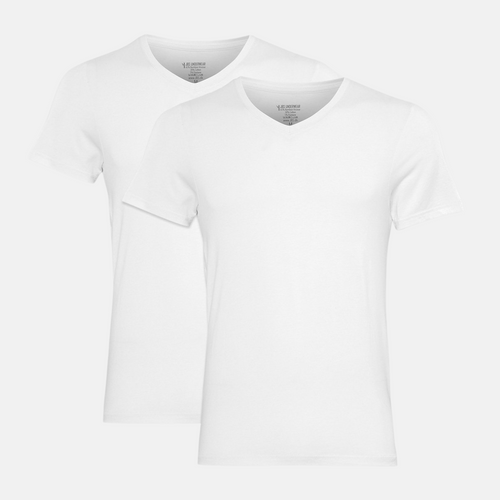
Without an undershirt, sweat goes straight into your work clothes, which are rarely washed daily. They smell sooner, and the fabric stiffens with salt. With an undershirt, sweat is caught in a layer you can change and wash on its own. Your jacket or overalls then last several days. See bamboo undershirts for men.
Cold when you stand still
Damp clothing against the skin cools quickly when you take a break. While working, your body makes enough heat to offset it, but the moment you stop, you feel the chill. A layer that moves moisture outward into the fabric keeps your skin from staying wet, so you feel less cold at lunch and while waiting.
Thin rather than thick
Many people assume a thick shirt works best under work clothes, but a thin layer often does more. It sits close, moves moisture away and leaves your arms free to move. When it is cold, adding an extra layer on top is better than choosing a thick undershirt that becomes wet and heavy.
Sleeves or no sleeves
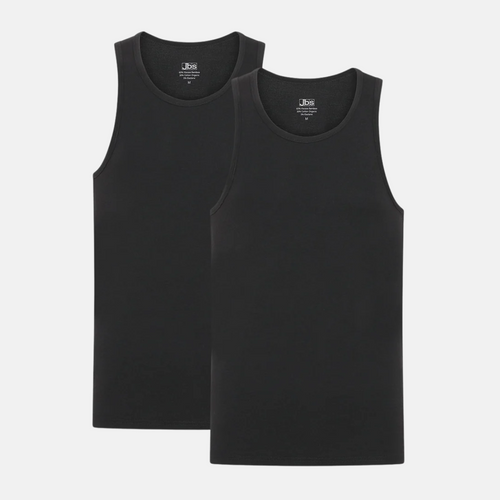
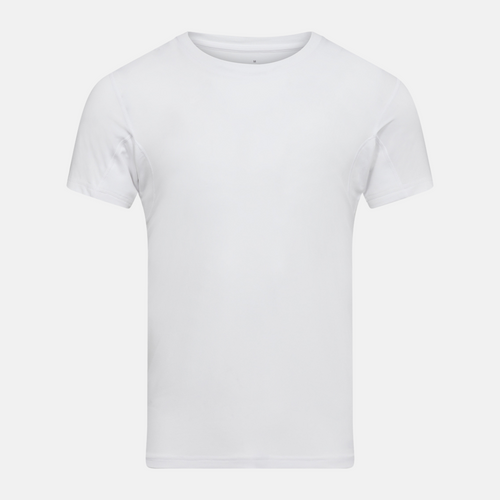
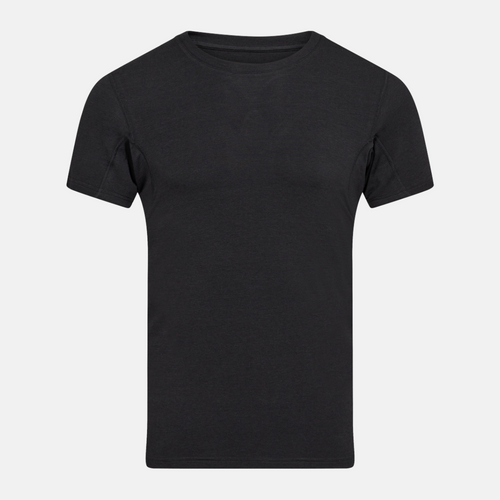
A tank top does not cover the armpit, where you sweat most during physical work. The sweat then goes straight into the shirt on top. For hard work, short sleeves are the right choice. A tank top makes sense under a shirt on warm days or for light work. See bamboo tank tops for men.
Length against cold spots
A short undershirt pulls loose from your lower back when you bend to lift or work near the floor. That leaves a strip of bare back where the cold gets in. Choose a style long enough to stay under your waistband, even when you reach up. See the range of bamboo underwear for men.
Fit under work clothes
An undershirt should fit close without pulling across the shoulders. Too big, and it folds under a heavy jacket or braces, where the folds rub. Too small, and it rides up. Try it with your arms stretched forward and up, as when you work. If it stays in place, the size is right.
Change in the middle of the day
If the shirt is soaked by lunch, changing it does more for the afternoon than anything else. A dry shirt after the break keeps you warm for the rest of the day, and your work clothes absorb less sweat. Pack a spare on heavy days. Care advice is under washing and care.
Wash after each day
An undershirt you have sweated in should be washed after use. Wash it at 40 degrees without fabric softener, because softener coats the fibres and makes them worse at taking up moisture. Hang it to dry. That way it keeps its shape and absorbs moisture just as well the next time you wear it.
How many you need
If you do physical work every day, five to seven undershirts is a good starting point. That gives you one for each day plus a spare for changing at lunch. Buying several of the same style means they wear evenly and can be replaced together, and it makes getting dressed in the morning simpler.
Frequently asked questions
Is an undershirt too warm for physical work?
No. A thin layer moves sweat away from the skin and keeps your work clothes drier, so you often feel cooler and more comfortable than you would without one.
Why do I get cold during breaks?
Because damp clothing cools the skin as soon as you stop moving. A layer that moves moisture outward prevents this, and changing into a dry shirt helps as well.
Tank top or short sleeves?
Short sleeves, if you sweat under your arms during physical work. A tank top leaves the armpit uncovered, so sweat goes straight into the shirt worn on top.
See our range of women's bamboo undershirts.