Clothing for a week of snow
Short answer: In a snowy week your clothes must cope with both cold and wet. Keep the inner layers thin and dry, and choose an outer layer that tolerates snow and meltwater, so you do not get wet on the way inside.
Snow is both cold and wet
Snow is cold, but it is the meltwater that causes the problems. When snow lands on clothing and melts, the fabric gets wet, and wet clothing loses heat fast. A week of snow therefore calls for clothes that both hold warmth and can come back dry. Think of the week as a series of trips in and out of the cold, where you need to use your layers wisely each time you step indoors or outdoors.
Outer layer and the hems of your trousers
The outermost layer must tolerate snow and meltwater, which matters especially around the neck, the wrists and the bottom of the trouser legs. Snow collects easily there and then melts into your clothes. Choose boots with a high shaft or gaiters if you walk in deep snow. Brush the snow off before you go inside, so it does not melt into your jumper, and hang the jacket up so it can dry.
Warm clothes that cope with many layers
For indoor use and as a warm middle layer you can choose something soft and airy. Zent is a brand you can read more about here: Zent. The most important thing is to have a couple of matching basic tops that you can combine and that are not so thick that they take up room under the jacket. Thick layers trap the air, and then you get sweaty, which you do not want before heading out into the snow.
A long sleeve T-shirt as a close layer
Under the jumper you need a long sleeve T-shirt that sits close and covers the wrists. See women's long-sleeved bamboo T-shirt. The smooth surface lets the jumper above glide easily, and the thin construction adds almost no bulk. Have two or three, so you can change if you get wet or sweaty, and take a dry one in your bag when you will be outside for several hours.
Underwear that stays dry
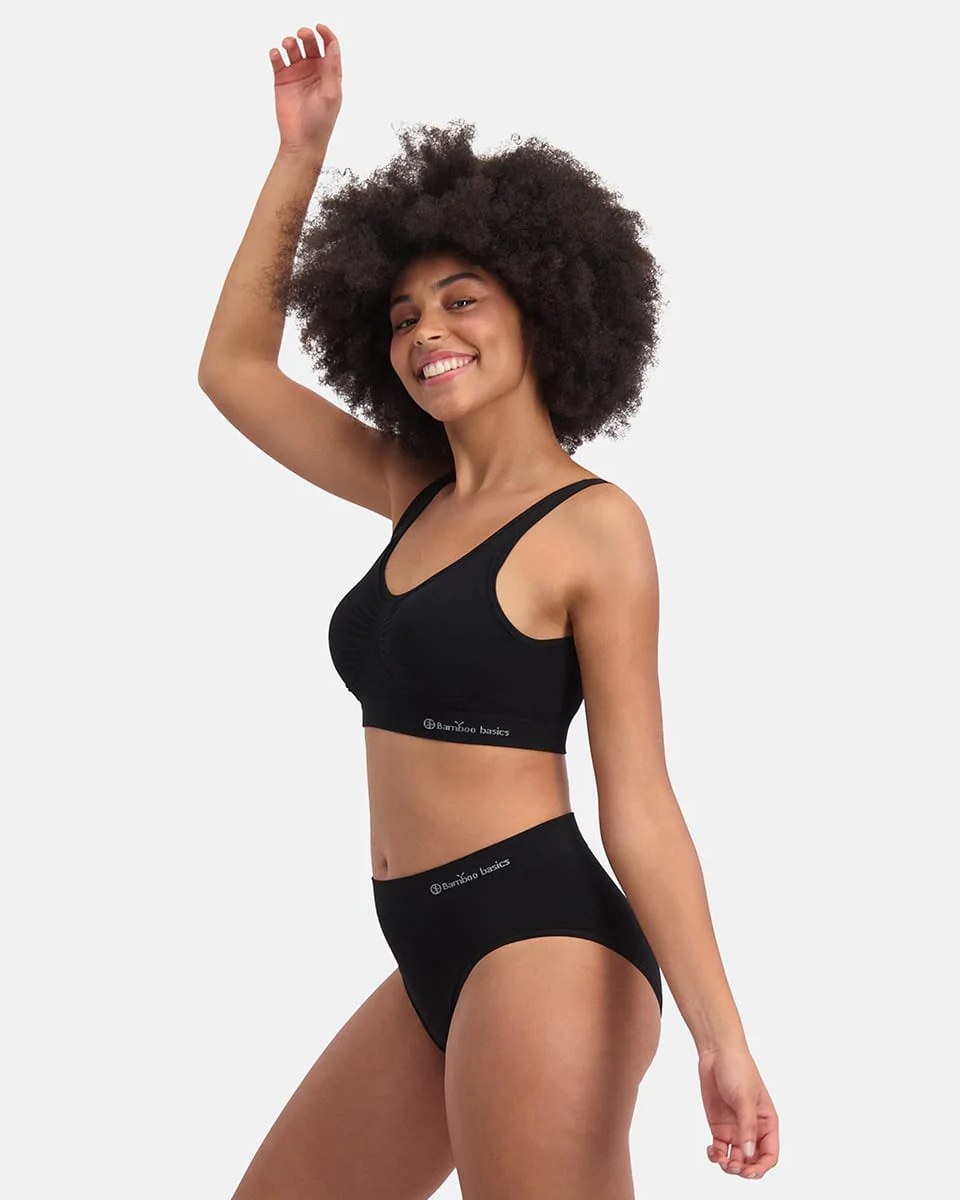
The innermost layer matters here too, because if it gets wet from sweat, it is hard to get warm again. Choose underwear that does not pinch and is soft against the skin, and change it when you have been out in the snow. See bamboo underwear for women. Change your socks as soon as they are damp as well, because cold, wet feet are the classic reason a snow day turns unpleasant.
Drying and care after snow days
After a walk in the snow everything must dry before it is worn again. Hang the clothes up with air around them and do not leave them in a wet heap. Wash viscose from bamboo at 30 to 40 degrees and skip fabric softener. Avoid drying directly on the radiator, which can damage the fibres. Fill boots loosely with newspaper so they dry faster, and lay gloves flat so they keep their shape.
Frequently asked questions
Why do I get wet from snow even if it does not feel wet
Snow melts from body heat and from the warmth of the room and turns to water that soaks into the clothes. Brush the snow off before you go inside and hang the clothes up to dry.
Should the inner layer be thick in snowy weather
No, thin and close fitting is best. The warmth comes from the layers together and from a dry inner layer, not from one thick layer.
What is most important to have in the bag
Dry socks and gloves. Cold, wet feet and hands are what turn a snow day unpleasant fastest.
You can find the full range at Bamboo-Clothing.com.