Clothing for orienteering in the forest
Short answer: Orienteering takes place off the paths, through thickets, over ditches and up steep banks. Close fitting clothes that protect your legs, socks that cope with wet ground and a bra that keeps you steady while running matter most.
Running without paths
In orienteering you choose your own route between the controls, and the best line often goes through forest, heath and bog. You jump over fallen trees, run down slopes and push through dense undergrowth. Clothing should therefore stand up to branches and thorns, give full mobility and not get heavy when wet. Many runners wear close fitting clothes with long legs to protect their skin from scratches and ticks along the way.
Socks for wet ground
Your feet almost always get wet in orienteering, because the route crosses bogs, streams and wet grass. Socks that stay in place and do not wrinkle in the shoe are important for avoiding blisters. Long socks or gaiters also protect your lower legs from nettles and thorns. See all bamboo socks for women. Change into dry socks after the race, and let your shoes dry in a well ventilated room before the next outing.
Support while running
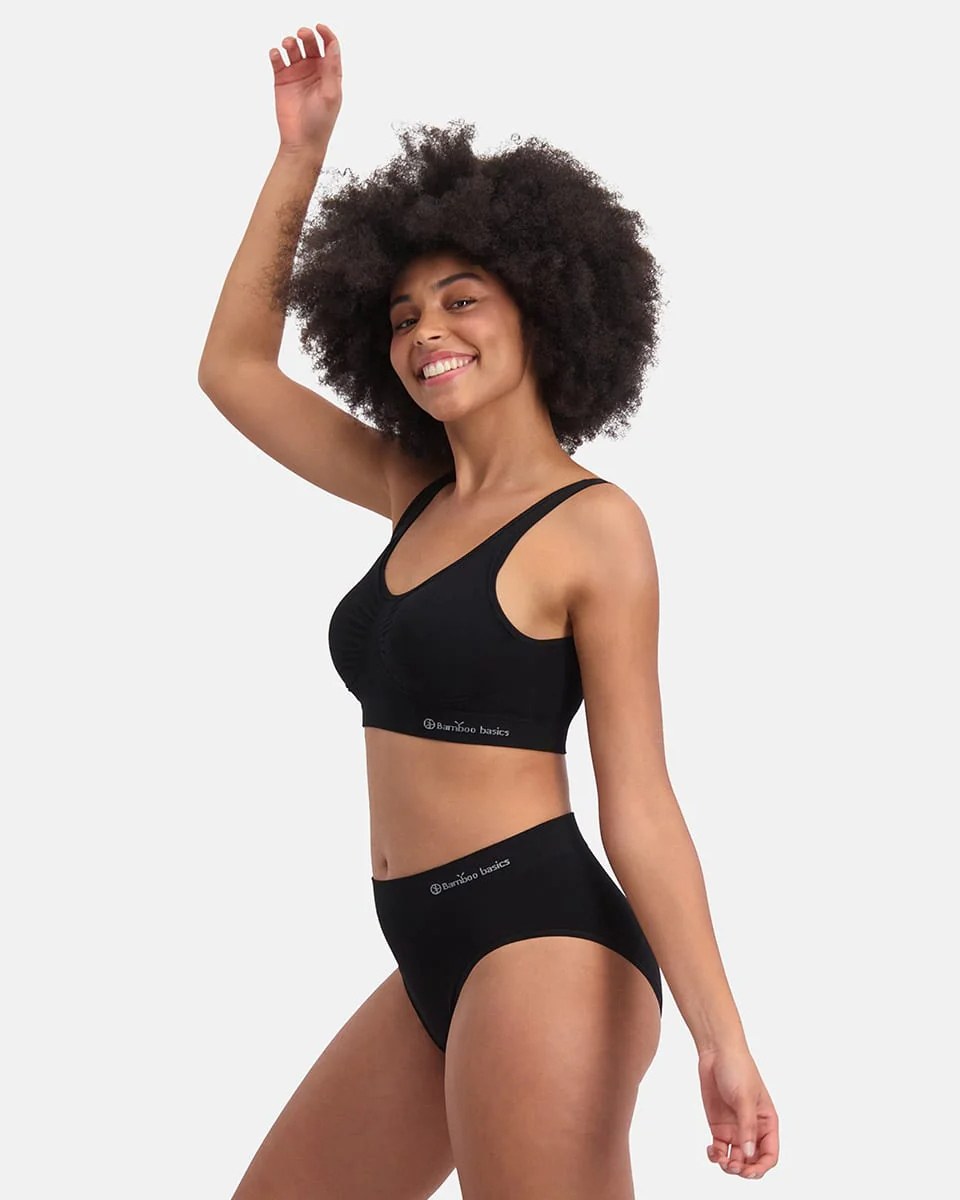
Running over uneven ground means lots of jumps and quick changes of direction, and a bra that keeps you steady makes the run more comfortable. Soft styles without underwire often feel better on long runs because nothing digs in. See bamboo bra without underwire. Choose a fit that stays put without squeezing your ribcage, so you can breathe freely as you run uphill towards the next control.
Long races and periods
An orienteering race can last from half an hour to several hours, and there are rarely toilets out in the forest. Many people use period underwear as an alternative, or as extra security on days when changing is difficult. See period underwear. Follow the instructions for how long it can be worn. If you have questions about your period, talk to your doctor.
Ticks and protection
Forests, heath and long grass are where ticks thrive. Close fitting clothing with long legs and sleeves makes it harder for ticks to reach your skin. Check your whole body carefully after the race, especially around the ankles, behind the knees, in the groin and at the waistband. Remove ticks as quickly as possible with a tick remover. If you notice a red ring around a tick bite, talk to your doctor.
Care after the race
Orienteering clothes are often wet, muddy and full of leaves and needles. Shake them out outdoors and rinse the mud out in cold water before they go into the machine. Wash viscose from bamboo at 30 to 40 degrees inside out and dry it flat. Avoid fabric softener. Turn socks inside out before washing so that soil and needles come out, and check shoes for stones.
Frequently asked questions
Why do orienteers wear close fitting clothes
Because they protect the skin from branches, thorns and ticks and do not snag on vegetation.
How do I avoid blisters in wet shoes
Wear socks that stay put and do not wrinkle, and change into dry socks after the race.
What should I do after a tick bite
Remove the tick quickly with a tick remover. If you notice a red ring around the bite, talk to your doctor.
You can find the full range at Bamboo-Clothing.com.