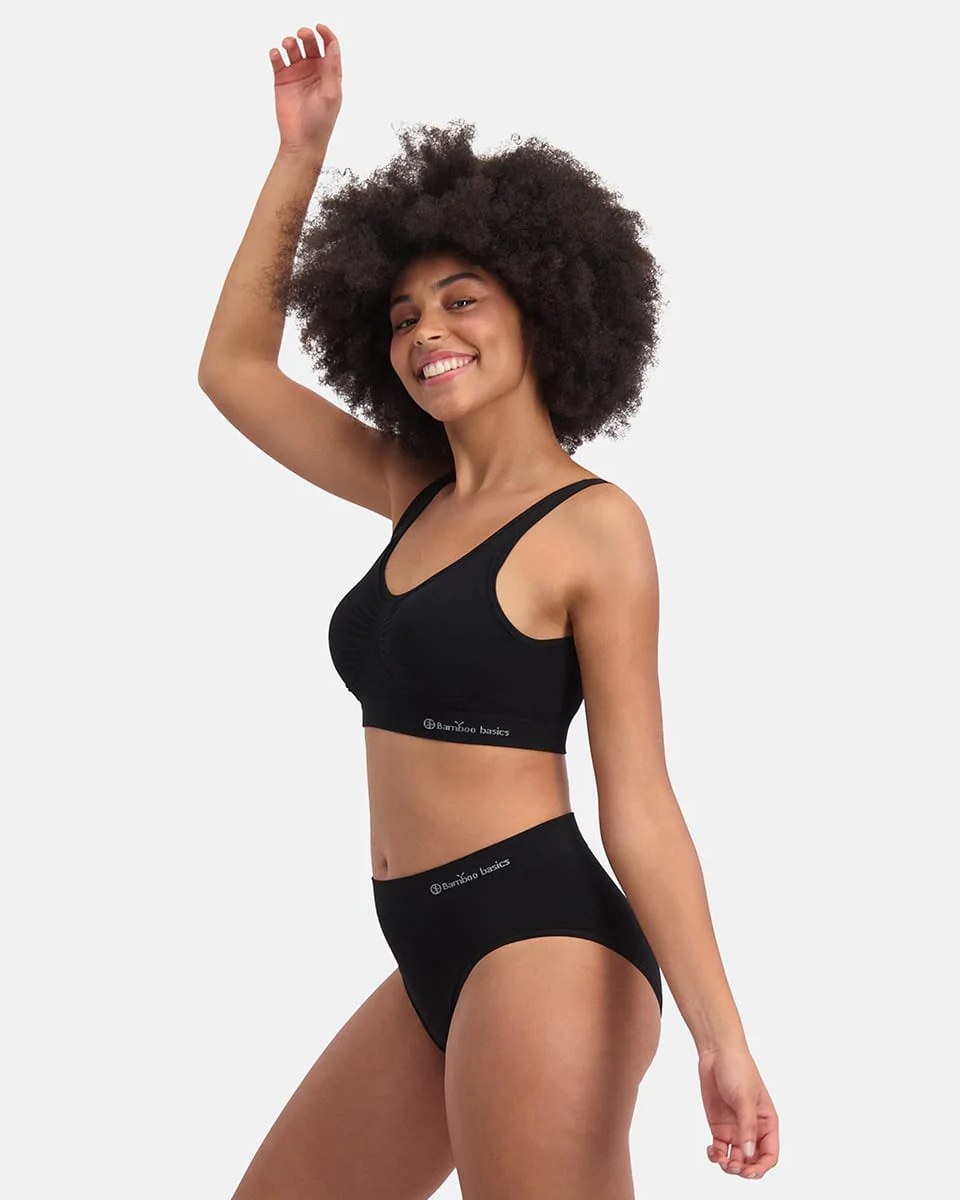
Clothing for painting in the studio
Short answer: In the studio you alternate between standing and sitting, reaching towards the canvas and getting paint on your clothes. Trousers with room to move, soft layers and clothes you are not afraid to stain make it easier to focus on the picture itself.
Moving in front of the easel
Painting is more physical than many people think. You step back and forth to see the picture from a distance, reach up to the top corner and bend down to mix colours on the table. Over an afternoon that adds up to a great many movements. Your clothes should follow along without pulling at the knees and hips. Stiff trousers and narrow skirts restrict you, while soft knits leave room to stand, sit and crouch as the work demands.
Soft trousers for long sessions
Many painters prefer soft trousers with an elasticated waist, because they are comfortable both standing and sitting. Training trousers made of viscose from bamboo are light and stretchy and do not feel heavy even after several hours. See bamboo training trousers for women. Choose a style with a little room at the knee so you can sit on a low stool without the fabric pulling. Leggings are an alternative if you like a closer fit. See bamboo leggings for women.
Heat in summer
Studios under the roof or with large windows can become very warm in summer. When the sun hits the glass the temperature rises fast, and paint dries faster too. Light shorts and a thin top make it more bearable, and you can always add an apron over them. See bamboo shorts for women. Make sure the room is well ventilated, particularly if you work with oils and solvents, so that both you and the painting are comfortable.
Apron or work clothes
Many painters keep one set of clothes only for the studio. Then stains do not matter and you can work freely. A long apron with pockets for brushes and rags protects most of the body. Acrylic paint can often be washed out while it is wet, but once dry it stays put. Oil paint needs other products altogether. The simplest approach is therefore to accept that studio clothes gradually take on a character of their own over time.
Stains and washing
Remove wet acrylic paint with cold water and a little soap as quickly as possible. Do not rub too hard, as that can push the colour deeper into the fabric. Oil paint must be treated with a suitable product before washing, and rags soaked in oil and solvent must be stored safely, as they can catch fire on their own. Then wash the clothes at 30 to 40 degrees. Viscose from bamboo handles a normal wash, but avoid bleach.
Comfort helps concentration
When your clothes do not pinch, itch or overheat you, you forget them. That is exactly the goal when painting: to sink into colour and form without thinking about your body. Soft fabrics, room to move and layers that come off easily are a simple recipe. If you have a permanent studio, hang a set of clothes on a hook by the door. Then you are ready the moment you walk in and pick up a brush.
Frequently asked questions
Can acrylic paint be removed from clothing
While it is wet, often yes, with cold water and soap. Once it has dried it is difficult, so act quickly.
Why are rags with oil paint dangerous
Oil and certain solvents can build up heat as they dry in a pile. Lay them flat to dry or keep them in a closed metal container with water.
Are leggings or training trousers better
It is a matter of taste. Leggings fit closely while training trousers give more air. Both work well if they are soft and stretchy.
You can find the full range at Bamboo-Clothing.com.