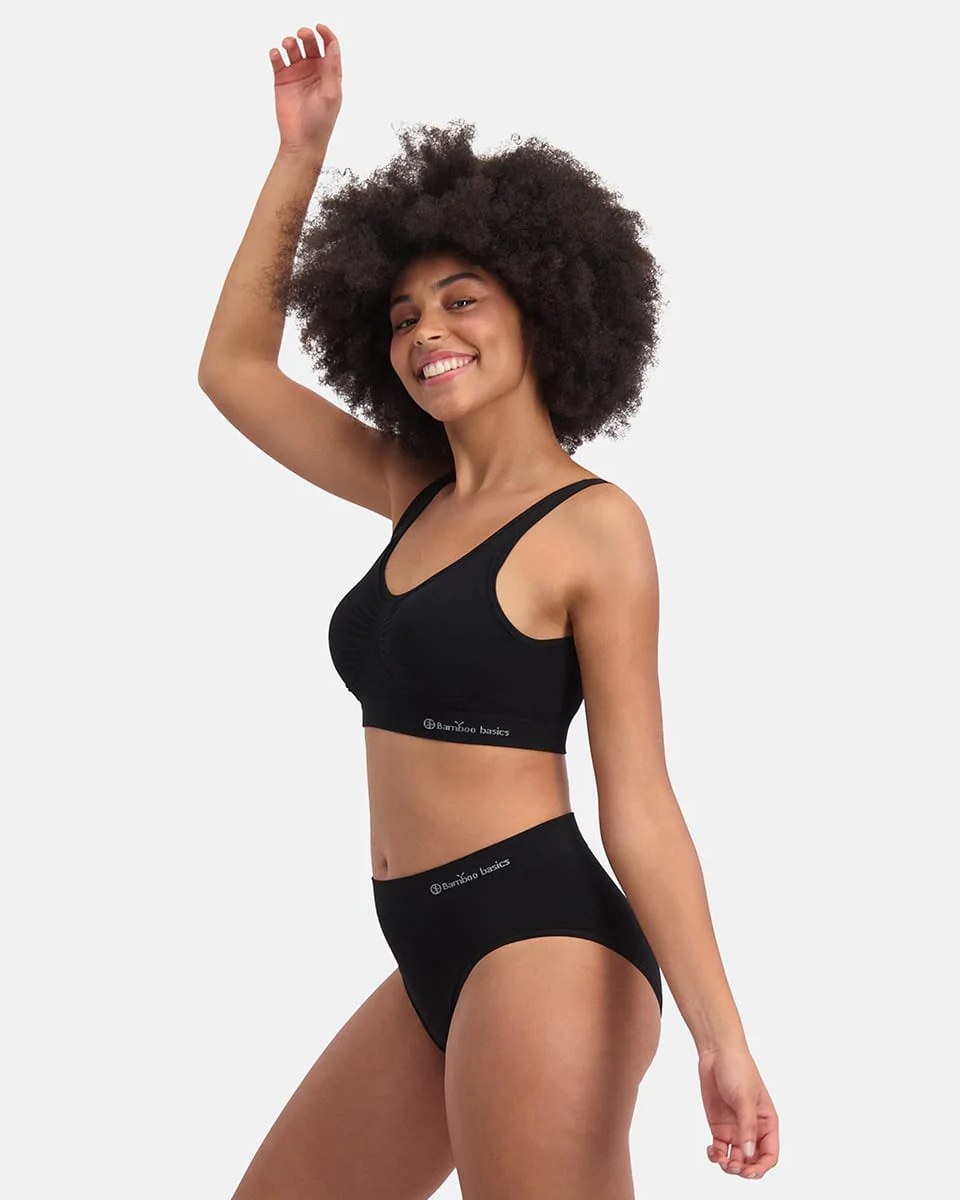
Clothing when the skin has eczema
Short answer: Choose smooth, fine fibres without a rough surface, and avoid thick seams. Wash without fragrance and add an extra rinse. Persistent eczema should be assessed by a doctor.
A smooth surface causes less irritation
Rough fibres rub against skin that is already irritated, and every movement adds to the discomfort. Smooth fibres like bamboo viscose create far less friction against the skin, both at rest and in motion through the day. See bamboo underwear for women, where the material is chosen for exactly this reason.
Seams are pressure points
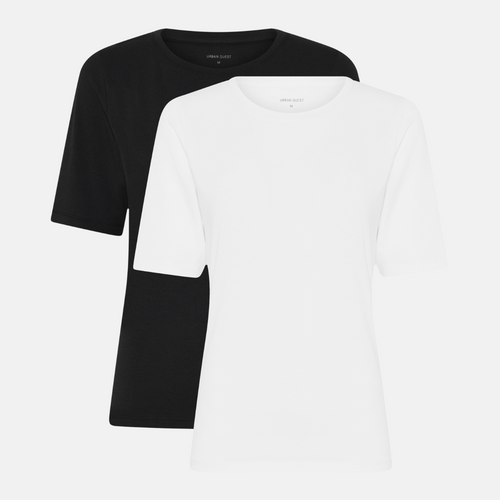
Flat seams are felt less on sore skin than thick, prominent seams that can sit like an edge against the skin all day. Look for styles without visible inner seams, especially around the waist and sleeves. See bamboo t-shirt for women, sewn with flat seams throughout.
Detergent residue can irritate
An extra rinse removes residue that would otherwise sit against the skin all day and can worsen itching. Use a mild, fragrance-free soap, and consider a lower dose than stated on the packaging, so clothing does not feel stiff or rough afterwards.
Loose rather than tight
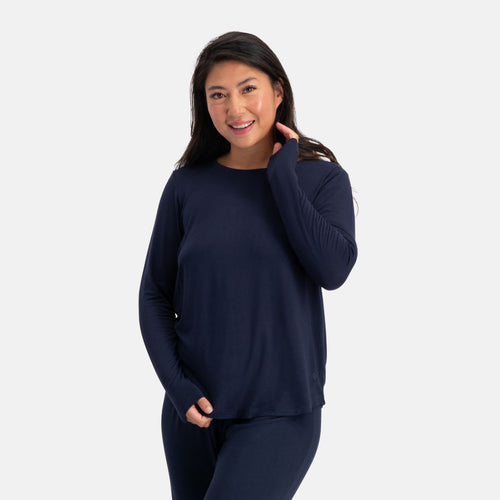
Pressure against the skin worsens itching, especially around the waist, arms and legs, where clothing often fits tightest. Loose clothing gives room and reduces the friction that otherwise arises from ordinary movement through the day. See bamboo clothing for women, available in loose fits.
Natural fibres at night
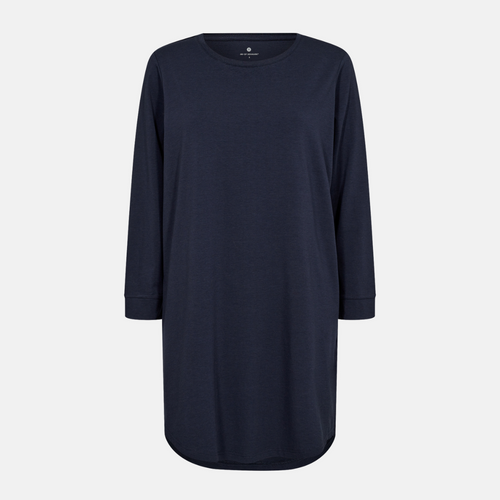
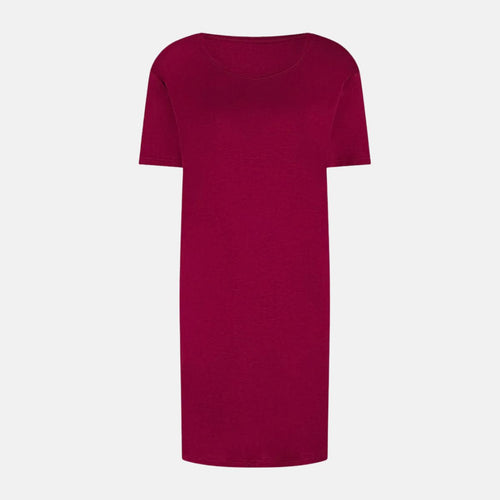
At night, skin rests against clothing for many hours without a break, and friction unnoticed during the day can feel more pronounced at night. Soft, smooth sleepwear reduces this continuous rubbing. See bamboo sleepwear for women, made from a fine material.
Temperature and sweat worsen itching
Overheating can trigger or worsen itching for many with eczema. A material that breathes and moves moisture away from the skin makes it easier to hold a steady temperature, day and night, without sweating unnecessarily.
Wash new clothing before wearing it
New clothing can carry residue from production that may irritate sensitive skin on first contact. Always wash new clothing at least once without fabric softener before it sits close to the body, especially when skin is already under strain from eczema.
Few good pieces rather than many
It is easier to rely on a few materials that have proven kind to your skin than switching between many different ones. Choose two or three styles you know work, and wear them again rather than experimenting with new, unfamiliar clothing.
When to see a doctor
For persistent or worsening eczema, or if the skin becomes weeping or feels warm to the touch, a doctor should assess it. Clothing and material choices can ease daily life, but they do not replace a professional assessment of the skin.
Frequently asked questions
What clothing is best for eczema?
Smooth, fine fibres in a loose fit without thick seams, washed without fragrance. Bamboo viscose is often chosen because it creates less friction against irritated skin.
Does an extra rinse help?
Often yes. Detergent residue in the fabric sits against the skin all day and can irritate. An extra rinse without fabric softener often makes a noticeable difference.
When should you see a doctor?
For persistent or worsening eczema, or if the skin becomes weeping. Contact your doctor, who can assess whether treatment should be adjusted.
You can find the full range at Bamboo-Clothing.com.