Duvet covers in Danish sizes
Short answer: Short answer: The cover needs to fit the duvet, not the bed. The common sizes are one hundred forty by two hundred and two hundred by two hundred twenty.
The duvet decides the size
A single duvet is typically one hundred forty by two hundred centimeters, regardless of whether the bed itself is ninety or one hundred centimeters wide. A double duvet is two hundred by two hundred twenty. If you have a long duvet, covers exist in two hundred twenty length for both of the widths mentioned.
Too big or too small
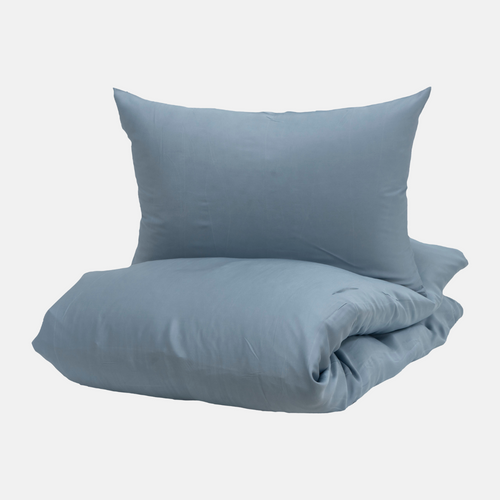
If the cover is too big, the duvet bunches up at one end and leaves an empty corner without filling. If it is too small, the duvet gets compressed and insulates worse, because the filling cannot spread out fully. Both are felt most clearly on the first night, when the difference is greatest. See bamboo bedding .
The closure
Most covers close with buttons or with an envelope opening without buttons or a zipper. An envelope opening is the easiest way to get the duvet in, while buttons hold best when you move around a lot during the night. See bamboo pillowcases .
A set or separate pieces
If you buy a set, you get a cover and a pillowcase that match in color and pattern. If you have two duvets in the same bed, you need two sets for one bed, one for each duvet. See home and homewear in bamboo .
Why the sizes are what they are
The two standard sizes come from a time when most beds had fixed duvet measurements, and they have since become a de facto standard in stores. That makes it easy to find covers, but it requires that you know your own duvet size before you shop.
Sizes from abroad
If you travel a lot or bought a duvet abroad, you may come across sizes other than the common ones. Always measure your own duvet instead of relying on a country's standard, since the differences can be several centimeters in either direction.
Filling and cover size
A duvet with a lot of filling takes up more space than it measures flat on the floor, and a cover that only just fits flat can therefore feel tight in practice. Consider a size slightly above the smallest one if your duvet has extra filling or several layers.
Washing and storage
Wash the cover separately from the duvet itself, which often only needs airing and less frequent washing. Store clean covers together with the matching pillowcase as a set, so you always have a matching pair ready without having to search for it.
Changing by season
Many people change their cover by season, with a thinner fabric in summer and a warmer one in winter. The sizes do not change, but the weight of the fabric makes a noticeable difference to how warm you sleep, regardless of the cover's size.
Frequently asked questions
How much does a cover shrink
A few percent in the first wash, depending on the fabric. Do not choose a size that only just fits if you want to avoid it feeling tight afterward.
Can a cover that is too long be used
Yes, but the duvet gathers at the bottom over time. A button or loop in the middle can help hold the duvet better in place inside the cover.
What if my duvet has an unusual size
Then measure it and buy according to that number. Covers exist in more sizes than the two common ones, especially at specialist retailers.
You can find the full range at Bamboo-Clothing.com.