Flatlock and why it does not chafe
Short answer: In a flatlock the two fabric edges are laid against each other instead of on top of each other. The seam therefore builds up almost nothing and cannot press against the skin, even when the garment fits close and is worn under other layers all day.
Edge to edge
In most seams two pieces of fabric are laid on top of each other and sewn together, which gives a double thickness along the join. In a flatlock the two edges are butted together instead. The join ends up as thin as the fabric itself, and that is the whole idea behind the seam.
How the join is held
The two parts are butted together and locked by threads that run across the join like small bridges. The threads pull the edges toward each other without laying them over each other. The result is a flat join where you can feel the threads, but no ridge of fabric pressing into the skin.
No seam ridge inside
There is no seam ridge inside, and the fabric lies at the same thickness throughout. An ordinary seam has a strip of extra fabric that is folded to one side and can chafe. With flatlock that strip is absent, so nothing can fold into creases under your clothes.
Why it is chosen in underwear
Underwear and base layers are under pressure from other layers all day. A seam that builds up two millimetres can leave a mark after a few hours. Flatlock is one way to avoid that. See bamboo sweatpants for men and look for the seams yourself.
What it cannot do
A flatlock is a little weaker than an overlock with the same thread, because there is no double edge to hold on to. The threads alone hold the join, so they carry more strain when the fabric is pulled hard. It is a trade between comfort and strength, and worth knowing.
Why rarely in crotch seams
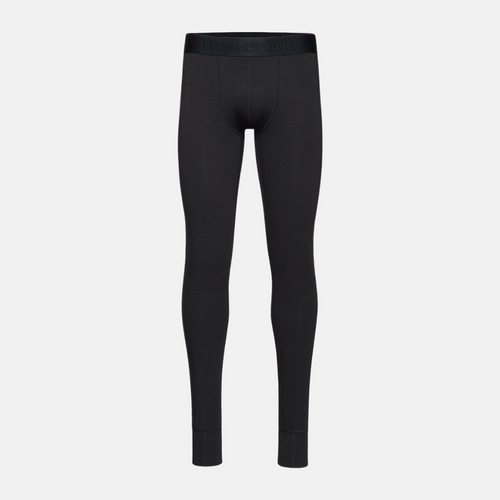
That is why flatlock is rarely used in crotch seams, where several pieces of fabric meet and the pull is greatest. There you need a seam that holds as much as possible. Where the seam sits more quietly, flatlock is a good choice. See bamboo underpants for men and bamboo long johns.
How to tell if a seam is flatlock
The seam looks the same on both sides, like two rows of stitches across the join. If you cannot feel an edge inside and the join lies flat with no extra strip of fabric, there is a good chance it is flatlock. If you are unsure, look at the inside.
Flatlock is not the same as seamless
Flatlock is sometimes called an almost invisible seam, but it is not the same as seamless. There is still a seam, it just does not build up. A seamless garment is knitted in one piece without joins, while a flatlock joins two pieces with a flat seam.
Care and small repairs
Wash the garment according to the care label and avoid pulling hard on the seams. A flatlock is hard to repair without the right machine, but a narrow zigzag holds as an emergency fix. If you find an open seam on a new garment, take a photo and ask customer service before repairing.
Frequently asked questions
How can I tell if a seam is flatlock?
The seam looks the same on both sides, like two rows of stitches across the join. You also cannot feel an edge inside, because there is no seam ridge.
Is flatlock the same as seamless?
No. There is still a seam, it just does not build up. A seamless garment is knitted in one piece, while a flatlock joins two pieces with a flat seam.
Can flatlock be repaired?
Hard without the right machine. A narrow zigzag holds as an emergency fix, but it looks a little more visible and less smooth than the original seam.
You can find the full range at Bamboo-Clothing.com.