From fibre to yarn on the spinning machine
Short answer: Loose fibres are straightened, drawn thin and twisted together into a thread. Three steps, and they decide whether the fabric later feels smooth or rough. Once you know the steps, it is easier to see why two garments of the same fibre can feel very different against the skin.
From viscose to thread
Bamboo fabric starts as viscose fibres that must become a thread before they can be knitted. The fibre itself is only short pieces with no strength, and it is spinning that holds them together. The process has three steps, and each one leaves its mark on the fabric you finally wear on your body.
From pile of fibres to sliver
Viscose fibres arrive as short pieces of around three to four centimetres. They are combed in the same direction and gathered into a loose strand that looks like a thick cord with no strength. The strand is the start of all knitted clothing, and if the fibres do not lie properly, it cannot be corrected later in the process.
Combing gives direction
Combing makes sure the fibres point the same way. If they lie in every direction, the thread becomes coarse and uneven and the fabric gets a busier surface. With well-aligned fibres the strand becomes even, and that is a precondition for the next step to give a smooth and uniform thread all the way along.
Drawing and twisting
The strand is drawn thinner in several passes until it has the desired thickness. Then it is twisted, and only then does the thread gain enough strength to withstand a knitting machine. Without twisting, the fibres slide apart. See bamboo tennis socks for women as an example of clothing where a strong thread matters.
Why spinning can be felt
Even spinning gives a thread of the same thickness all the way, and that shows as a calm surface in the fabric. An uneven thread gives small knots that can be felt against the skin. So it is not only the fibre that decides how soft something feels, but also the way it has been spun.
What you can see in the fabric
Hold the fabric up to the light and look at the surface. If the threads are uniform, the rows of stitches look regular and the fabric appears calm. If there are thick and thin places, the pattern becomes more irregular. You do not need to be an expert to get a feel for it when you compare two garments side by side.
The link to knitting
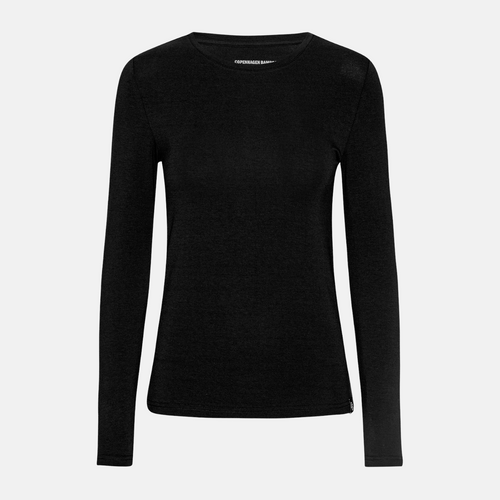
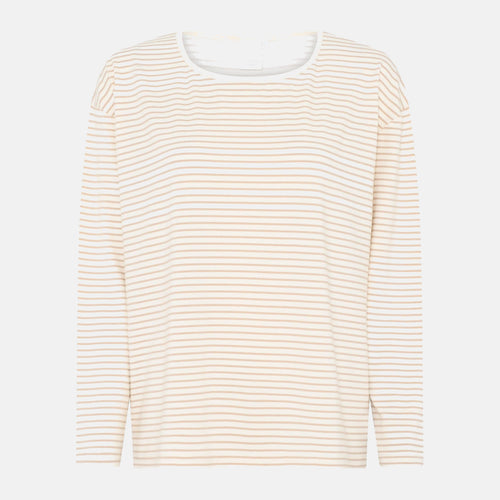
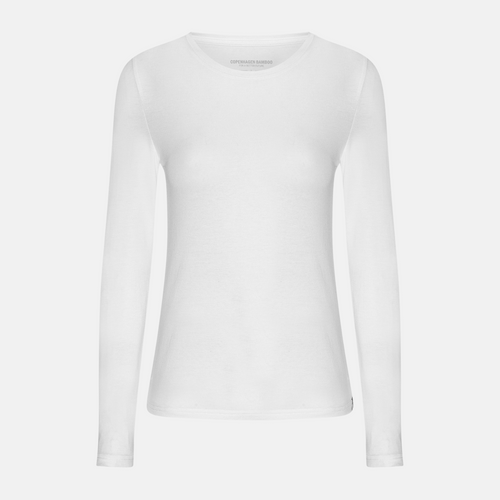
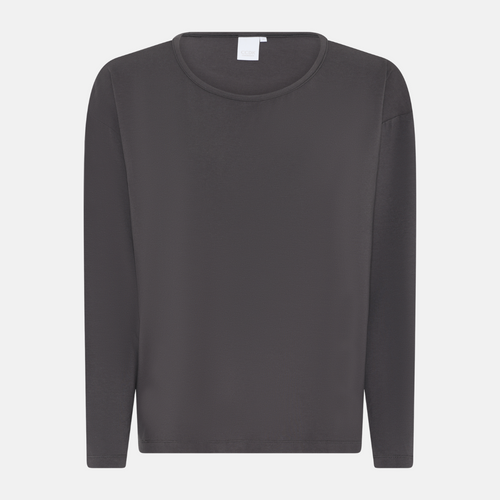
The thread becomes fabric on a knitting machine, and here the evenness of the thread matters a great deal. A strong and uniform thread runs smoothly through the machine and gives a neat knit. See bamboo tops for women and women's long-sleeved bamboo t-shirts, where the surface of the fabric is easy to feel.
What it means for you
As a customer you rarely have access to details about the spinning, but you can feel the result. A fabric that feels smooth and even has usually been spun with care. Try the garment on and feel the surface with your fingers. The first impression often tells you more than a long description on a page.
Fibres become your clothes
From short fibres to a thread that can be knitted takes a series of small steps. Each step matters, and none can be skipped. When you know the process, it becomes easier to understand why fabrics feel different, and why the difference often sits in a thread you never see.
Frequently asked questions
How long is a single viscose fibre?
Typically between three and four centimetres. The length is chosen so the fibres suit the machines and can be twisted into a thread that does not break along the way.
Can you see the spinning in the finished fabric?
Yes. Hold the fabric up to the light and you see the thread as small regular arcs. When the threads are even, the rows look calmer and the surface more uniform.
Why is the yarn twisted at all?
Without twisting, the fibres slide apart and the thread breaks in the machine. The twist holds the short fibres together so the thread can be knitted into fabric and withstand use.
You can find the full range at Bamboo-Clothing.com.