Heat conduction in a fibre
Short answer: All fibres conduct heat, but they conduct it slowly, and the differences between fibre types are small. That is why the construction of a fabric often matters more than the material itself when you want to know how a garment feels on the skin and how well it keeps you warm.
What heat conduction means
Heat conduction means that heat travels through a material from the warm side to the cold side without the material itself moving. When you put on a jumper, heat passes from your skin into the fabric and on towards the room. How fast that happens depends on the material, the thickness and how closely the fabric sits.
Fibres are poor conductors
Cellulose, wool and polyester all conduct heat worse than water and better than air. None of them insulates by itself, but none draws heat away especially well either. The differences between them are small, so you rarely feel them when the build of the fabric is otherwise the same.
Air does most of the work
Still air conducts heat very poorly, and it is the air that insulates in a garment. The fibres simply hold the air in place between the threads. That is why a loose knit or brushed fabric often feels warmer than a thin, flat one, even when the fibres are exactly the same.
Contact area decides the feel
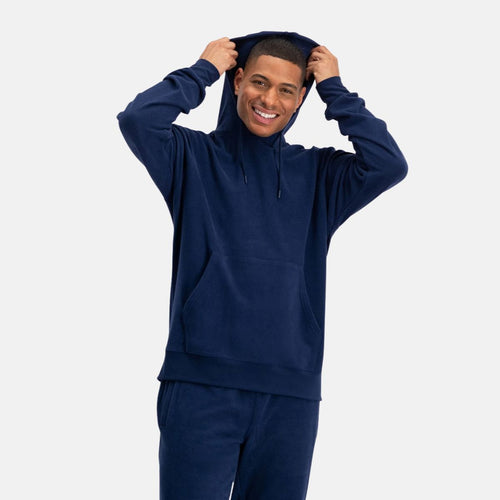
A smooth fabric touches the skin in many places and carries heat away quickly. A textured fabric touches fewer places and feels warmer in the first moments. That is one reason a soft, slightly rough surface feels calm in cool weather. Have a look at a bamboo hoodie for men for everyday wear.
Why viscose feels cool
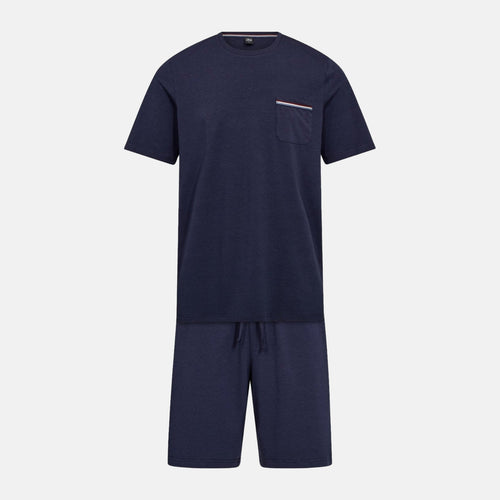
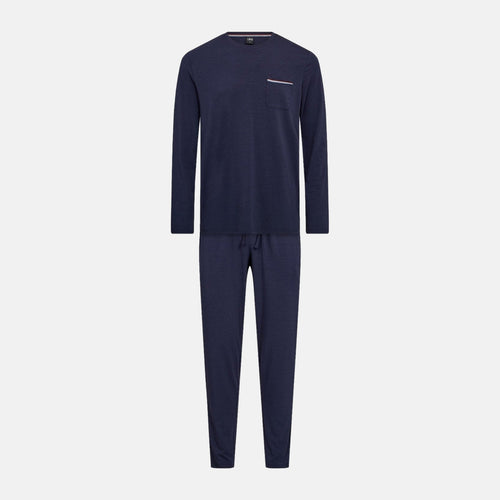
The surface of viscose is smooth and dense, and it makes good contact with the skin. That gives the cool sensation the moment you put a garment on. After a few minutes the fabric has warmed to skin temperature and the feeling fades. See also bamboo loungewear for men and sleepwear.
Why metal feels cold
A metal object and a jumper can have exactly the same temperature in a room, yet the metal feels far colder. The reason is that metal conducts heat hundreds of times better than textile and so pulls warmth out of your fingers. The feeling tells you about conductivity, not about how cold the object really is.
Thickness and structure matter more
A thick layer slows heat more than a thin one, because the heat has further to travel. A fabric with a lot of trapped air slows it even more. When you compare two garments, thickness, weave and knit size usually explain the difference in warmth, not whether the label says bamboo, cotton or something else.
Moisture changes the picture
Water conducts heat far better than air. When a fabric is damp, water fills the tiny spaces where air used to sit, and heat flows away from the skin faster. That is one reason wet clothes feel cold even when they are thick. A fabric that releases moisture quickly keeps the skin more comfortable.
How to use this day to day
Choose smooth fabrics for a cool feel in warm weather, and fabrics with some structure or a brushed surface when you want warmth. Think in layers: a thin layer next to the skin and a slightly thicker one over it traps more air than one thick layer. That lets you adjust to the day without changing everything.
Frequently asked questions
Does the fibre matter at all?
Yes, but less than thickness, structure and moisture. The conductivity of the fibre types is so close that the build of the fabric usually decides how a garment feels and how well it keeps you warm.
Why does metal feel cold?
Because metal conducts heat hundreds of times better than textile. It carries warmth away from the skin so fast that the brain reads it as cold, even though metal and textile share the room temperature.
Can a fabric feel cool and still keep you warm?
Yes. It can have a smooth surface that feels cool at first and still hold plenty of air in its structure. A brief cool moment is then followed by steady warmth once the fabric reaches skin temperature.