Heavy foot perspiration
Short answer: A foot can give off up to a quarter of a litre of fluid a day, and the sock has to move that amount on, or it ends up in the shoe. A fabric that transports moisture onward does more than one that only absorbs. Three simple habits help: change socks, change shoes and let shoes dry.
How much it actually is
The foot has more sweat glands per square centimetre than anywhere else on the body. On an active day in closed shoes, a quarter of a litre for both feet together is a realistic figure. That is more than most people imagine, and it explains why socks and shoes turn wet when moisture has nowhere to go.
Why it ends up in the shoe
Sweat does not disappear on its own. If the sock is dense and holds on to moisture, it is pushed out into the shoe, where it stays in the insole and the fabric. The shoe turns damp from the inside, and the damp is still there the next day. This is often where the smell problem begins.
The sock must transport, not just absorb
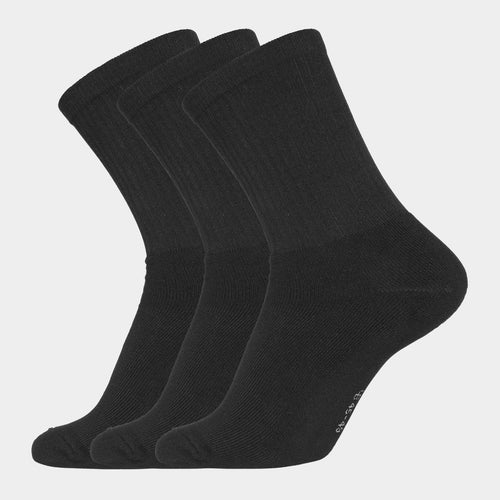
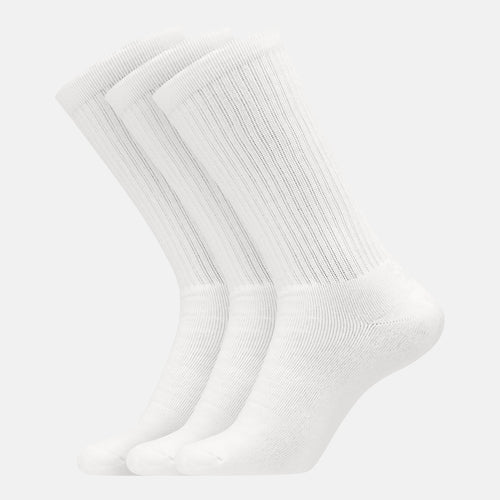
A fabric that absorbs and holds on to moisture gets wet and stays wet. That goes for cotton too, which absorbs well but releases moisture slowly. The foot gets wet and stays that way. Bamboo viscose takes up moisture and passes it on to the air, so the sock does not turn into a wet cloth. See bamboo socks for men.
Habit one: change socks
The most effective single step is changing socks, even in the middle of the day. Carry a dry pair in your bag and change when you feel the foot is wet. It takes a minute and does more than almost anything else.
Alternate between two pairs of shoes
Let shoes dry fully between wears. If you have two pairs to alternate, each pair gets a whole day to dry. Put them somewhere with airflow, not in the closed cupboard by the door. A shoe that is still damp when you put it on starts the day over again with the moisture.
Tennis socks for active days
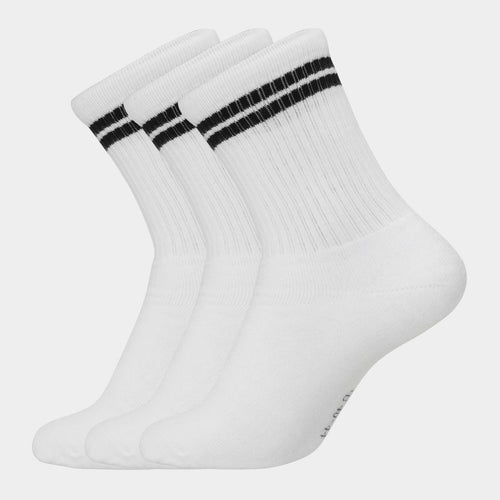
If you are active or stand a lot, the foot takes on more moisture than on a quiet day. Choose a sock that suits your shoe and does not fold or rub. See bamboo tennis socks for men if you wear sports shoes every day and want to keep the foot dry.
Is cotton bad
Cotton is not bad, but it is not ideal for the foot, because it holds on to moisture. The sock absorbs well and releases it slowly, so the foot gets wet and stays that way. On a short walk that is fine, but on a long day in closed shoes it is a drawback. The same principle applies for women: bamboo socks for women.
Insoles you can take out
Removable insoles can be taken out and dried, and that helps with the smell. Take them out in the evening so they get air, and let them dry fully before they go back in. If you have two pairs of insoles, you can alternate them like the shoes.
When it is extreme
If you sweat far more than you think is normal, or the smell stays the same despite good habits, there may be another explanation. Talk to your doctor if it bothers you or the foot starts to crack or itch. Clothing and habits can help, but we cannot diagnose or promise the smell will go away.
Frequently asked questions
Does changing socks midday help
Yes, a lot. It is the most effective single step, because you remove the moisture the sock has taken up. Carry a dry pair in your bag and change when the foot feels wet. It takes less than a minute.
Are cotton socks bad
They absorb well but release moisture slowly. The foot gets wet and stays that way. For a short day that is fine, but on long days in closed shoes a fabric that transports moisture onward is the better choice.
What about insoles
Removable insoles can be taken out and dried, and that helps with the smell. Take them out in the evening, let them dry fully, and alternate between two pairs if you can. Then the foot starts the day in a dry shoe.
You can find the full range at Bamboo-Clothing.com.