How a print wears off
Short answer: A print sits on top of the fabric as a thin layer. That layer is bent, rubbed and heated with every wear and wash, and in the end it cracks and flakes off. The fabric is not giving up, the layer on top is, because it does not move quite like the fabric beneath.
A thin layer on top of the fabric
A print is ink that sits as a thin layer on the surface of the fabric. It holds on, but it is not part of the yarn itself. So it does not follow the fabric in everything it goes through. Whatever bends the fabric bends the layer too, and the layer has less give.
The print does not follow the fabric
The fabric stretches when you move, but the ink is stiffer. With every movement the layer is pulled, and microscopic cracks appear that you cannot see at first. Over time the cracks join up and show as fine lines, and eventually the ink comes loose in flakes.
Every wash takes a little
Water, detergent and friction from other clothes in the drum all work on the print. One wash makes almost no difference, but many washes add up. A print that looks fine after the first washes can look worn after many, especially if the wash is hot or mixed with rough fabrics.
Heat is the fastest way to damage
Tumble dryers and irons soften the print and make it stick to itself or to the drum. Softened ink can drag along when the surface moves, leaving creases and shiny patches. Once a print has turned hot and tacky, the damage cannot be undone. See all of it under bamboo clothing for men.
That is why you turn the garment
Wash and dry inside out, so the print does not rub against other clothes or the drum wall. It is the simplest way to extend the life of a garment, and it costs nothing. Wash printed clothes with other soft items, and avoid mixing them with zips, hook-and-loop fasteners or other hard surfaces.
Which prints last longest
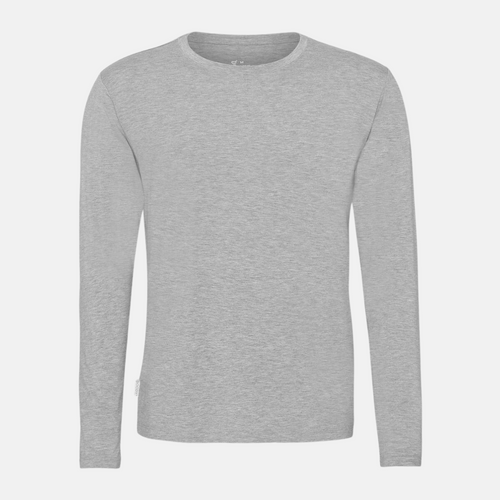
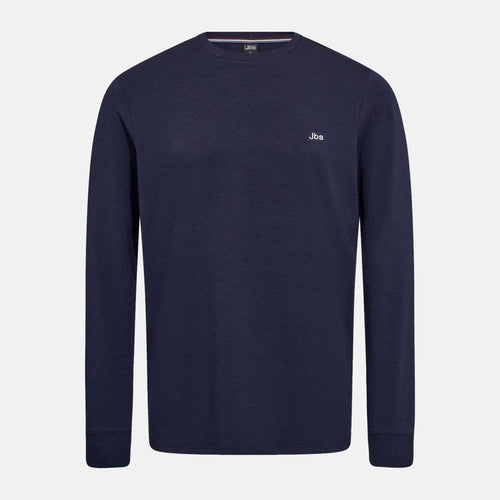
Prints that are printed into the fabric rather than laid on top like a film follow the fabric's movements better and wear more slowly. A thick, rubbery print feels like a layer on top, while a soft one almost disappears into the fabric. See bamboo T-shirts for men and bamboo long-sleeve T-shirt for men.
Can you iron a print
Never iron directly on the print. If the garment needs ironing, turn it inside out and use a low temperature, so the heat does not reach the ink. If you are unsure what it tolerates, follow the care label in the neck or side seam. That avoids a shiny iron mark in the print.
Why a print cracks in the folds first
Bending is greatest in the folds, for example at the elbow, the waist and where the garment drapes over the shoulder. The print is stretched and pressed most there, so the first cracks often show up in those places. Turning the garment inside out when washing can slow the wear.
Checking a print before you wear it
To judge a print, stretch the fabric gently across it and let go. A print that shows fine lines at once or feels stiff will give way sooner than a soft print that follows the fabric. Check the edges too, where a poor print often starts to lift.
Frequently asked questions
Which prints last longest
Prints that are printed into the fabric rather than laid on top like a film. They follow the fabric better and feel soft when you run a finger over them.
Can you iron a print
Only inside out and never directly on the print. Use a low temperature, and follow the care label if you are unsure what the garment tolerates.
Why does a print crack in the folds first
Because the bending is greatest there. At the elbow, waist and shoulder the print is stretched and pressed most, so that is where the first small cracks show.
You can find the full range at Bamboo-Clothing.com.