How bamboo viscose is made
Short answer: The bamboo stalks are shredded into pulp, dissolved chemically into a thick liquid, pushed through fine nozzles and hardened into threads that are spun into yarn.
From plant to chips
The bamboo is harvested and mechanically shredded into chips. That is the raw material the whole process builds on, and this is where the difference between plant and finished fabric begins. The chips must be even before they can be cooked further.
Cooking into cellulose pulp
The chips are cooked with chemicals until only the cellulose remains as a thick pulp. This is the same first step as other viscose production, whether the raw material is bamboo, beech or eucalyptus. See how bamboo viscose is made for the full process.
Dissolving into liquid
The cellulose pulp is chemically dissolved into a thick, spinnable liquid. This step is what turns viscose into a regenerated fiber rather than a natural fiber like cotton, where the fibers are not dissolved and rebuilt along the way.
Why regenerated is the right word
Because the fiber is completely rebuilt along the way, it is called a regenerated cellulose fiber rather than a natural one. The raw material is natural, but the fiber's path from plant to thread is a chemical process, not just a mechanical one. See facts about bamboo.
Spinning through nozzles
The thick liquid is pushed through nozzles with many very fine holes. Each nozzle forms one long, thin thread, and the number of holes decides how many threads form at the same time.
Hardening in the bath
The threads run into a bath where they harden from liquid to solid fiber. This is where the liquid cellulose turns into something resembling a hair, and this step gives the fiber its smooth surface.
From fiber to yarn
The hardened threads are spun together into yarn, just like other textile fibers. From here bamboo viscose follows the same path as other viscose fabrics, through weaving or knitting into the finished textile.
This is why the label says viscose
Labeling rules require the fiber's name on the item, and after processing the fiber is viscose, not bamboo. Bamboo is only the raw material, not the fabric that ends up in the finished garment in your hand.
What it means for the fabric
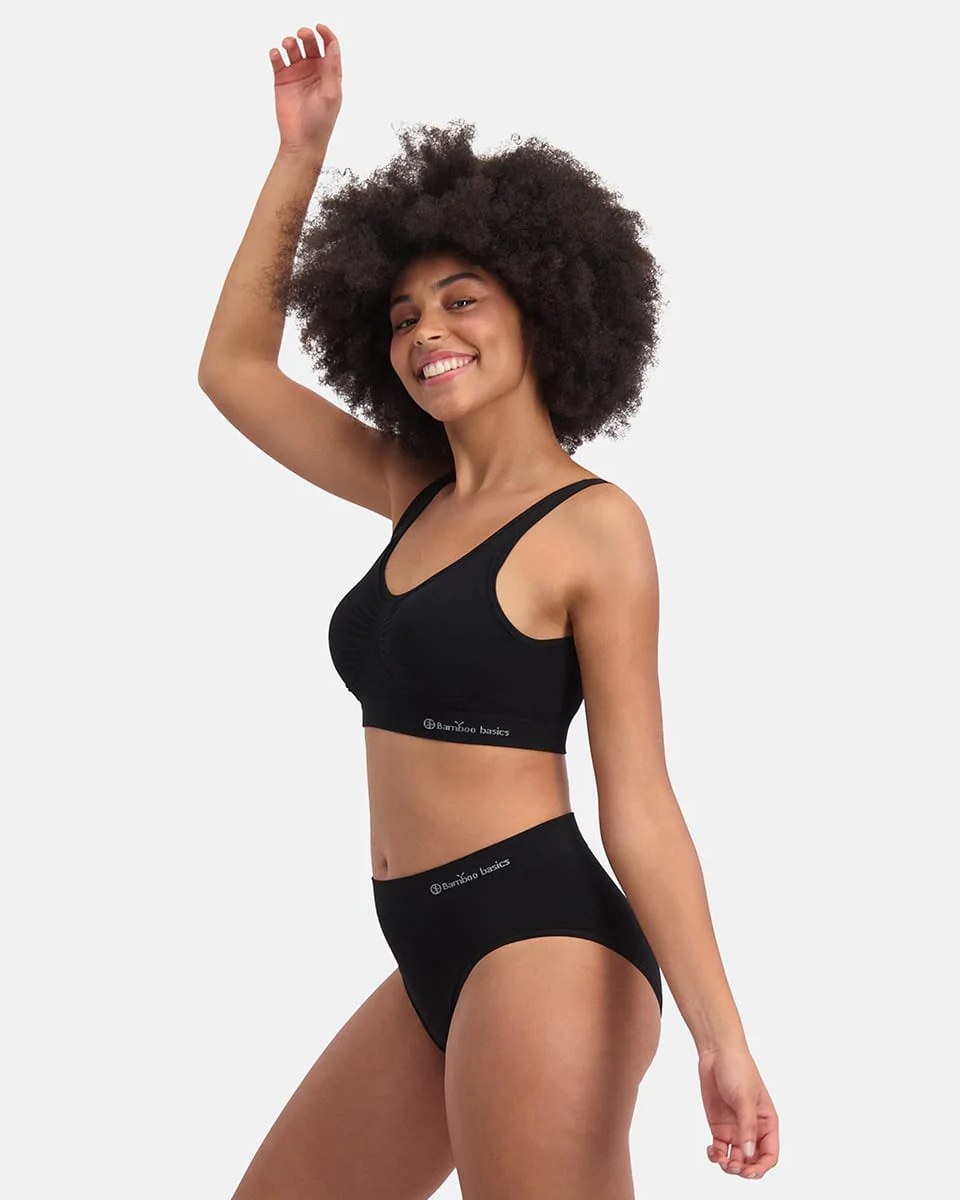
The smooth surface from nozzle spinning is why the fabric feels smooth and cool against the skin. It is the same quality you can feel in bamboo underwear for women, where the softness comes directly from this process.
Frequently asked questions
How is bamboo viscose made?
The bamboo is shredded into pulp, dissolved chemically into a liquid, pushed through nozzles and hardened into threads, which are then spun into yarn and further into fabric.
Is bamboo viscose a natural fiber?
It is a regenerated fiber. The raw material from the bamboo plant is natural, but the fiber itself is chemically rebuilt along the way and is therefore not a natural fiber in the classic sense.
Why does the label say viscose instead of bamboo?
Because labeling rules require the fiber's name after processing, and bamboo is only the raw material. After the process the fiber is viscose, and that is the name the label must carry.
You can find the full range at Bamboo-Clothing.com.