How less clothing ends up in the bin
Short answer: Buy fewer and better garments, repair the small faults, and hand in the rest for collection instead of putting it in the bin. Those three steps cover most of it. None of them asks for more than a little attention.
Buy fewer
A garment worn a hundred times replaces five worn twenty times. It is the biggest single factor, and it comes before everything else. Every time you skip buying something you would not wear, you spare yourself a garment that later has to be handed in or thrown away.
Before you buy
Ask yourself when you last wore something similar and whether you own something to go with it. A garment that suits only one occasion is rarely worn enough. Choose something you can wear for several purposes, so you put it on again and again. See bamboo polos for men.
Repair the small faults
A loose seam, a missing button and a small hole can each be fixed in ten minutes with needle and thread. Those are the three faults that most often make people discard something that is otherwise intact. It is not hard, and most people learn it by trying once.
How to do it
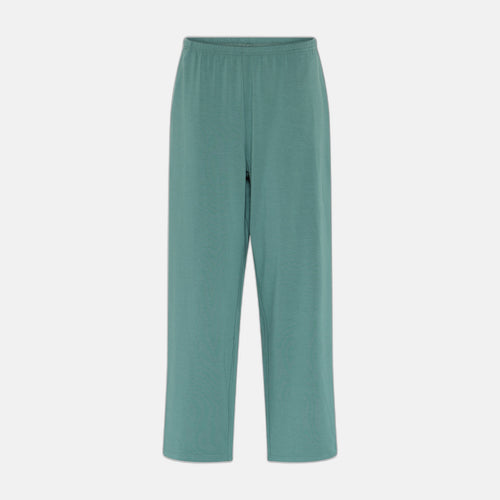
Take a needle and thread in a matching colour and sew slowly with small, close stitches. For a loose seam, sew along the old seam, and fix a button by passing the thread through the holes several times. A small hole can be closed from the inside. Bamboo pants for women with a loose seam are a good example.
When it cannot be repaired
Sometimes the fabric is so thin or worn that a repair will not hold. Then the garment has reached its limit as clothing, but the fabric can still serve another purpose. It can become a cloth or a cushion cover, if the fabric is whole enough. That is still better than throwing it away.
Hand in the rest
Even damaged textiles can be handed in for collection and become something else. That includes worn pieces such as towels, which is why collection beats the bin. Put everything in a bag and make sure it is clean and dry. See bamboo towels.
What belongs in the bin
Only what is so contaminated that it cannot be handled. Wet, mouldy or heavily oiled textiles belong here, while everything else can be handed in. The bin is only the right place when the clothing cannot be processed. When in doubt, choose the option that gives the textile a chance.
Make it a habit
Put a bag in the wardrobe where you place clothes that need repair or hand-in. When the bag is full, deal with it in one go. That turns it into a routine you do not have to think about, instead of a project you keep postponing.
What makes the biggest difference
Buying fewer garments and wearing them longer. That beats everything else, because every garment you do not buy never has to be repaired, handed in or thrown away later. The order is simple: buy less first, then repair, then hand in, and only last put something in the bin.
Frequently asked questions
Can all textiles be handed in?
Clean, dry textiles yes, even damaged ones. Only what is wet or heavily contaminated cannot be used, and it belongs in the bin so it does not spoil anything else.
What belongs in the bin?
Only what is so contaminated that it cannot be handled. Everything else can go to collection, even when it is worn or has holes.
What makes the biggest difference?
Buying fewer garments and wearing them longer. That beats everything else, since every garment you do not buy never needs repair or disposal later.
You can find the full range at Bamboo-Clothing.com.