How long a knit holds its shape
Short answer: A dense knit keeps its shape for years, while a loose knit gives way after a few months. Density decides it, not price. Pull the fabric across and let go: if it springs fully back, the knit is dense enough.
Density decides
When a knit keeps its shape for years, it is rarely down to price. Density decides. A dense knit holds its shape for years, while a loose knit gives way after a few months. Price and label say less than many think, so a close look at the fabric itself is worth more.
What holds the shape
Stitches that sit close together lock each other in place and find it hard to move. When the fabric is stretched, they return to their original position because they have something to hold on to. That is why a dense knit can look the same after many movements, washes and days of wear.
Loose stitches slide
Loose stitches can slide, and each time the fabric is stretched they slide a little further. It does not happen from one day to the next, but it adds up. After a few months the garment is wider than it was, and it no longer fits as it did at the start. That slow change is what makes loose knits give way.
How to test it
Pull the fabric across and let go. If it springs fully back, the knit is dense enough. If it stays wider, the garment will give way with use. The test takes a few seconds and can be done in a shop or at home on something you already own. Try it on bamboo shorts for men too.
Where it shows first
Neckline, armhole and hip height are the three places where the fabric is stretched most often during a day. That is why giving way shows there first. A neckline that starts to wave, or an armhole that sags, tells you the knit is not dense enough. At the hip, the waistband grows wider.
Undershirts and underwear
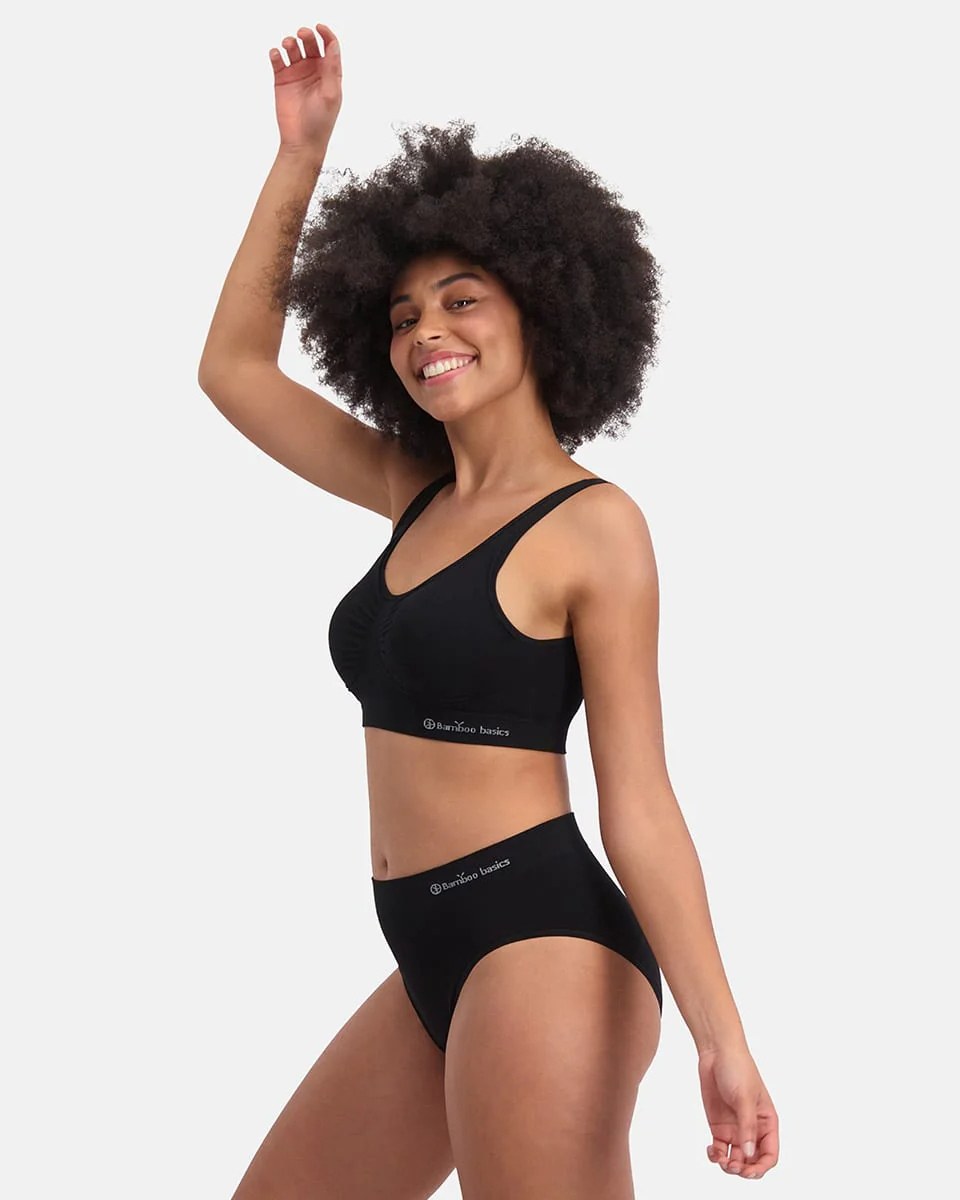
Pieces close to the body are stretched the most, because they follow you all day. That applies to undershirts and underwear, where the fit depends on the fabric springing back after every movement. Look at bamboo undershirts for women and bamboo underwear for women, and do the stretch test on them.
When a knit has stretched out
It can be partly saved. Dampen the garment, shape it with your hands and let it dry flat. That often brings back some of the shape, but rarely all of it. Loose stitches that have once slid do not fully return. Prevention is better than repair, and a dense knit is the best start.
Elastane as a help
Two to five percent elastane makes the fabric spring back by itself. The elastane works like a built-in spring that pulls the fabric together again after each stretch. That does not mean stitches and density are unimportant, but elastane is a good help, especially in pieces meant to sit close to the body.
Keeping the shape
A garment often grows longer over time because it hangs on a hanger while wet. Lay heavy pieces flat to dry, so the weight of the water does not pull the fabric downward. Also avoid pulling at the neckline when you take a garment off. Both habits help the knit keep its shape for longer.
Frequently asked questions
Can a stretched-out knit come back
Partly. Dampen the garment, shape it with your hands and let it dry flat. Loose stitches that have slid rarely return fully, so a dense knit is the best starting point.
Does elastane help
Yes, two to five percent makes the fabric spring back by itself. It helps in close-fitting pieces, but the density of the knit still counts just as much.
Why does a garment get longer over time
Because it hangs on a hanger while wet. Lay heavy pieces flat to dry, so the weight of the water does not pull the fabric downward.
You can find the full range at Bamboo-Clothing.com.