How sweat moves through a fabric
Short answer: Sweat goes three ways. It is absorbed into the fibre, drawn onward between the threads, and evaporates from the surface. A good fabric handles all three, and it is the interplay that decides how dry and comfortable the skin feels along the way.
Into the fibre first
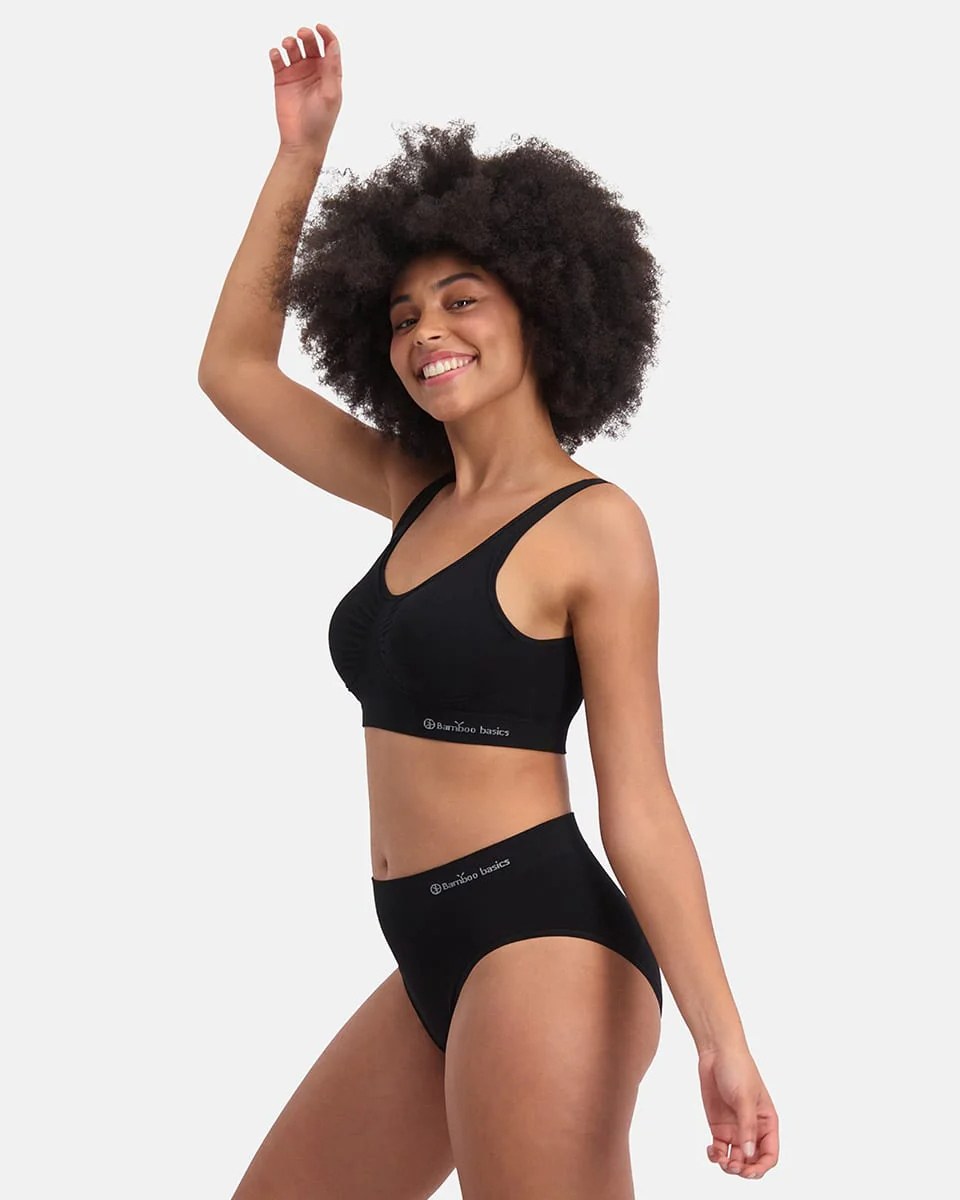
Cellulose fibres draw the first drops into the material itself. That is why the skin feels dry even though there is already sweat in the fabric. The fibre acts as a small buffer that takes the moisture before it reaches the surface. See the bamboo bra without underwire, where the fabric lies close to the skin.
Onward between the threads
When the fibre is nearly saturated, the water is drawn onward through the small gaps between the threads. This spreads the moisture over a larger area so it does not gather in one spot. It makes the fabric less clammy against the skin and prepares the next step. See the bamboo sleepwear for women, where fabric carries moisture away at night.
Out into the air last
From the surface the water evaporates. How fast that happens depends on air humidity, temperature and whether the air is moving. If the air is dry and warm it is quick. If it is damp and still it is slow. This is the last link, and it is where many garments get held back if there is no room for air.
Why all three steps must work
If only one step works, things go wrong. If the fibre absorbs but the water never moves on, the fabric turns heavy and damp. If the water moves but never evaporates, the surface stays wet. Only when all three work together does the fabric feel dry. See the bamboo sports bra, where the whole chain is used during movement.
What stops the process
A dense layer outside can stop everything. Without air exchange the moisture cannot escape, and the water stays in the fabric instead of evaporating. This applies for example under a tight jacket or in a closed shoe. Here it helps to open up, ventilate and give the moisture a way out.
Why cotton feels heavy
Cotton holds on to water and releases it slowly. After sweating it therefore feels heavy, cool and clammy for longer. The fibre takes up moisture, but movement between the threads and evaporation take time. It is no fault of cotton, just a different balance between the three steps that many notice in daily life.
The role of knit and weave
Knitted fabrics have more small gaps and pockets of air than tightly woven ones, and that affects how moisture moves. An open knit lets moisture travel on and evaporate faster, while a dense fabric holds more back. Two garments of the same fibre can therefore feel different, because construction sets different conditions for the three steps.
Change clothes when needed
Does it help to change undershirt midday? Yes. A dry shirt starts the process over, and the fibre can take the first sweat again. On a long or active day it is a simple way to stay dry. It takes nothing more than an extra shirt in your bag.
Using it in daily life
Choose a layer that lies close to the skin and can absorb, and an outer layer that does not seal completely. Ventilate when you can, and let clothes dry properly between wears. Then all three steps get the best conditions and you experience the fabric as dry and calm against the skin.
Frequently asked questions
What stops the process
A dense layer outside. Without air exchange the moisture cannot escape and stays in the fabric. Open up, ventilate and choose an outer layer that lets moisture out when you have the chance.
Why does cotton feel heavy after sweating
Because the fibre holds on to water and releases it slowly. Cotton therefore feels heavy, cool and clammy for longer after sweating than a fabric that moves moisture on faster.
Does it help to change undershirt midday
Yes. A dry shirt starts the process over, and the fibre can take the first sweat again. It is a simple habit if you have a long or active day ahead of you.
You can find the full range at Bamboo-Clothing.com.