How to avoid hanger marks in the shoulders
Short answer: Use a wide hanger that follows the shape of the shoulder, and do not hang knitted pieces. The marks come from weight on too small an area. If they have already appeared, you can usually dampen the spot lightly and shape the fabric back with your fingers.
How the marks appear
The weight of a garment rests on two points, where the ends of the hanger touch the fabric. If the hanger is narrow, all the weight gathers there and the fibres are stretched permanently in exactly those places. That is why the marks show as small peaks in the shoulder, even when the garment is otherwise fine and almost new.
Why narrow hangers are worst
Wire hangers and narrow plastic hangers have small surfaces and pointed ends, so the fabric gets no support around the shoulder. The heavier the garment, the clearer the mark, and the longer it hangs, the harder it is to remove. A wide hanger with a rounded shoulder solves most of the problem right in the wardrobe.
What to do about existing marks
Dampen the spot lightly and shape the fabric back with your fingers while it dries. Leave the garment lying flat so its own weight does not pull it out again. This works best on fresh marks. If they have set for months, they are hard to fix completely. That applies to bamboo pants for women whose waistband has hung in a narrow clip.
What to do from now on
Fold knitwear instead of hanging it, and buy wide hangers for whatever should hang. A hanger with a shoulder of three centimetres or more spreads the weight enough that marks do not appear. Light pieces such as a bamboo tank top for men can lie folded in a drawer, and then the problem never starts.
The wide hanger in practice
A good hanger has a rounded shoulder that follows the line from the neck out to the sleeve. It is often a little thicker in the middle, so the weight rests softly. Choose the size to suit the garment: a hanger much wider than the shoulder pulls the sleeve out, and a narrower one makes exactly the marks you want to avoid.
The towel over the hanger
If you only have narrow hangers, you can widen them with a small rolled towel or a piece of thick fabric wrapped around the bar. That increases the contact area and spreads the weight better. It is a temporary fix, but it works surprisingly well until you have switched to hangers with a proper shoulder.
Which pieces mark most easily
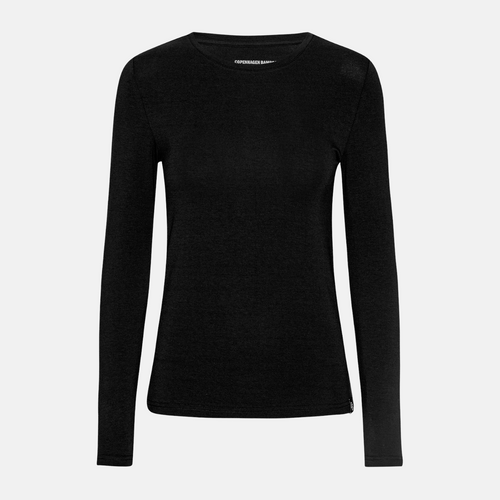
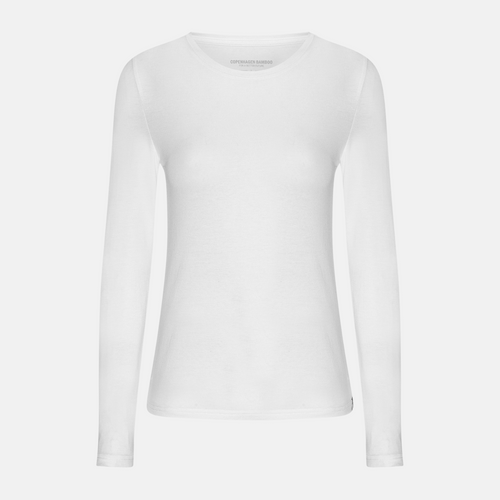
Heavy knitted pieces and anything with soft shoulders are most exposed, because the fabric gives way to the weight. Thin jersey also marks if it hangs on a narrow hanger for a long time. For a women's long-sleeved bamboo T-shirt, a wide hanger is the safest choice if you want it to hang.
When you should not hang at all
Some pieces are happiest lying down. That goes for heavy knits, soft tops and anything that does not need to hang to be aired. Fold them simply and place them on a shelf or in a drawer with plenty of room. That avoids both marks and the bumps that come from hanging too long.
Habits that help
Change the hanger while you tidy the wardrobe, and avoid squeezing too many pieces onto the same rail. Crowding presses the shoulders together, so marks get deeper. Take pieces off the hanger when they will be stored for a long time, and never hang anything damp. Small habits like these keep clothes looking good for many years.
Frequently asked questions
Do the marks disappear by themselves
Rarely. They need to be dampened lightly and shaped back with your fingers while the fabric dries. The fresher the mark, the easier it is to remove.
Does it help to put a towel over the hanger
Yes. It makes the hanger wider and spreads the weight over a larger area, so the fabric is not stretched at two small points in the shoulder.
Which pieces mark most easily
Heavy knitted pieces and anything with soft shoulders. They give way to the weight, so it is best to fold them and keep them on a shelf.
You can find the full range at Bamboo-Clothing.com.