How to fold a t-shirt so it does not crease
Short answer: Fold along the seams, use as few folds as possible, and never fold across a print. Two folds are enough for most pieces, and clothes keep their shape longer in the drawer.
Fold along the seams
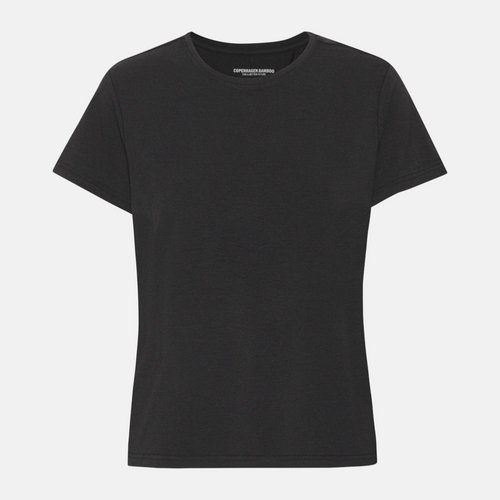
The seam is already a line in the fabric, so a fold that follows it adds no new crease that shows from outside. Fold across a seam instead, and the surface stays smoother, so the t-shirt lies flatter in the drawer without extra lines that later need smoothing out again with an iron. See bamboo t-shirts for women.
Avoid folding across a print
A fold through a print leaves a permanent crease in the design, because the print ink is not as stretchy as the fabric around it. Place the print on top and fold around it rather than over it, so the image stays whole without cracks, white lines, or frayed edges over time. See bamboo clothing for women.
Fewer folds hold the shape best
Two folds are enough for most t-shirts in an ordinary drawer. Every extra fold is a new line that the fabric remembers, and that has to be shaken out again before the piece looks presentable. The simpler your folding pattern, the faster the garment is ready to wear without ironing or straightening it out.
Fold only once the fabric is fully dry
If a damp piece gets folded, the creases set hard because the fibers stiffen in whatever shape they dry in while folded up. Wait until the t-shirt is completely dry, ideally after it has hung for an hour once out of the dryer, and the folds stay soft and disappear easily once you wear the piece again.
Put the heaviest pieces on the bottom
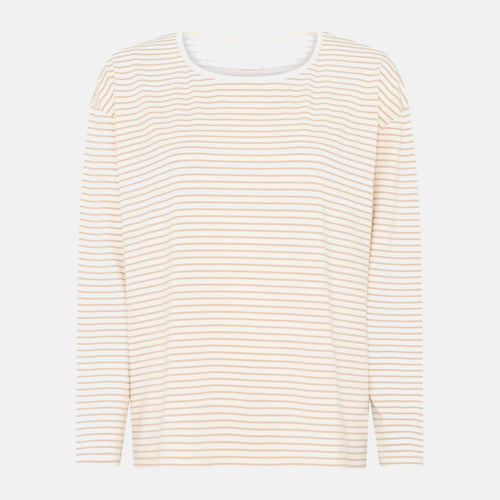
In a drawer the top layer presses down on whatever lies underneath. Put the thickest and sturdiest t-shirts at the bottom and the thinnest on top, and you avoid deep lines pressed into a delicate fabric by the weight of everything stacked above it through the week. See bamboo tops for women.
Stand the folds up on their edge
Stack t-shirts flat on top of each other and you only see the one on top, while the rest sits forgotten at the bottom. Stand them upright on their edge in the drawer instead, and you can see every piece from above at once, which gives a better overview and less mess.
Sort by color or sleeve length
A fixed order makes it faster to pack and pick clothes in the morning without digging through the whole drawer. Sort by color, sleeve length, or occasion, whichever you use most in daily life. The system does not need to be complicated, only consistent, so you always know exactly where a particular piece sits.
Avoid packing the drawer too full
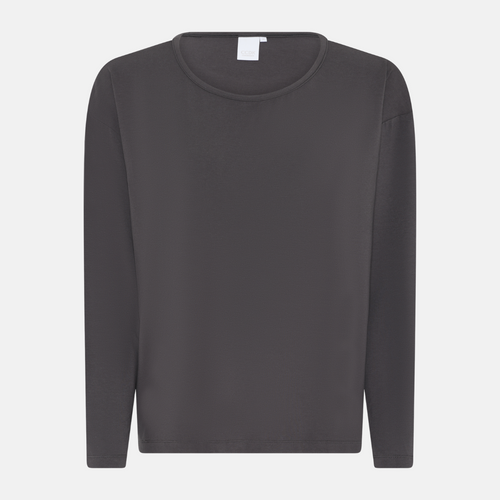
A drawer that is stuffed full creates creases no matter how carefully you folded each piece. The fabric has no room to lie naturally, and the edges get bent by the pieces pressing in from both sides. Remove a few pieces you rarely wear, and leave enough air so each t-shirt can lie without pressure. See bamboo underwear for women.
Smooth out creases with a little steam
If a fold has set in anyway, light steam from a garment steamer or an iron on a low setting can loosen the fibers again without ironing the whole piece. Hold the iron a couple of centimeters from the fabric, and let the steam do the work, so the print and the seams stay fully intact.
Frequently asked questions
What is the best way to fold a t-shirt?
Fold along the seams, avoid folding across a print, and use as few folds as possible. Two folds are enough for most pieces in an ordinary drawer at home.
Is it okay to fold across a print?
No. A fold through the print leaves a crease in the design that sets in, because the print ink is not as stretchy as the fabric around it.
Does clothing need to be fully dry before folding?
Yes. If a damp piece gets folded, the creases set in harder, because the fibers stiffen into whatever shape they have while finishing drying in the drawer.
See our range of bamboo t shirts for men.