How to layer three layers of men's clothing correctly
Short answer: Thin next to the skin, insulating in the middle and windproof outside. The order matters more than the total amount, and the base layer decides whether the whole system works, no matter how cold it is outside.
The base layer's only job
The base layer should move moisture away from the skin, and that is its only job. It must not insulate, or it holds the moisture instead of passing it on to the layers outside it. A thin, close fitting fabric does this job best. See bamboo underwear for men.
Why a close fit is correct
If the base layer sits loose, air lies between skin and fabric, and moisture evaporates more slowly there than directly on the skin. A close fitting layer keeps constant contact with the skin all around, and that contact is what moves moisture further out instead of leaving it sitting.
The mid layer's role
The insulation sits in the mid layer, not against the skin and not on the outside. It holds the still air that acts as insulation, and it needs room to loft slightly without being pressed flat by the outer layer. See bamboo clothing for men.
How thick the mid layer should be
The amount depends on activity and temperature, not only on the degrees on a thermometer. Moving slowly calls for a thicker mid layer than moving a lot, because movement generates its own heat. A mid layer that is too thick during high activity ends up making you wet with sweat rather than cold.
The outer layer's job
The outer layer stops the wind and keeps out rain and snow. Without a windstop the two inner layers are cooled from outside, no matter how well they insulate on their own. A windproof outer layer does not need to be waterproof if the weather stays dry that day. See bamboo t-shirts for men.
Breathability in the outer layer
An outer layer that stops all air also traps all moisture inside, and then you get wet from your own sweat instead of the rain. Choose a fabric that blocks wind but lets water vapour through, especially if you wear the layer during longer activity.
The same principle on your feet
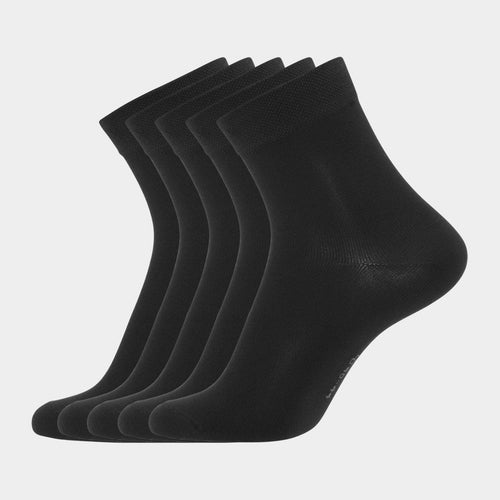
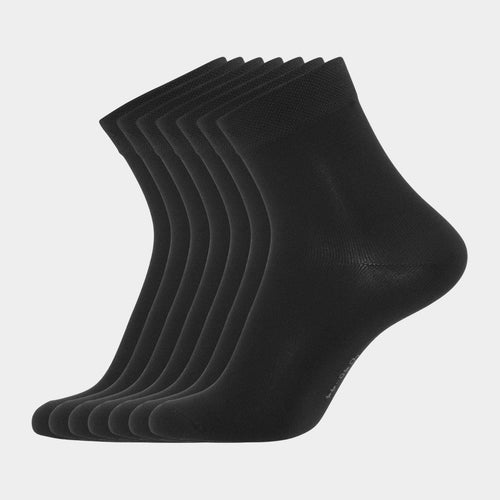
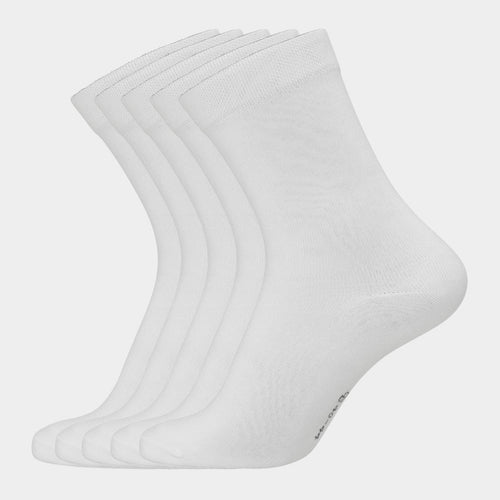
A thin sock next to the skin, room in the shoe for air, and a shoe with a tight outer surface. Feet follow the same logic as the rest of the body, and a sock that is too thick inside a close fitting shoe pushes the air out and makes the foot colder, not warmer. See bamboo socks for men.
Hands and head follow the same system
Although the layer system is usually discussed for the body, the same three steps apply to hands and head. A thin inner glove, a warmer outer glove and a windproof outer shell keep fingers warm longer than a single thick glove, because moisture from the hand also needs somewhere to go.
How to adjust along the way
If you get warm, remove the outer layer first, not the base layer. Moisture from the skin still needs somewhere to go, and removing the base layer takes away exactly that function. Pack the layers in a bag in the order you expect to need them again.
Frequently asked questions
What is the order in three layers?
Thin and moisture wicking next to the skin, insulating in the middle and windproof outside. The order matters more for how well the system works than the total amount of clothing.
What happens if the base layer is too thick?
It holds moisture instead of passing it on. You then cool down as soon as you stop moving, no matter how good the outer layer otherwise is.
Does the same apply to feet?
Yes. A thin sock next to the skin, air around the foot and a shoe that stops wind and water outside follow the same principle as the rest of the body.
You can find the full range at Bamboo-Clothing.com.