How to tighten a loose sock cuff
Short answer: Sew a thin elastic into the cuff from the inside. It takes fifteen minutes and gives the sock another half a year to a full year. It is a small repair that pays off when the rest of the sock is whole.
Why the cuff goes loose
The elastane in the cuff breaks down from heat and sweat. The yarn itself is usually fine, so the sock is whole apart from the fact that it falls down. Elastane is what makes the cuff sit snugly around the leg, and once it is spent, the cuff can no longer hold the sock up.
When the repair pays off
This is exactly the situation where a repair pays off: the sock is otherwise whole, with dense yarn and no holes. New elastic means you can keep wearing it for a long time. Check the heel and toe first. If they are still thick and intact, the sock is a good candidate.
What you need
You need a thin, covered elastic of three to five millimetres, a needle, thread in the same colour as the sock and small scissors. Elastic can be bought in fabric shops. Choose a width that lies flat on the inside. No other tools are needed for the job.
Measure the elastic
Measure a thin elastic that is three centimetres shorter than the circumference of the cuff. Measure around the cuff with a tape measure, or lay the elastic around it and subtract three centimetres. The elastic should be slightly shorter than the cuff, so it draws it in once it is sewn on.
Sew it in from the inside
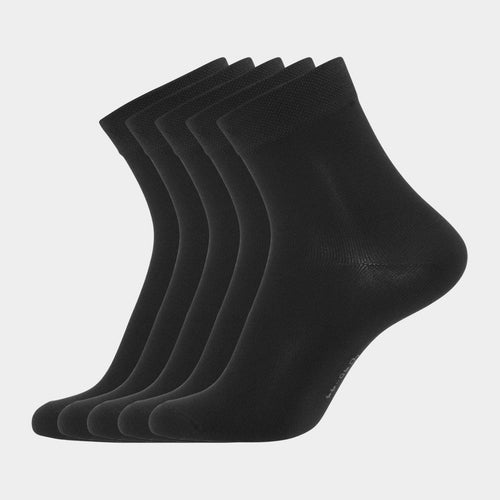
Turn the sock inside out and sew the elastic on with small stitches, stretching it lightly all the way round. Sew slowly and pull just enough for the fabric to gather without puckering much. Sew along the edge of the cuff where the old elastic sat. See our all bamboo socks for men.
Join the ends and check
Sew the ends of the elastic together with a small overlap and secure the thread with a few stitches back and forth. Turn the sock the right way out and try it on. If it stays up without squeezing, the repair has worked. If it still slips, unpick it and try a slightly shorter elastic.
Check after the first wash
Wash the sock once as usual and see whether the cuff still holds. If the elastic is sewn on with small, even stitches, the seam should survive the wash. If it comes loose in one place, sew it back with a few stitches. If the cuff is still too loose, unpick it and try a shorter piece.
When it does not pay off
If the heel or toe is thin as well, the sock will not last long enough to justify the repair. Then it is better to retire it and find a new pair. See our bamboo socks for women and bamboo compression stockings. Leave compression stockings as they are, because the pressure is part of the function.
How to make the cuff last
Heat and sweat break down elastane, so wash your socks at a low temperature and let them air dry. Avoid pulling at the cuff when you take them off. With a little care the new elastic lasts longer, and you enjoy socks that would otherwise have been thrown away.
Frequently asked questions
Which elastic should you use
A covered elastic of three to five millimetres. It lies flat on the inside and can be sewn on with small stitches. Measure it three centimetres shorter than the circumference of the cuff before you cut it.
Can you see it from the outside
Not if it is sewn on the inside with small stitches in the same colour. Pick a thread that suits the yarn and sew slowly, so the seam lies evenly and does not show through.
Does it work on compression stockings
No. The pressure is part of the function and should not be changed. Leave them as they are, and find a new pair of compression stockings when the elastic is spent.
You can find the full range at Bamboo-Clothing.com.