Knitted and woven fabrics and when each is better
Short answer: Knit is made of loops that can move and stretch in every direction. Woven fabric is threads that cross fixed against each other, holding a stiffer structure. Knit stretches and wrinkles less, woven holds its shape and falls sharper. The choice depends on what the garment needs to do.
Knit follows the body without added elastane
The loops in a knit can shift relative to each other, and that gives the fabric stretch in every direction, even without elastane added to the yarn. This is why t-shirts and jumpers are almost always knitted, while shirts with crisp lines rarely are. See bamboo t-shirt for women.
Woven fabric holds a firm, stable shape
Threads that cross fixed over and under each other give a fabric that does not change shape when the body moves. That is why a shirt or trousers with sharp lines need a woven fabric, where every thread keeps its place in the pattern all the way through. See bamboo clothing for women.
Knit wrinkles noticeably less than woven fabric
The loops in a knit can move instead of forming sharp folds when the fabric is pressed or folded together. Woven fabric folds easily by comparison, because the threads are fixed in place and cannot absorb pressure by shifting the way loops can. See bamboo tops for women.
Underwear is almost always knitted
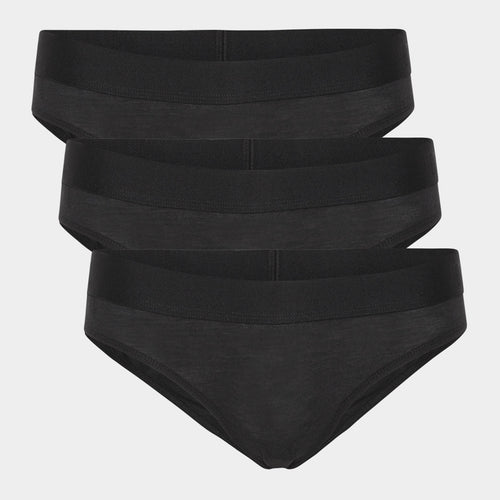
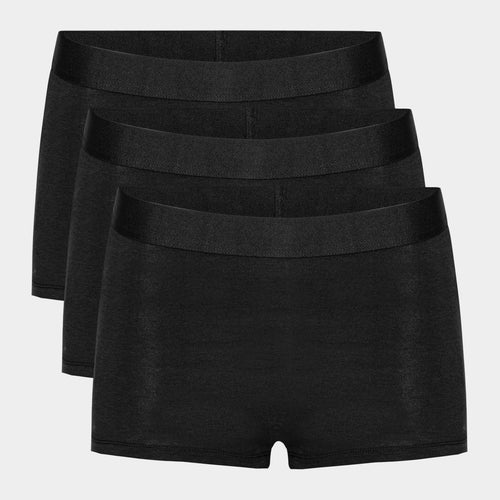
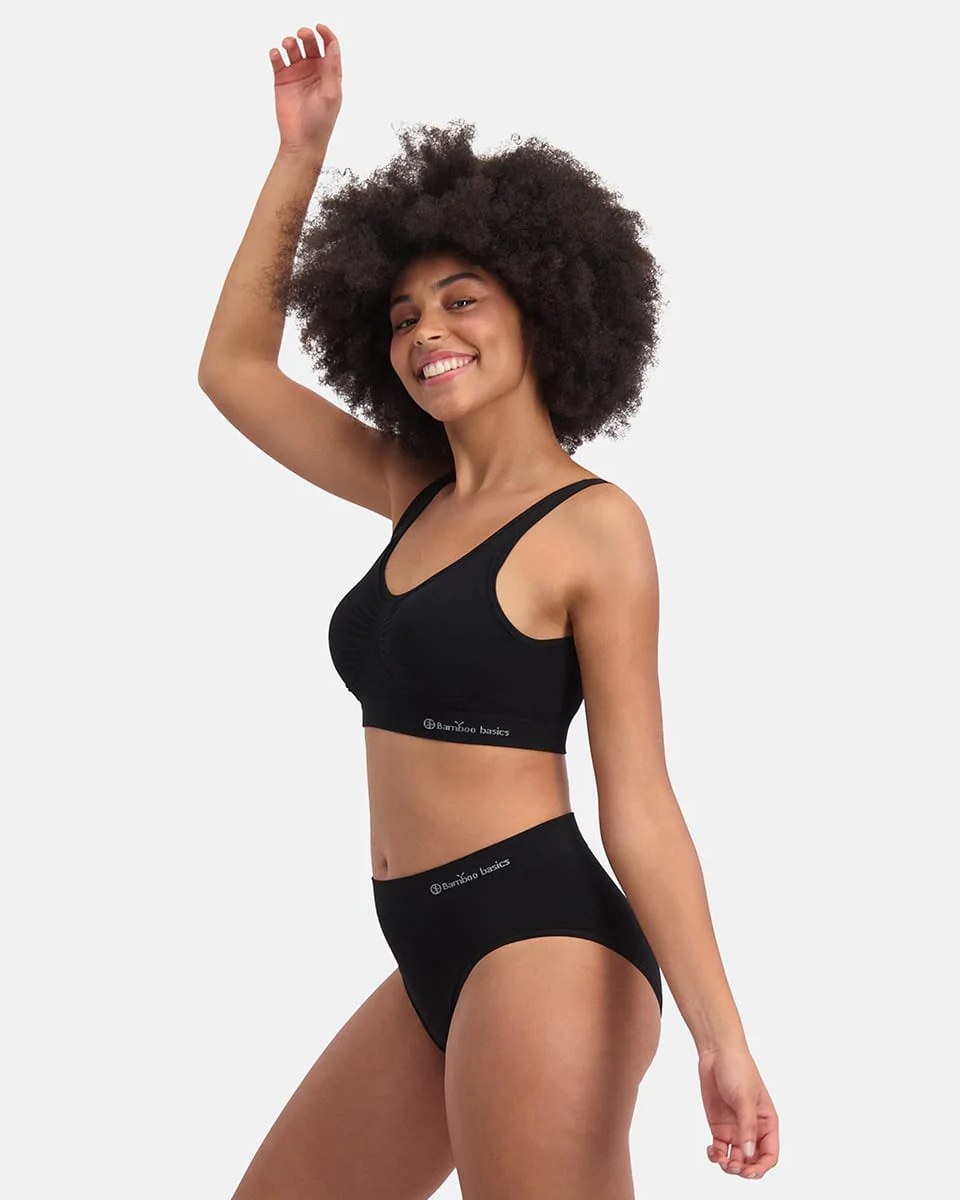
Underwear needs to follow the body's movement and stretch throughout the day, and knit does that without trouble. Woven underwear is rare, because it needs a lot of added elastane to reach the same stretch, and even then it never sits quite as close and smooth. See bamboo underwear for women.
Breathability differs between the two
Knit has natural gaps between the loops that let air pass more easily, while a tightly woven fabric can hold more warmth in. The difference matters most during high activity, where a knitted layer often feels cooler and more flexible than a comparable woven layer of the same weight.
Washing behaviour follows the construction
Knit can lose its shape if hung up wet, because the loops pull downward under their own weight. Woven fabric holds its shape better on a hanger, because the threads do not shift the same way. Lay knitted garments flat to dry, and hang woven ones as usual on hangers.
Durability depends on both factors
A dropped stitch in a knit can spread if the yarn is not locked well, while woven fabric typically only frays at a cut edge. Both weaknesses are handled with good stitching at seams and edges, whether the fabric started out knitted or woven in the first place.
Weight feels different at the same number
A knitted fabric often feels heavier than its weight rating suggests, because it sits closer to the body and moves with it. A woven fabric at the same weight can feel lighter, since it stands slightly off the body and lets more air circulate freely between fabric and skin.
Choose construction by purpose, not looks
Consider whether the garment needs to follow the body's movement closely, or hold a firm shape throughout the day. Knit wins for activity and comfort, woven wins for structure and a more formal look, and many wardrobes need both kinds for different situations day to day.
Frequently asked questions
What is the difference between knit and woven fabric?
Knit is made of loops that can move freely. Woven fabric is threads that cross fixed against each other, giving a stiffer structure that does not change shape when the body moves.
Which wrinkles the least?
Knit. The loops can move instead of forming sharp folds, which happen in woven fabric when the threads are pressed tightly together and cannot shift out of the way.
Why is underwear almost always knitted?
Because it needs to follow the body and stretch with movement. Woven fabric can rarely do that without a large amount of added elastane in the yarn.
You can find the full range at Bamboo-Clothing.com.