Layering for a day hike
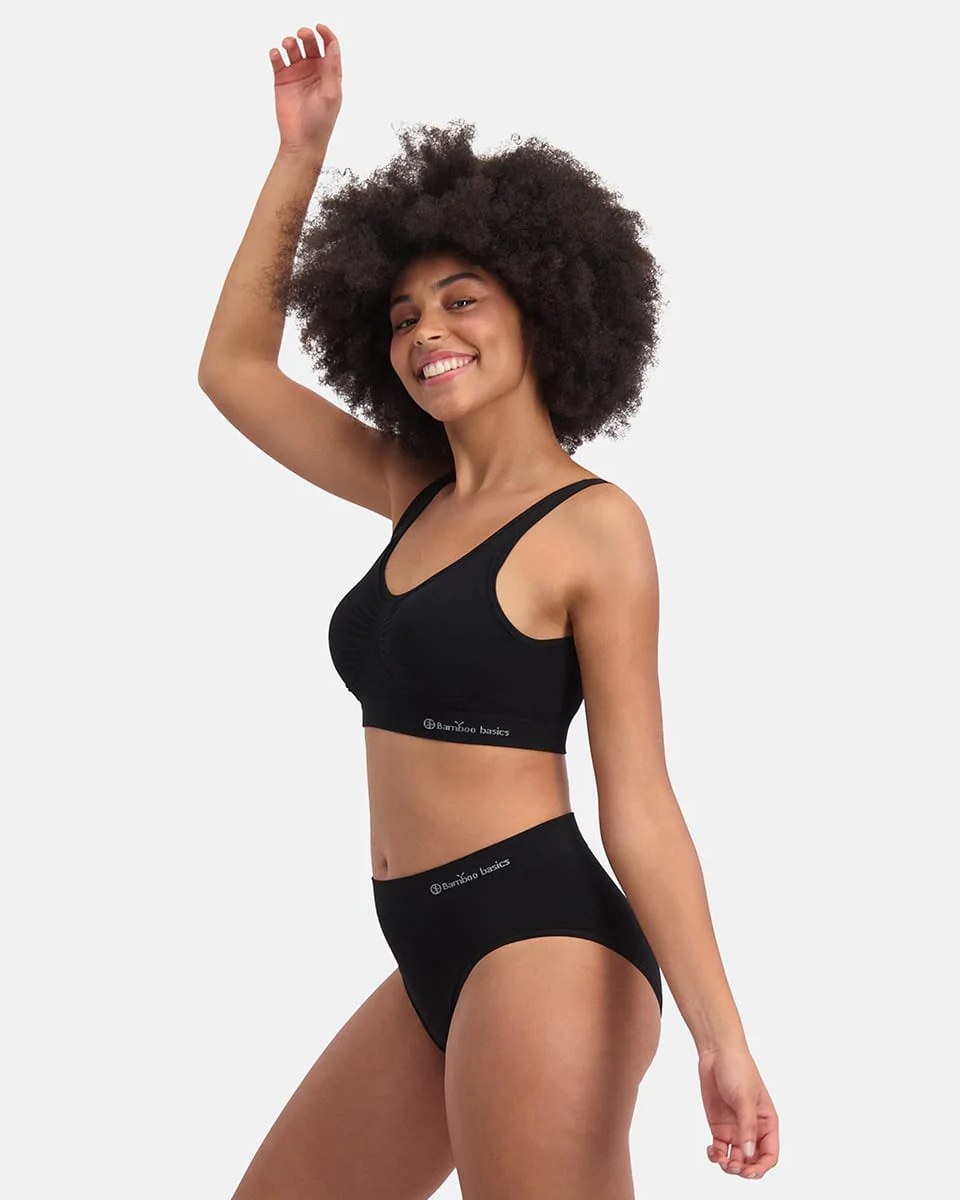
Short answer: Three layers cover a typical day hike: bamboo viscose closest to the skin, insulation in the middle and wind protection outside. The innermost layer decides whether you get cold during a break.
The base layer matters more than the jacket
The jacket keeps the weather out, but it is the base layer that decides whether you are wet or dry once you arrive. See bamboo undershirt for men . A thin layer that moves sweat away from the skin does more for comfort than an expensive jacket as the outer layer.
The insulating middle layer
The middle layer holds the warm air your body produces. It should be thick enough for the cold but not so thick that you sweat on climbs, where your pulse rises the most. Choose it by season and terrain rather than a fixed rule for the number of layers.
Socks decide the day
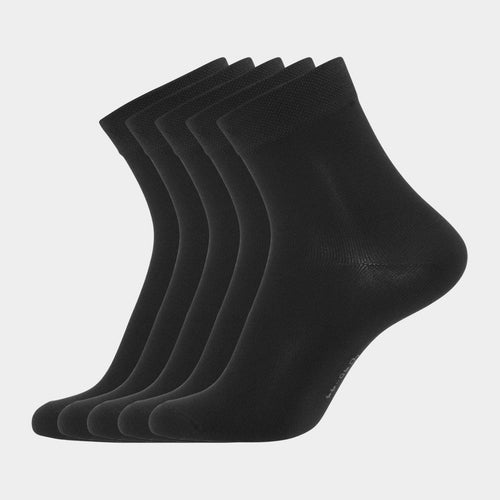
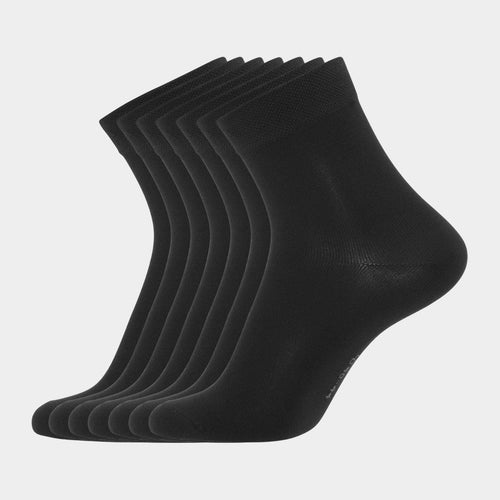
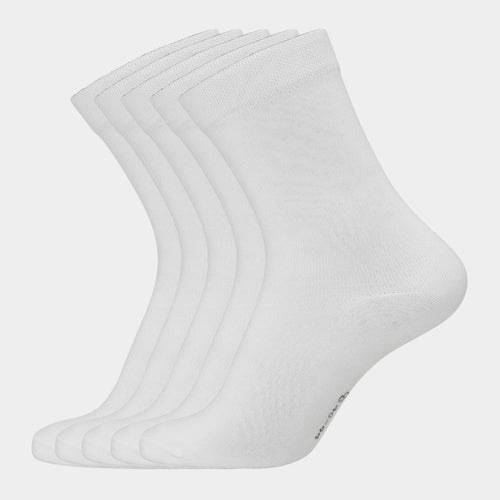
Most hiking problems are foot problems, not leg problems. Smooth socks without a hard seam and a spare pair in your bag solve most of it before a blister forms. See bamboo socks for men .
The break is where you get cold
When you stop to eat, damp clothing cools quickly. Change your base layer during a long break if you can, rather than sitting in a wet layer for twenty minutes.
T-shirt or undershirt as the base
On shorter routes in mild weather, a thin t-shirt is enough as the innermost layer. See bamboo t-shirts for men . On colder, longer routes a long-sleeved undershirt gives better coverage without being much warmer than a t-shirt.
Terrain changes what you need
A forest trail and open hillside place different demands on the same layer. In the forest wind is less of a problem, while open terrain requires the outer layer to protect better, even though the base layer can stay the same throughout.
Backpacks and moisture
The back under a backpack sweats more than the rest of the body, no matter how thin the layer underneath is. A backpack with space away from the back helps, but the base layer still needs to move moisture where the strap presses against the skin.
Washing after the hike
Wash your base layers at 30 degrees after every hike, so the material keeps its ability to carry moisture away. Let the clothes dry fully before packing them away, or the odour will set into the fibres for next time.
Pack a spare layer
A spare dry base layer in your bag weighs almost nothing and saves a break when the weather turns. It is the cheapest insurance against getting cold for the rest of a long day hike.
Frequently asked questions
Is bamboo good for hiking?
Yes, as a base layer in moderate weather. For winter mountain trips, wool is still safer once it gets wet, because it holds onto warmth better.
How many pairs of socks should you bring on a day hike?
One spare pair. Dry socks halfway through are the cheapest comfort you can give your feet on a long route.
Should you wear cotton on a hike?
Avoid cotton as your base layer. It gets wet and stays wet for the rest of the hike, unlike fast-drying materials.
You can find the full range at Bamboo-Clothing.com.