Materials closest to the skin and why the choice matters
Short answer: The innermost layer is the only one that touches your skin all day. That is why its ability to move moisture and the quality of its edges matter more than any other layer in your wardrobe.
The inner layer sets the frame
If the inner layer is damp, a good outer layer does not help. A nice shirt or a warm jumper cannot make up for a layer that holds sweat against your skin. The chain is only as strong as the link closest to your body. That is why it makes sense to start with underwear. See bamboo underwear for men.
Why moisture matters so much
Your body releases a little moisture all the time, even when you sit still. If it stays in the fabric, it feels clammy, and your skin can get cold once you stop moving. A material that draws moisture away from the skin and lets it evaporate keeps your temperature more even. You notice it most on long days and at night.
Natural materials move moisture
Cotton, viscose and wool absorb moisture inside the fibre itself. This means the fabric can take up a fair amount before it feels wet against the skin. Bamboo viscose belongs to this group and feels smooth and soft. The materials still behave differently depending on yarn, knit and thickness, so try them yourself before deciding.
Synthetic fabrics work differently
Polyester absorbs almost no moisture in the fibre. Instead, it moves moisture along the surface and out through the fabric. That works well for training, when you sweat a lot in a short time. In everyday wear it feels different, because the fabric can seem slick and a little cool. Neither is wrong, they simply feel different.
The edges matter just as much
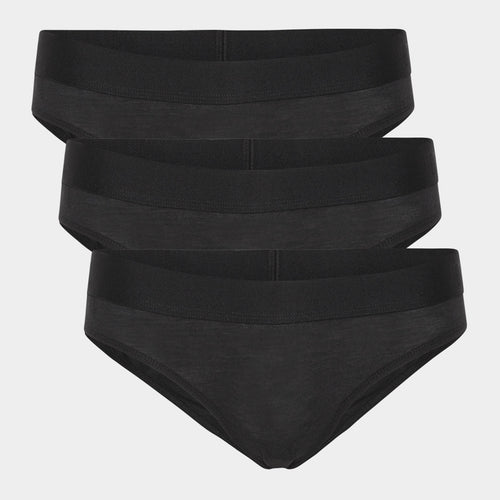
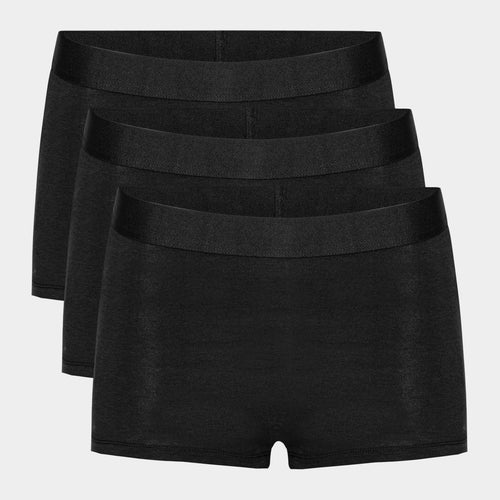
A perfect material with a hard edge is still uncomfortable. A tight elastic or a thick seam that rubs all day matters more than the choice of fibre. Flat seams and laser cut edges lie closer to the body and show less under clothes. So look at the edges before you look at the material. See bamboo underwear for women.
Fit and material work together
A material can only move moisture if it lies against the skin. If underwear is too loose, moisture gathers in folds and the fabric rubs when you move. If it is too tight, the edges press. The right fit sits close without squeezing, so the material can do its job. Try two sizes if you are unsure.
Washing decides if it keeps working
Fabric softener leaves a thin film on the fibres, and that film stops moisture transport in all natural materials. The fabric still feels soft, but it no longer keeps your skin dry. Use a normal detergent, wash at 40 degrees and skip the softener. Read more about washing and care.
Drying and heat
High heat in the tumble dryer wears out the elastic in edges and waistbands. That is often where underwear loses its fit first, long before the fabric itself is worn. Dry on low heat or hang it up instead. Thin materials dry quickly on a rack, and the edges keep their shape longer without high heat.
How to choose in practice
Start with what bothers you most. If it is moisture, choose a material that absorbs it or moves it away. If it is chafing, look at seams and edges. Buy a single pair and wear it for a week before buying more. That tells you more than any product description, because your body and your day decide.
Frequently asked questions
Which material is best against the skin?
One that moves moisture away from the skin. Cotton and bamboo viscose do this well, while dense synthetic fabrics do it less when you do not move much during the day.
Do seams matter as much as material?
Almost. A good material with a hard edge is still uncomfortable all day, so look for flat seams and soft edges before you think about the fibre itself.
Can washing ruin a good material?
Yes. Fabric softener leaves a film on the fibres that stops moisture transport. High heat in the tumble dryer also wears out the elastic in edges and waistbands.
You can find the full range at Bamboo-Clothing.com.