Mountain hiking and why layers matter more there
Short answer: In the mountains, weather changes faster and temperature drops with altitude. A dry base layer is not comfort, it is part of safety, when the shift from sun to wind can happen in minutes.
Altitude changes the temperature
Temperature drops noticeably for every hundred metres you climb, often faster than the map suggests. One extra layer in your bag is not excessive, it is the margin that keeps you warm if the weather turns along the way. See bamboo undershirt for men.
A wet base layer cools you fast
If you stop in wind with a wet layer on, your body cools quickly, far faster than in flat Danish terrain. Choose something that moves moisture away rather than holding onto it. See bamboo t-shirts for men.
Socks and a spare pair
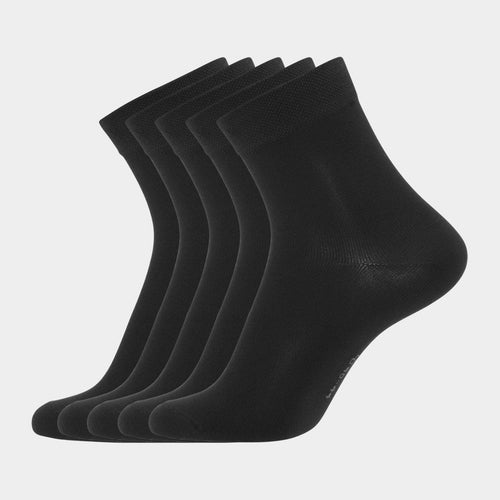
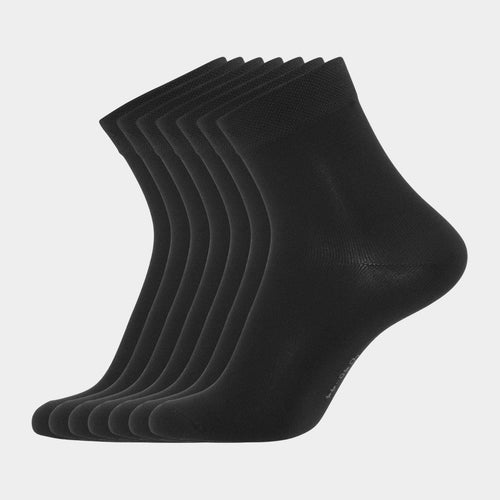
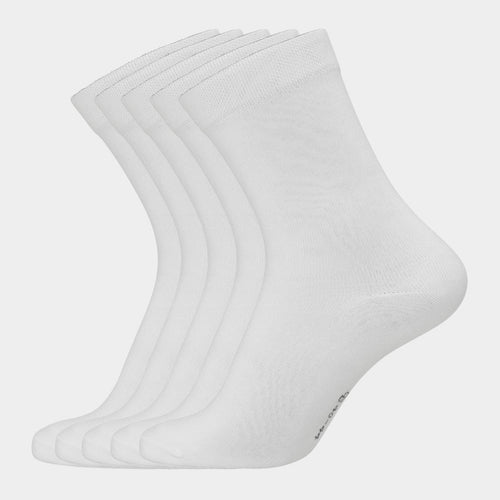
Your feet decide a hiking day. A dry pair in your bag is the cheapest insurance against sore feet and wet boots. See bamboo socks for men.
Wind changes everything at the top
Even a mild day in the valley can turn cold at a summit, because the wind really takes hold up there. A windproof outer layer is not extra gear on a mountain trip, it is part of the basics along with the layers beneath it.
Sun and shade shift fast
Switching between sun and shade on a mountain trail can change the felt temperature significantly within minutes. Layers you can quickly add or remove are therefore better than one thick layer that leaves you either freezing or sweating.
Pack the layers within reach
The outer layer should sit on top of your pack, not at the bottom. If you have to dig through the bag every time the weather changes, you eventually stop doing it, and that is where the risk begins.
Wool or bamboo viscose over cotton
The fabric of the base layer matters more than the number of layers. Wool and bamboo viscose move moisture away from the skin, while cotton holds onto it and turns into cold, heavy clothing as soon as you sweat.
Judge the weather at the start, not just from home
Last night's forecast does not necessarily tell you much about conditions at the summit today. Check conditions at the starting point, and pack an extra layer if there is the slightest doubt about wind higher up.
In short
Mountains demand more layers than you are used to at home, because temperature and wind shift faster with altitude. A dry base layer and a spare pair of socks are cheap insurance against a day that turns.
Frequently asked questions
What should you wear as a base layer for a mountain hike?
A layer that moves moisture, so wool or bamboo viscose. Never cotton, because it holds onto moisture and turns cold as soon as you sweat or stop in wind.
How many layers should you bring?
Three on your body and one extra in your bag. Mountain weather changes faster than lowland weather, and an extra layer is the cheapest insurance against a sudden cold snap.
Why is cotton a poor choice?
Because it holds onto water and turns cold when you stop or the wind picks up. Wool and bamboo viscose move moisture away from the skin instead of storing it.
You can find the full range at Bamboo-Clothing.com.