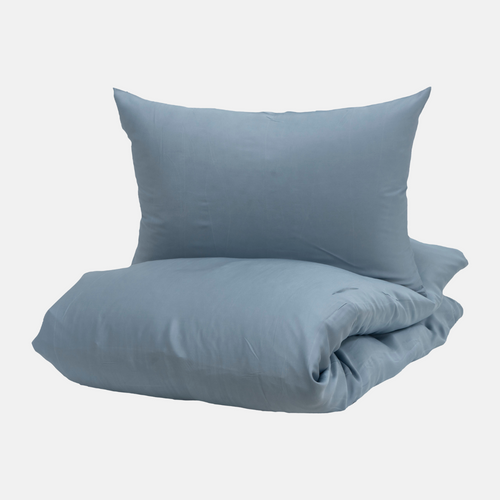
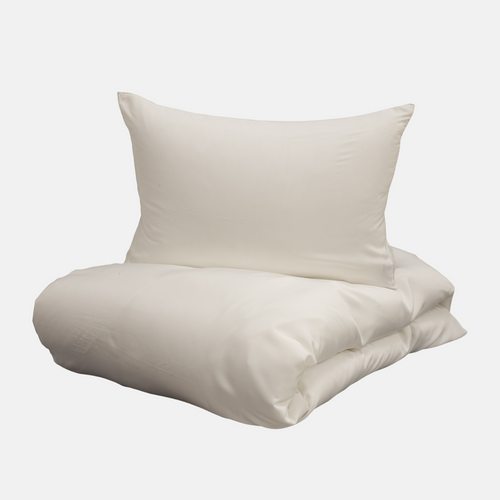
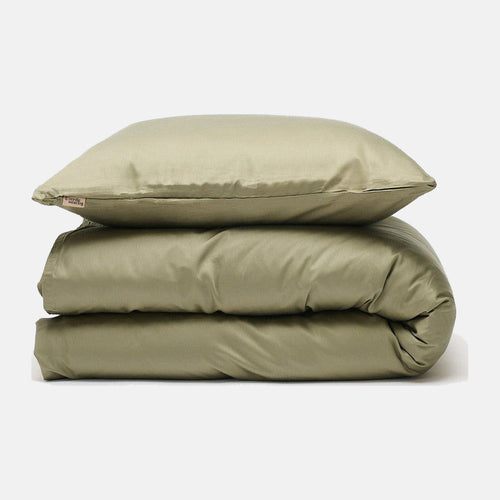
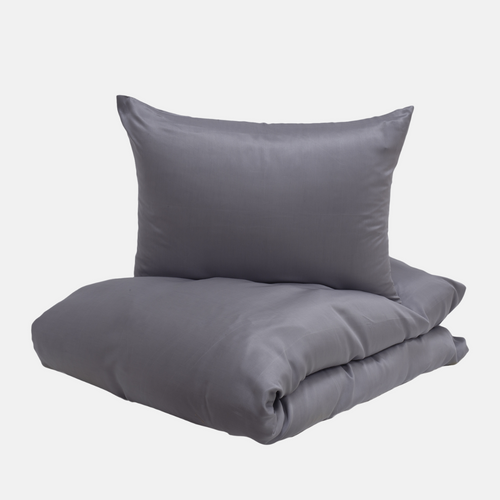
Percale versus sateen in bedding
Short answer: Percale is matte, crisp and cool to lie on. Sateen is smooth, soft and has a light sheen. The difference lies in the weave of the threads, not in the fibre behind it.
Two ways of weaving
Percale is a simple weave, where threads cross over one and under one in a fixed, even pattern. Sateen lets each thread run over several other threads before going under again. That gives a smoother surface and the characteristic sheen that sateen is known for in bedding shops.
How the two fabrics feel
Percale feels cool and slightly crisp against the skin at first and gradually softens with time and more washes. Sateen instead feels smooth and soft from the very first night in bed and glides more easily against the skin. See bamboo bedding to compare both weaves in the same collection.
What suits whom
If you sleep warm at night, percale is often the better choice, because the simple weave lets more air through the fabric. If you instead want a smooth, soft feel with a bit of sheen, sateen is the choice. Both can work well year round, depending on what you prefer.
Durability over time
Percale is generally more hardwearing, because the threads sit more tightly locked together in the simple weave. Sateen is somewhat more prone to snagged threads, because the long floats catch more easily on rings, nails or rough surfaces. See bamboo pillowcases in both weaves.
How to spot the difference
Sateen has a light, visible sheen that shifts with the light, while percale stays completely matte from any angle. Hold the fabric up to a window or a lamp, and the difference becomes clear right away, even for an untrained eye that has never compared the two before.
Wrinkling and upkeep
Sateen typically wrinkles less, because the smooth surface tends to fall into large, soft folds rather than sharp creases. Percale can look more creased right after washing, but the creases smooth out quickly once the fabric lies flat on the bed during the first night.
Weight and temperature in bed
Sateen usually sits a little closer to the skin and therefore feels slightly warmer than percale at the same thread count. Percale, with its more open structure, gives better airflow and suits anyone who runs warm at night or sleeps under a thick duvet.
Bamboo viscose in both weaves
Whether bamboo viscose is woven as percale or sateen, the fibre keeps its ability to absorb moisture and release it back into the air. That makes both weaves comfortable to sleep in compared with synthetic alternatives, while the actual feel against the skin depends mostly on the weave rather than the fibre.
How to choose your sheets
Look first at whether you sleep warm or cold, and then at whether you prefer a matte or a slightly shiny surface. See bamboo sheets, where both weaves come in the same sizes, so you can switch between them without changing the rest of the bedding.
Frequently asked questions
Frequently asked questions
Can you see the difference between percale and sateen
Yes. Sateen has a light, visible sheen, while percale stays completely matte. Hold the fabric up to light, and the difference becomes clear right away.
Is sateen warmer than percale
A little, because the surface sits closer to the skin. Percale has a more open structure that lets air through better and therefore feels cooler.
Which weave wrinkles the least
Sateen, because the smooth surface tends to fall into soft folds rather than sharp creases. Percale can look creased right after washing but smooths out again quickly.
See our range of Nordic Weaving bedding.