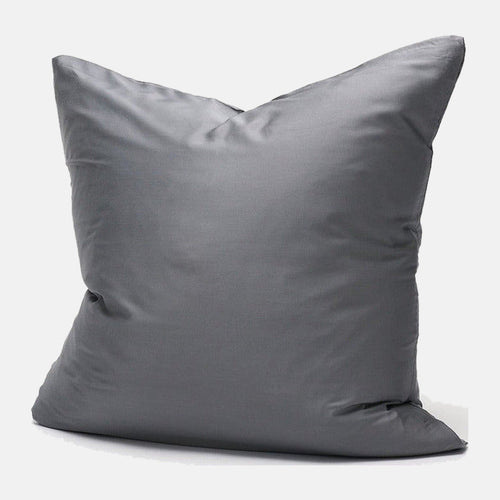
Pillowcases for the pillow you have
Short answer: Measure your pillow before you order. Sixty by sixty and fifty by seventy centimetres are the two common Danish sizes, and they cannot be used interchangeably. With the right size, the cover sits neatly and the pillow stays in place all night.
Start by measuring the pillow
Take a tape measure and measure the pillow as it lies, without pressing it flat. Measure both width and length and write the numbers down so you have them when you order. Many people guess from what they usually buy, and then end up with a cover that does not fit.
Sixty by sixty centimetres
Sixty by sixty centimetres is the classic square pillow that many Danish homes still use. It fills the bed well and gives a wide place to rest your head. A cover in this size is made for exactly that shape, so it sits snug and smooth once the pillow is properly inside.
Fifty by seventy centimetres
Fifty by seventy centimetres is the longer European model, often found in newer bedding and in hotels. It is narrower and longer than the square pillow. That is why a cover made for one size cannot be used on the other, no matter how much you try to adjust the pillow afterwards.
Why the sizes cannot be swapped
A cover that is too big hangs in folds and shifts around during the night. A cover that is too small pulls the pillow out of shape and strains the seams. It is worth spending two minutes on measuring. Take a look at our bamboo pillowcases to compare the sizes in the range.
Ergonomic pillows
If you have a neck support pillow with a wavy surface, the usual sizes do not quite apply. The cover must either be made to fit the shape or be stretchy enough to follow it. Measure the pillow at its widest and longest point, and check that the cover suits that kind of pillow.
Envelope closure or buttons
An envelope closure keeps the pillow inside without buttons and is the most common solution. It is quick to take on and off, and there are no parts that can break. A button closure is more secure if you toss and turn in your sleep, but it takes a little longer at every change.
Colour and the rest of the bed
When you choose a cover, think about the rest of the bed too. A pillowcase should match the duvet cover and the sheet in colour, so the bed looks calm. Read more about bamboo bedding and bamboo sheets if you want to buy several pieces at once and make them fit together.
What happens in the wash
Bamboo fabric can shrink a little in the first wash. So choose by the pillow and not by the smallest size you can find. Wash the cover according to the label, close the closure first, and shake it out afterwards. That way it keeps its shape and sits nicely on the pillow.
How often to change them
Most people change pillowcases every second week, and more often if their skin is problematic. Your face rests on the pillow for many hours, so the cover collects moisture and skin oils. Buy at least two covers per pillow, so there is always a clean one in the cupboard.
Frequently asked questions
Can you use a cover that is too big?
It works, but the pillow shifts inside the cover during the night and the fabric bunches up. It is more comfortable to choose a cover that matches the pillow.
Do pillowcases shrink?
A little in the first wash. Choose by the pillow and not by the smallest size, so the cover is not too small after washing and does not sit crooked afterwards.
How often should they be changed?
Every second week for most people, and more often if the skin is problematic. With two covers for each pillow, a clean one is always ready in the cupboard.
You can find the full range at Bamboo-Clothing.com.