Printed labels at the neck against sewn labels
Short answer: A printed label is colour applied directly to the fabric, and a sewn label is a piece of woven tape. Print cannot scratch, but it fades sooner. The sewn one lasts longer and holds more text, but can be felt at the neck.
Two ways to give the same message
Both types must show size, material and care instructions. The difference is whether the information sits directly on the fabric or on an extra tape that is sewn in. One is flat and almost invisible, the other a small edge you can grip. The choice is about comfort, lifespan and how much text is needed.
How a printed label is made
A printed label is a thin film of colour applied directly to the inside of the fabric, so the text becomes part of the surface. There is no edge and no tape, so it is barely felt on the skin. The colour must still stay put and survive washing, movement and rubbing.
Print wins on comfort
Without a tape at the neck there is nothing to prick or scratch. That is one reason print has become common in underwear, sportswear and nightwear, where the fabric lies close to the body. With sensitive skin at the neck or back, a printed label is often easier to live with. See bamboo sweatshirts for women.
Print loses on lifespan
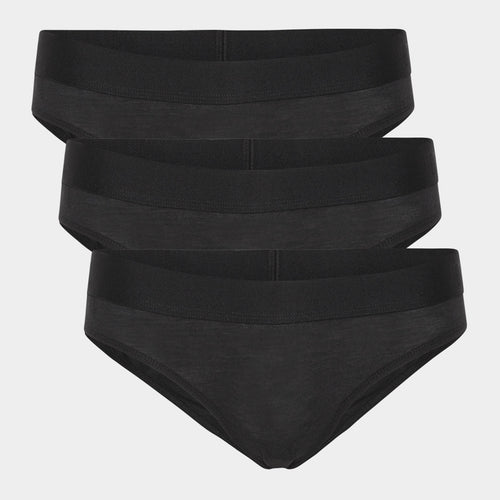
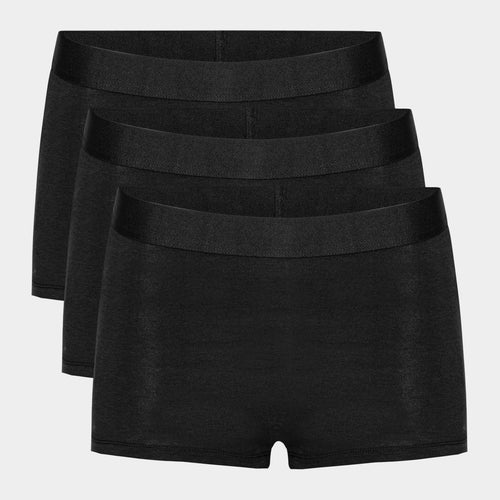
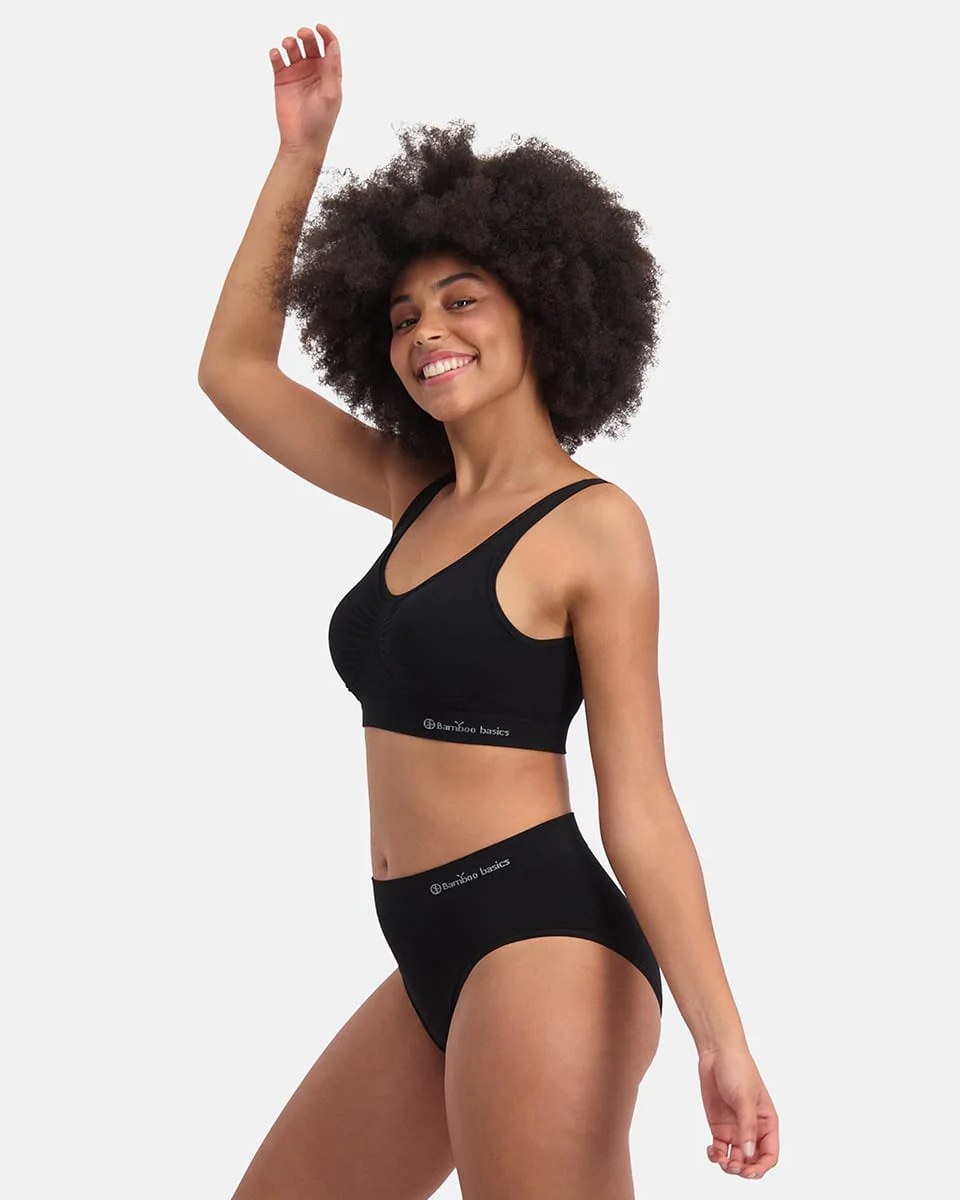
The colour wears off slowly in the wash and against the skin. After a few years the text can be hard to read, and if the care instructions vanish you no longer know what the garment tolerates. A woven label can still be read, because the thread is part of the tape. See bamboo sports bras and bamboo underwear for women.
The sewn label and its strengths
A sewn tape can hold more text and several languages and stays legible for many years. It is easy to cut off if it bothers you, and until then you can read the care instructions. The downside is the edge, which can scratch at the neck. A soft, flat tape is more comfortable than a stiff one.
Who notices labels
Sensitivity to labels varies a lot. Some never notice one, while others feel every edge. If unsure, run a finger along the neck of a garment before buying, or choose one where the label sits in the side seam. A flat, soft label suits most people, and a printed one takes up almost no space.
How to choose
If you want to avoid scratchy labels, print is the simplest choice. If you want care instructions that stay readable for years, a sewn label is better. Some garments combine both, with printed size and a small sewn label in the seam carrying the care text. Check where the label sits before buying, to avoid surprises at home.
Keep the care instructions
Whichever type you have, the care instructions are the most important information. Photograph the label with your phone when the garment is new, or write down the temperature. That way you have the information even when the print has faded or the tape has been cut off. This small habit saves guessing when washing months later.
In short
Printed labels win on comfort, sewn ones on lifespan, and neither is wrong. It depends on where you are most sensitive and how long you want the label to stay readable. Save the care instructions another way if you choose print, and cut a sewn label close if it bothers you. That gives you the best of both.
Frequently asked questions
What do I do when the print is gone
Write the washing temperature down somewhere safe or find the item on the shop website. A similar garment with a readable label can serve as a guide until you are sure.
Can a printed label irritate the skin
Rarely. The print is thin and flat, but some people react to the ink. If you notice itching or redness, talk to your doctor and choose garments with no label at the neck.
Why do some brands still use tape
Because tape lasts longer and can carry more information, such as several languages and more detailed care instructions. The text stays easy to read for many years.
You can find the full range at Bamboo-Clothing.com.