Rib knit against jersey
Short answer: Rib stretches a lot across the width and springs back, while jersey stretches less and drapes more softly. That is why rib is used for edges and cuffs and jersey for the main panels of a garment. Knowing the difference makes it easier to pick the right fabric.
How rib is built
Rib is knitted with alternating knit and purl stitches, which forms vertical ridges. The ridges can be pulled out and spring back, and that is the source of the clear stretch across the width. The fabric sits close to the body without squeezing, a quality that plain jersey has only to a lesser degree.
How jersey is built
Jersey is knitted in one smooth stitch pattern, which gives an even and soft surface without ridges. The fabric stretches less than rib and does not spring back in the same way. It drapes calmly and follows the shape of the body without pulling, which makes jersey pleasant for large panels.
How much they stretch
Pull both fabrics across the width and you feel the difference at once. Rib gives a lot and springs back, while jersey gives a little and then settles into its shape again. That difference decides where each fabric is used, and why they rarely replace each other in the same part of a garment.
How they drape
Jersey hangs softly and falls in quiet folds that follow your movement as you walk. Rib holds its shape better and lies closer, because the ridges pull the fabric together. That is why jersey suits the front and back best, where fabric should hang. See bamboo t-shirt dresses for an example.
Rib at necklines and cuffs
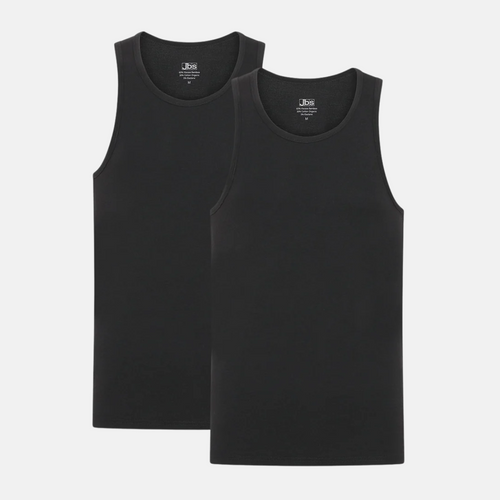
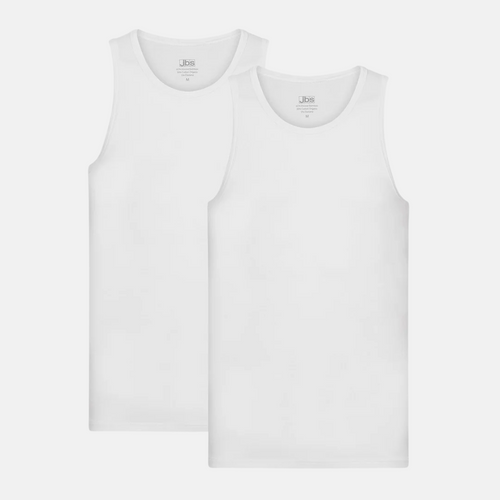
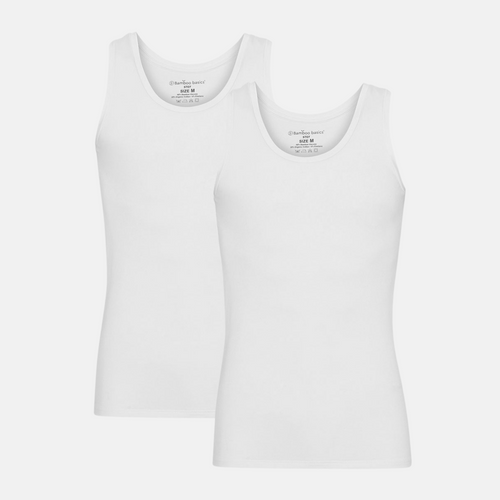
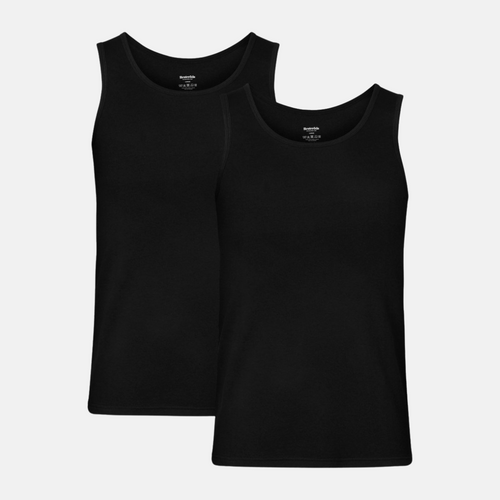
A neckline must stretch over the head and then close snugly around the neck again. That is exactly what rib does well, because the ridges give plenty of stretch and pull back together. The same idea applies to sleeve cuffs and hems. You can see it in a bamboo tank top for men.
Jersey in the garment itself
Front, back and sleeves are usually made in jersey, because the fabric should hang rather than grip. A calm drape gives a cleaner shape than a fabric that squeezes, and no ridges show through a shirt. The same goes for a light bamboo undershirt for women in jersey.
When the edge loses its spring
After many washes, ribbed edges can turn loose as the spring slowly fades. That comes with age and is not a fault in itself. Wash at the temperature on the care label and avoid hanging the garment by the neckline when it is wet, so the edge is pulled out of shape less often.
What about warmth
Rib is slightly warmer than jersey, because the ridges trap a little more air. The difference is small, but it can be felt in close fitting tops and undershirts, where the fabric lies directly against the skin. On hot days soft jersey can feel lighter, while rib gives a little more warmth in the cold.
How to choose
Start with what the fabric is for. If it must hold an edge or close snugly at neck and sleeve, rib is the right choice. If it forms the garment itself and should hang calmly, jersey is better. Most good garments use both, each in the place where it helps most.
Frequently asked questions
Why do ribbed edges go loose
The spring in the ridges fades slowly after many washes and much wear, so the edge gives more than at the start. Wash by the care label and hang the garment by the shoulders rather than the neckline.
Is rib warmer than jersey
Slightly, because the ridges hold more air between fabric and skin. The difference is biggest in close fitting tops and undershirts, and it matters most when the weather is cold.
Can a whole garment be made of rib
Yes, mostly in close fitting tops and undershirts. The whole garment then follows the body closely, but it also squeezes more than jersey does, so many prefer jersey for a looser fit.
You can find the full range at Bamboo-Clothing.com.