Socks for standing work and what prevents aching legs
Short answer: After eight hours on your feet, blood collects in the lower legs. A stocking with even pressure helps, and a sock without a constricting cuff avoids making it worse. Dry feet make the rest of the day easier.
What happens in your legs
When you stand still most of the day, the calf muscle barely works and blood struggles to travel back up. It collects in the lower legs, which become heavy, sore and sometimes swollen. This affects many people in shops, warehouses, kitchens and hospitals. A sock cannot remove it, but it can help or make it worse.
Even pressure rather than a tight cuff
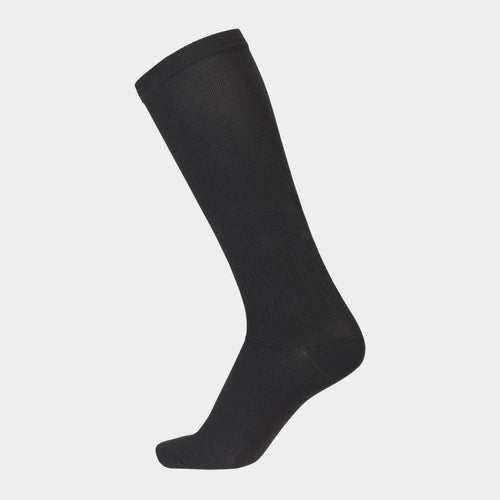
Even pressure along the whole calf supports the flow of blood upwards. A narrow, tight cuff does the opposite, because it constricts in one place and holds blood down. A support sock has the most pressure at the ankle, easing up the leg. Put it on in the morning, before your legs swell. See bamboo support socks.
How to wear a support sock properly
Pull the sock up smoothly without folds and make sure the heel sits exactly in place. A fold behind the knee or at the ankle can leave a pressure mark and spoil the effect. Do not roll it down if it feels warm, as the edge becomes a tight ring. Take it off completely during a break instead.
Dry feet against blisters
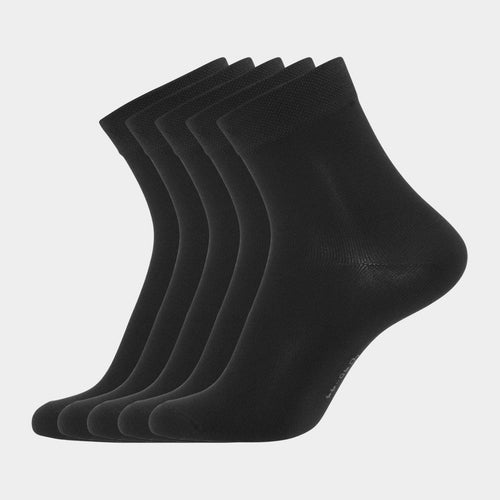
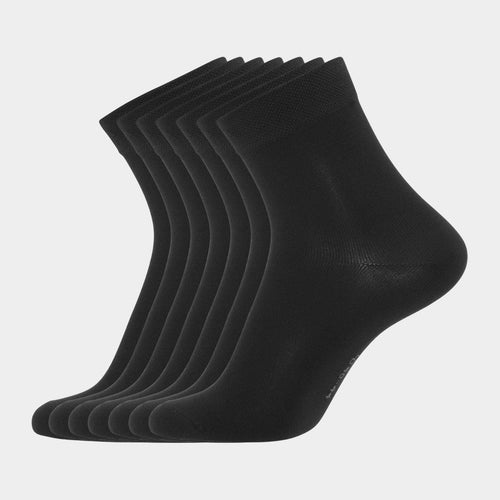
Eight hours in shoes means damp feet, and damp skin blisters more easily. A material that moves moisture away therefore prevents more than a thicker sock. Bamboo viscose draws sweat away from the skin, so the foot stays drier through the shift. See all bamboo socks for men.
The sock must not fold
A sock that is too big folds under the foot or at the heel. The folds rub with every step, and after many hours that becomes a blister. Choose the size that lies smooth without squeezing. Also check that the heel sits correctly, so the sock does not slide down into the shoe during the day.
Change halfway through the shift
If you can change socks in the middle of the day, it does more than any product. Dry feet last the rest of the day. Keep a spare pair in your bag or locker at work. It takes a minute during a break, and many people notice the difference the same afternoon.
Shoes matter too
The sock works together with the shoe. A shoe that is too narrow squeezes foot and sock together, and a shoe without support leaves feet tired whatever the sock. Make sure there is room for your toes and a cushioned sole. Consider alternating two pairs of shoes at work, so they dry between shifts.
When it hurts every day
Persistent pain, swelling or numbness should be seen by a doctor or podiatrist. Clothing can make the days easier, but it is not a treatment. If you suddenly notice swelling in only one leg, see a doctor the same day. See also all bamboo socks for women.
In short
Choose support socks with even pressure, or socks with a soft cuff that does not constrict. Keep feet dry with a material that moves moisture, and change halfway through the shift if you can. Make sure the sock does not fold and your shoes leave room. Persistent pain should be seen by a professional.
Frequently asked questions
Do support socks help with standing work?
For many people, yes. Even pressure supports the flow of blood upwards through the day, so legs feel less heavy. They should sit smoothly and be put on in the morning to work best.
How do I avoid blisters?
Keep your feet dry and make sure the sock does not fold under the foot. A material that moves moisture away and a change of socks midway through the shift do more than a thicker sock.
When should you seek advice?
With persistent pain, swelling or numbness in the legs, talk to a doctor or podiatrist. Sudden swelling in only one leg should be seen the same day.
See our range of men's bamboo socks.