Socks for walking boots
Short answer: A hiking boot sock needs a high cuff, cushioning under the foot and a material that moves moisture away from the skin. These three things decide whether a long walk stays comfortable or ends with sore feet.
Three things decide the walk
A hike loads the foot for hours, and the sock is the only layer between skin and boot. That makes the choice matter more than many think. Cuff, cushioning and material work together, and if one is missing you feel it fast. Look at all three before you look at colour or price.
The cuff must be high
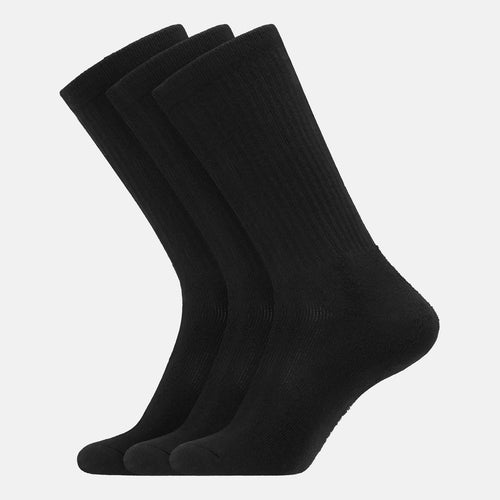
Hiking boots have a tall rim. The sock should reach about five centimetres higher, so the leather never touches the skin. Put the sock on and check where the boot rim ends before you buy. A cuff that is too low creates friction exactly where the rim meets the skin.
Why blisters appear
The most common cause of blisters on a long walk is a rim rubbing against the skin again and again. A sock that does not cover the boot rim is the classic trigger. With a high cuff the friction moves onto the sock, and you can walk further before anything starts to bother you.
The cushioning under the foot
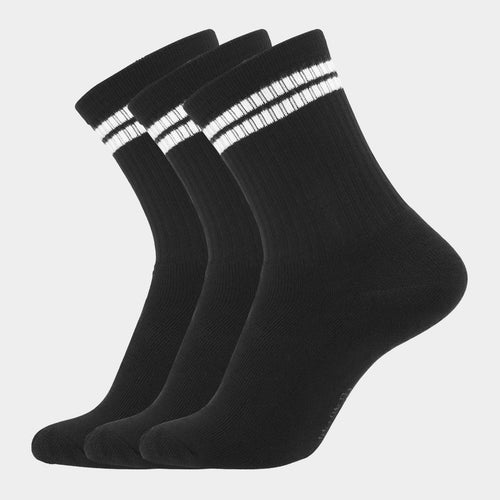
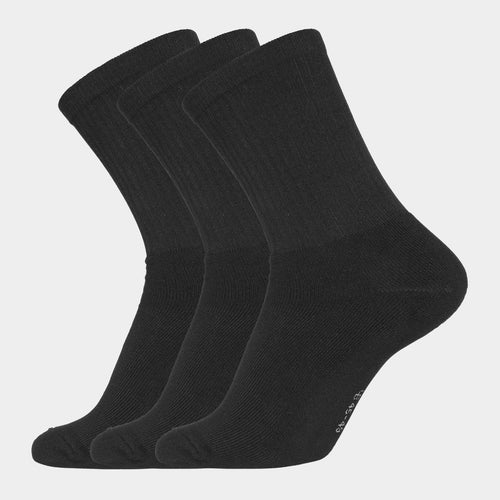
A terry sole cushions under the heel and forefoot, where the pressure is greatest. That noticeably reduces tired feet on a day walk, because every step feels a little softer. The padding does not need to be thick everywhere, since the two pressure points matter most. Take a look at bamboo socks for men.
The material moves moisture
Bamboo viscose moves moisture away from the skin. That matters, because damp skin has more friction and gets blisters faster. The material feels soft against the foot, and the moisture does not stay trapped in the sock. Have a look at bamboo socks for women for forest paths and mountain trails.
Dry feet matter most
Dry feet are the single most important thing on a long walk. Moisture comes from sweat, but also from wet ground or rain. A sock that moves moisture helps with the first. For the second, a change of socks is the simplest fix, and it takes almost no room in the pack.
A spare pair in the pack
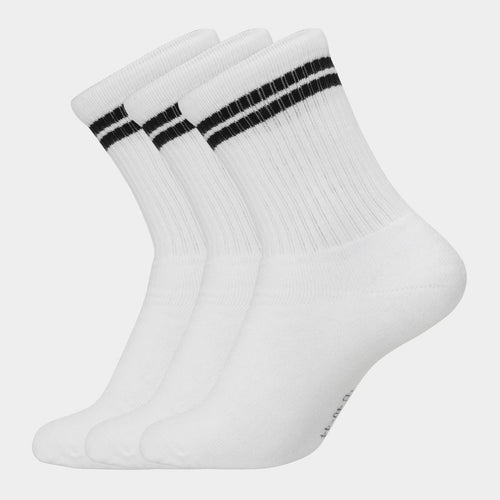
Always bring a spare pair. A change halfway makes a big difference on a long walk, because you start again with a dry sock. Wring out the wet pair and hang it on the pack so it dries as you walk. For easier routes, try bamboo tennis socks for men.
Two layers of socks
Do two layers of socks help? Yes, if there is room in the boot. The friction then moves between the layers instead of hitting the skin. But two thick pairs in an already snug boot only make the foot tight. Try the combination at home and walk a short round before a day hike.
Why cotton is a poor choice
Cotton is not a good choice for hiking. It gets wet and stays wet, and a wet sock rubs more. The result is friction and cold feet at every break. Choose a material that passes moisture on, and leave the cotton at home for everyday wear.
Frequently asked questions
Should you bring a spare pair
Yes. A change halfway makes a big difference on a long walk, because you start again with a dry sock and the other pair can dry on your pack.
Do two layers of socks help
Yes, if there is room in the boot. The friction then moves between the layers and away from the skin. If the boot is already snug, a second pair only makes the foot tight.
Is cotton suitable for hiking
No. Cotton gets wet and stays wet, and damp skin gets blisters faster. Choose a material that moves moisture away from the skin instead.