Socks for wellington boots where the foot cannot breathe
Short answer: Rubber traps every bit of moisture inside. The sock therefore needs to move moisture away from the skin and have room to do it. A thick sock inside a tight boot works against that and makes things worse.
The rubber traps the moisture
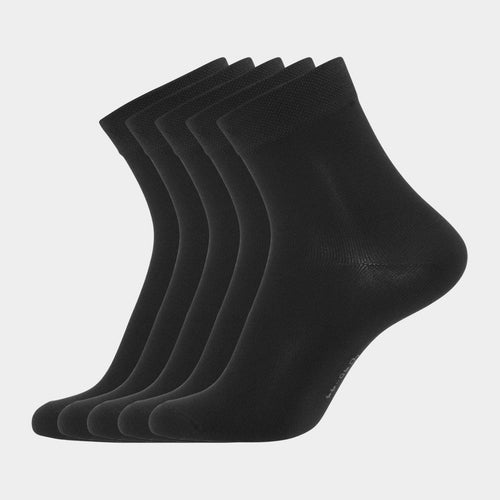
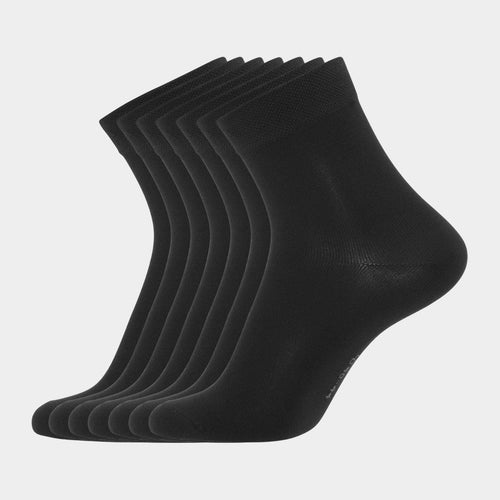
All the sweat stays in the boot, because rubber does not let air or moisture pass through the material the way a breathable fabric would. The sock is therefore the only part of the outfit that can actively move moisture away from the skin. See bamboo socks for men.
The length needs to clear the shaft
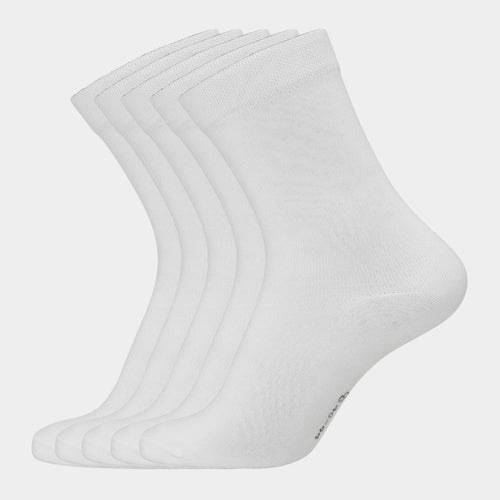
If the sock is shorter than the boot, the shaft rubs directly against the calf with every step, because there is no fabric to absorb the friction between skin and rubber. Always choose a length that matches or clears the boot's shaft. See bamboo socks for women.
Room is necessary
Without air around the foot, moisture cannot go anywhere, no matter how good the sock's fabric otherwise is at carrying it away. A tight boot blocks exactly the air movement needed for that to happen.
Switch to a dry pair afterward
The foot ends up damp regardless, after a couple of hours in rubber boots. A dry pair afterward is necessary to stop the feet staying cold and damp for the rest of the day. See bamboo clothing for men.
The fabric decides how well it works
Cotton holds onto moisture instead of moving it along, while bamboo viscose carries moisture further into the sock, where it can evaporate slowly even inside the closed environment a rubber boot creates.
Avoid a thick sock in a tight boot
A thick sock takes up more room and presses the foot against the rubber, which raises both heat and pressure while making the moisture problem worse rather than better.
Check the boot's fit
A boot that is already too small makes worse everything a good sock could otherwise solve, because there simply is not room for the air movement the foot needs. See bamboo underwear for men.
Wash the socks often
Moisture and sweat from rubber boots build up in the yarn faster than ordinary wear does, so the socks should be washed more often if used regularly with this type of footwear.
For longer stretches outdoors
During garden work or long days in rubber boots, the difference between a good sock and a poor one shows within a few hours. Here it pays to invest in socks made specifically for this kind of use.
Frequently asked questions
Which socks work best with rubber boots?
Long socks that move moisture and have room in the boot. Rubber traps all the moisture, so the sock has to do the work alone.
Should the sock be thick?
Only if the boot has room. A thick sock in a tight boot presses the foot and makes the moisture problem worse rather than better.
Why does the foot get damp regardless?
Because rubber does not let moisture through. Sweat cannot evaporate out of the boot, so the sock alone has to carry that load.