Socks in cotton, wool or bamboo
Short answer: Cotton is cheapest and most robust, wool warmest and best in cold, bamboo viscose smoothest and best against odour in everyday use. The choice often follows the season.
Cotton for everyday wear and hard use
Cotton socks withstand the most wear and cost the least of the three materials, making them a natural choice for everyday use. However, they get wet from sweat or rain and stay wet for a long time, because the fibres hold onto the water. For office days and lighter activity, cotton is often enough and the price is hard to beat.
Wool for cold and wet weather
Wool insulates even when it becomes damp, which is why it is used in mountains and on winter trips. The fibres trap small pockets of air that hold onto warmth, whether the sock is dry or slightly damp from sweat. That makes wool the most reliable choice when temperatures drop or the weather turns wet and cold.
Bamboo for odour and comfort
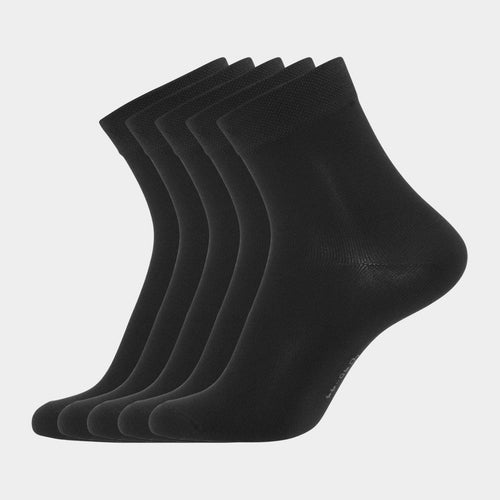
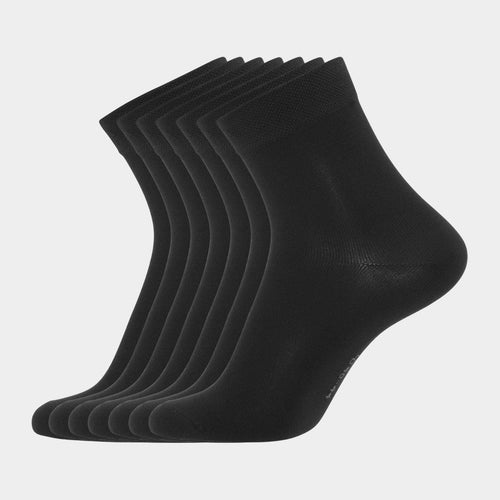
Bamboo viscose is the smoothest against the skin of the three materials and binds odour compounds noticeably weaker than synthetic fibres do. That makes bamboo socks comfortable to wear all day, even after many hours in shoes. See bamboo socks for men for a soft alternative for everyday use.
Breathability and moisture management
Cotton absorbs moisture quickly but holds onto it, which can give a damp feeling after activity. Wool handles moisture better than cotton, while bamboo viscose moves moisture fastest onward into the shoe and surrounding air. The difference is most noticeable on long walks or days when feet sweat more than usual.
Durability under wear
Cotton and blends with synthetic reinforcement in the heel generally last longest under hard, daily wear. Pure wool and pure bamboo viscose can wear out faster at the heel if no reinforcement is added. Look for a small share of polyamide in the heel if the socks are meant for a lot of walking or running.
Washing and upkeep
Cotton socks tolerate warm washing and tumble drying without issues, making them easy to maintain in a busy everyday routine. Wool often needs to be washed cooler and air dried to avoid felting and shrinking of the fibres. Bamboo viscose sits in between and should be washed at a moderate temperature to keep its smoothness longest.
Mix by season
Most people need several types of socks depending on the season, activity and how much their feet sweat that day. Wool for winter and cold, bamboo viscose for the rest of the year and cotton for everyday use covers most needs. See all bamboo socks for men for a selection suited to warm days.
Fit and thickness
Cotton socks often come in a thicker quality that gives extra padding in the shoe for everyday use. Wool can be thin and still warm, because the insulation comes from the fibre structure and not only the thickness. Bamboo viscose sits closest to the foot and gives the least volume, which makes it suited to narrow shoes.
Price difference between the materials
Cotton is usually the cheapest choice and comes in all price ranges from basic to reinforced quality socks. Wool typically costs more because of the raw material price and the more complex processing of the fibres. See bamboo socks for women for a mid price segment focused on comfort and odour control.
Do you need different socks for summer and winter
It is a clear advantage to have several types of socks, as the need changes markedly with season and activity level. Wool in winter and bamboo viscose the rest of the year covers most needs for most people. Cotton works well as a supplement to both, especially for lighter everyday use without much wear.
Frequently asked questions
Which socks last longest?
Cotton and blends with synthetic reinforcement at the heel generally last longest. Pure natural fibres like wool and bamboo viscose wear out faster at the heel without added reinforcement.
Which socks smell least?
Bamboo viscose and wool smell least, because both bind odour compounds more weakly than synthetic fibres like polyester do under the same use.
Do you need different socks for summer and winter?
It is an advantage. Wool in winter and bamboo viscose the rest of the year covers most needs for most people.