Socks in winter shoes and moisture from the inside
Short answer: In winter shoes, feet usually get wet from the inside through sweat rather than from the outside through snow. A sock that moves moisture away from the skin keeps the foot warmer than a thick sock that soaks up moisture and stays damp.
Sweat is the problem
When your feet freeze in winter, it is easy to blame the cold outside. Inside the shoe, though, it is usually sweat that makes the foot cold. Feet sweat in the cold too, and a damp sock draws heat away from the skin much faster than a dry one.
Thick does not mean warm
A thick sock seems like the obvious choice, but it can squeeze the foot inside the shoe. When the foot is pressed, circulation suffers and the toes get colder. Warmth comes from a foot that has room and stays dry, not from the number of layers.
Room in the shoe
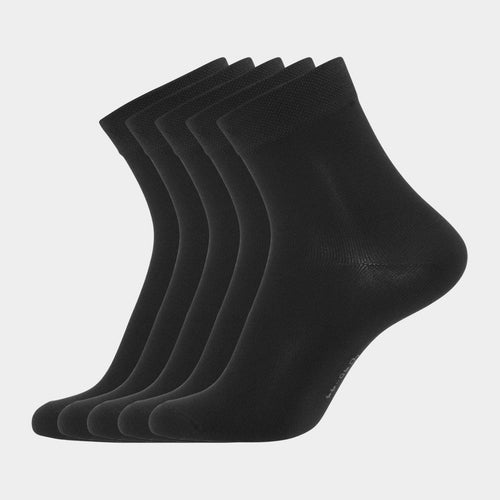
There should be air around your toes. The air between foot and shoe insulates, and it disappears if everything is filled up. If the shoe is tight, no sock will help. Try winter shoes on with the sock you plan to wear. See bamboo socks for men for regular lengths.
Change along the way
If you come inside with damp socks, change them. A dry sock warms at once, while a wet one keeps cooling. If you have a long day outdoors ahead, put a spare pair in your bag. It takes up almost no space and makes a clear difference.
Two thin layers
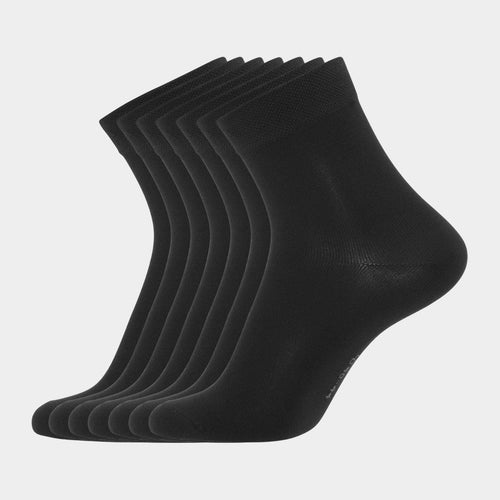
On long days outside, two thin layers often work better than one thick. The inner layer lies smoothly against the skin, and the outer one adds a little warmth. Just remember that the shoe still needs room for both. See bamboo socks for women for thin styles.
The material
The material decides how well the sock moves moisture. Bamboo viscose can move moisture away from the skin and feels smooth against the foot. Cotton absorbs moisture as well but holds on to it longer. That matters more in a closed winter shoe than in a light summer shoe.
Let the shoe dry
Winter shoes collect moisture from both sweat and snow. Place them somewhere with air around them and take out the insole if you can. Avoid putting them right against a hot radiator, as leather and glue can be damaged. A dry shoe is a warm shoe.
The cuff
In winter many people wear long socks under their trousers. Here it matters that the cuff does not dig into the calf, since a tight cuff can also lead to cold feet. A soft, wide rib keeps the sock up without leaving marks.
The range
If you keep a few pairs of socks just for your winter shoes, you know the length and thickness are right. Choose a dark colour so salt and street dirt are less visible. See the full range in all bamboo socks for women.
Read more
If you want to know more about how socks can keep your feet warm without itching, read about bamboo socks in winter. It covers the difference between wool and bamboo, and why many people combine the two in the cold months.
Frequently asked questions
Why do feet get cold in winter shoes?
Usually because the sock is damp from sweat or the shoe is too tight. A damp sock draws heat away, and a tight shoe reduces circulation in the foot.
Are thick socks the warmest?
Not if they squeeze the foot. Room in the shoe and a dry sock matter more than thickness, because the air around your toes also holds the warmth.
Do two thin layers work?
Yes, on long days outside two thin layers often beat one thick. The shoe still needs room for both, otherwise the foot gets squeezed.
See our range of men's bamboo socks.