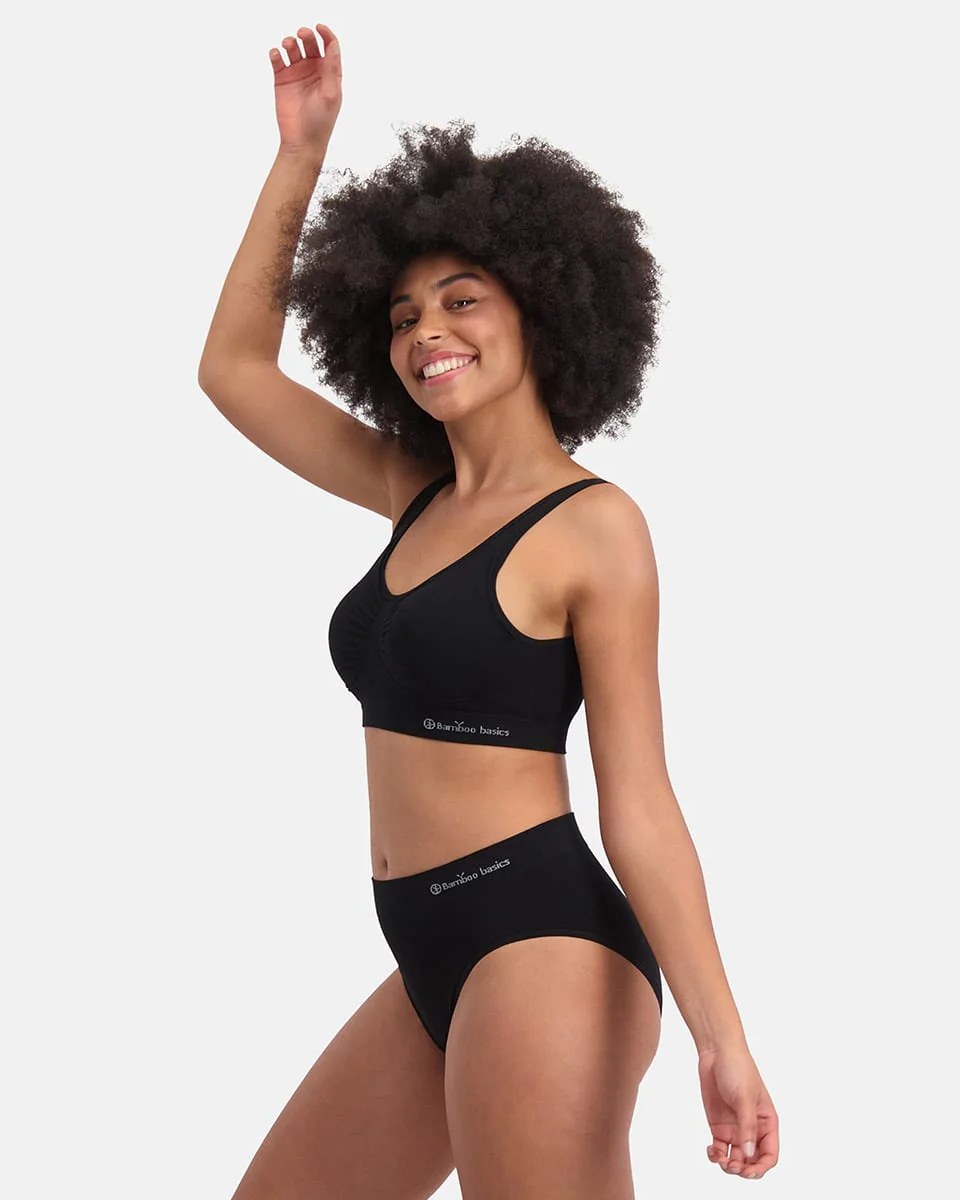
Tanga or string and the difference in the cut
Short answer: Tanga and string are used slightly differently from brand to brand, but typically a tanga has a little more fabric at the front and back than a string. The difference lies in how narrow the back is and how high or low the waistband sits. Always check the pictures and description of the individual garment.
What the words cover
Tanga and string are terms often used interchangeably, and the definitions are not fixed. Both typically describe cuts with a narrow back and low coverage. What one brand calls a tanga, another may call a string, so the pictures matter more than the name. That applies especially when you compare several brands.
The typical difference between tanga and string
As a rule of thumb, a tanga has a slightly wider back and more fabric at the sides, while a string has a thinner strip and less coverage. That is a general description and not a rule. bamboo inner shorts are an entirely different cut with legs and more coverage, if you prefer that.
Waistband and width of the sides
The width of the sides and the height of the waistband decide much of the comfort. A wider side lies flat and presses less, while a narrow one can cut in if the size is too small. Measure your hips, use the size guide, and try a size that lies flat without squeezing.
The fabric close to the skin
With a narrow cut, you feel the fabric clearly. Choose a soft, stretchy material without coarse seams. Viscose from bamboo is often soft, but read the composition on the label. It tells you more about how the cut fits than the name does, and it is easy to compare between models.
When narrow cuts can be practical
With close-fitting dresses and trousers, a narrow cut can avoid visible edges. For everyday wear, exercise and long days many prefer more fabric. It is a choice and not a requirement, so choose the cut that feels best, and feel free to switch depending on the day.
Bra and the whole picture
Underwear is more than the bottom half. A bamboo bra without underwire can give a soft, adapted layer on top and goes well with a light cut below. Choose fabrics and colours that go together so you can mix freely. That way you can choose by the day.
Layers on top
What you wear over it affects the choice. Under thin dresses and trousers a smooth, narrow cut is least visible. When it gets cold, a thin long-sleeved layer such as a women's long-sleeved bamboo T-shirt can keep you warm without adding bulk.
Washing and care
Wash according to the label, preferably on a gentle cycle in a laundry bag, and skip fabric softener, which can make the elastic slack. Dry flat or hanging without high heat. Change daily. Slack elastic or thin fabric are signs that the fit is used up, whatever the cut is called.
Frequently asked questions
What is the difference between a tanga and a string?
The terms are used slightly differently between brands. Typically a tanga has a little more fabric than a string, which is narrower. Always check the pictures and description of the individual garment.
Which cut is most comfortable?
It is personal. Fit and fabric matter most, and many prefer more fabric. Try a pair in the right size and choose the one you forget you are wearing.
How do I find my size?
Measure your hips and use the size guide for the specific model. If you are between two sizes, try both.