Tensile strength measured in newtons
Short answer: Tensile strength is the force needed to tear a fabric sample apart. It is measured in newtons, and the number tells you how much the fabric can bear, not how long it will last. Here is how the measurement works and what it tells you.
How the measurement works
A strip of fabric is clamped in two jaws that are pulled apart at a steady speed. The machine records the force at which the fabric gives way. The strip has a fixed size so figures from different fabrics can be compared. The test destroys the sample, so the result comes from a scrap and not the finished garment.
A newton is a force, not a weight
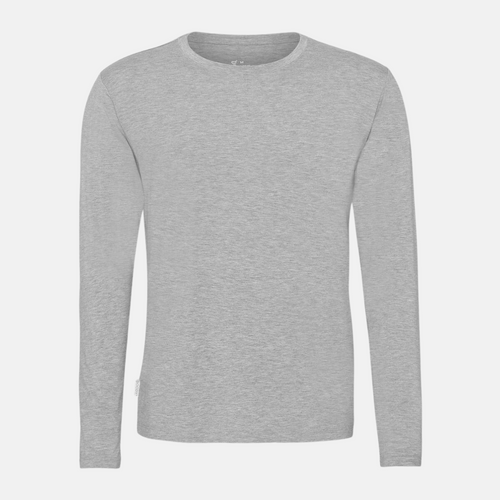
Ten newtons roughly equal the weight of one kilo. An ordinary jersey fabric can often bear many hundred newtons before it tears. The figures sound large, but they mostly show that everyday clothing rarely comes near what it takes to tear the fabric. See our bamboo long sleeve T-shirt for men.
What the number does not say
Tensile strength measures one single hard pull. It says nothing about wear, about pilling or about how well the fabric handles a hundred washes. A fabric can be strong in the test and still wear thin over time. See also bamboo bedding and bamboo underwear for men, where washing and wear matter a lot.
Direction and sample size
Tensile strength is often measured both lengthways and crossways, because the fabric is not the same in both directions. The width and length of the sample are fixed in the method so results can be compared. A number without direction and method is of limited value. Always ask how it was measured.
Knit and woven are measured differently
Knit and woven fabric are not measured the same way. Knit is often tested with other methods, because it stretches so much that an ordinary pull test gives no useful picture. So figures for the two types cannot be compared directly, and you should only compare fabrics measured by the same method.
Does high tensile strength matter in underwear
Less than you might think. In underwear and T-shirts, wear and elastic matter more in practice than the force it takes to tear the fabric. Nobody pulls a T-shirt with hundreds of newtons. What you feel is fit, softness and how the fabric looks after many washes.
When tensile strength matters more
For fabrics exposed to hard pulling, the number matters more. That applies to bags, tarpaulins and workwear, for example. For bedding and everyday clothing, other properties decide whether you are satisfied, and tensile strength is only one of several numbers to look at on a data sheet.
Seams can be the weak point
In a finished garment it is often the seam and not the fabric itself that gives first. That is why there are special tests for seam strength, where a seam is pulled until it opens. A strong fabric does not help if the seam is weak, so both should be judged separately.
What you can feel yourself
You cannot test tensile strength at home with numbers, but you can feel differences. Hold the fabric between your fingers and pull lightly. Notice when it starts to give and whether it springs back. Compare two garments and see how they feel after a wash. That says more than a number.
Frequently asked questions
Does high tensile strength matter in underwear
Less than you might think. Wear and elastic matter more in practice, because underwear is rarely exposed to the hard pull that tensile strength measures.
Are knit and woven measured the same way
No. Knit is often tested with other methods, because it stretches so much. So figures cannot be compared directly between the two types of fabric.
Can I test it at home
Not with numbers, but you can feel when a fabric starts to give. Compare two garments and notice how they behave when you pull lightly.
You can find the full range at Bamboo-Clothing.com.