The difference between viscose, modal and lyocell
Short answer: All three are cellulose fibres made from plant pulp and belong to the same family of regenerated fibres. The difference lies in the process itself: lyocell uses a solvent that is recycled in a closed loop, while viscose and modal use other chemical methods along the way.
The same starting point for all three
All three fibres start with cellulose from plant pulp, whether the source is bamboo, beech or eucalyptus. That is why they resemble each other so closely in feel and behaviour despite their different names, and it is also why many shoppers mix them up without being able to tell the difference. See how bamboo viscose is made.
Modal is a stronger variant
Modal is a variant of viscose where the fibres are stretched further during manufacturing before being allowed to fully harden. That makes the fibre noticeably stronger, especially when wet, which is one of the biggest weaknesses of ordinary viscose in everyday wear and when washing the clothing repeatedly.
Lyocell uses a closed loop
In lyocell, the cellulose is dissolved in a solvent that is afterwards recovered and used again and again in production instead of being released as waste. That is the key technical difference between the three processes, and it makes lyocell the manufacturing method that typically uses the fewest new chemicals per kilo of fibre.
In practice they feel almost the same
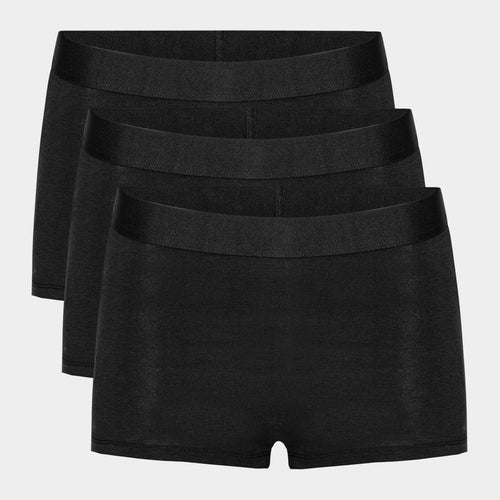
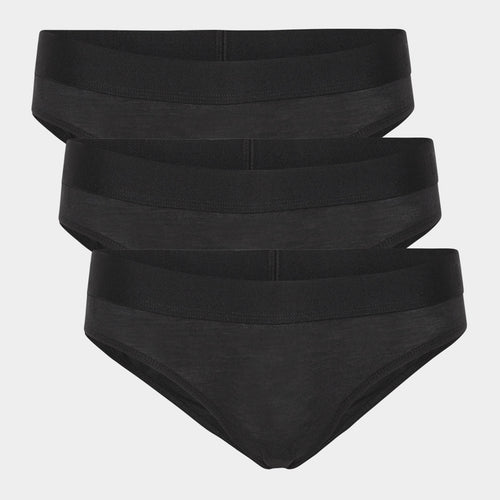
For an ordinary wearer, the everyday difference between the three fibres is often fairly small. All three feel soft against the skin, drape heavily like a natural fabric and absorb moisture well, which makes bamboo underwear for women comfortable to wear close to the skin throughout the whole day.
Strength and durability vary a little
Although they feel similar, modal and lyocell generally hold up a little better to repeated washing than ordinary viscose, because the manufacturing process makes the fibres stronger from the start. The difference shows up most after many washes over a long time, not in the first few months when all three fibres behave in a very similar way.
Care is largely the same
All three tolerate less heat than cotton and should be washed at 40 degrees without fabric softener, which otherwise cancels out moisture transport in the fabric. See washing and care for the general advice that applies to all regenerated cellulose fibres regardless of which of the three types a given item is actually made from.
Environmental impact depends on the process
Because lyocell recycles its solvent, the process is often considered more resource efficient than the one used for ordinary viscose. See facts about bamboo for an overview of what is genuinely documented about the different plant sources and manufacturing methods, without exaggeration from either side of the debate.
How to tell the difference in practice
On a care label, the only way to tell the difference is by reading the fibre name itself, since all three often feel and look the same on first touch in a shop. Modal and lyocell are mentioned less often than viscose, because both are more expensive to manufacture and therefore used in fewer collections overall.
The choice rarely depends on fibre alone
In practice, cut, weight and weave often matter more for how a piece of clothing feels and fits than whether it is viscose, modal or lyocell. The fibre sets the framework, but the rest of the design decides most of the overall experience once the clothing is actually worn and washed again and again.
Frequently asked questions
What is the difference between viscose and lyocell?
The process. Lyocell uses a solvent that is recovered in a closed loop, while ordinary viscose releases more waste product during the actual manufacturing of the fibre.
Is modal stronger than viscose?
Yes, especially when wet. The fibre is stretched further during manufacturing, which makes it more durable through repeated washing over a long time compared with ordinary viscose.
Can wearers actually feel a difference between the three fibres?
Only slightly. All three feel soft, drape heavily and absorb moisture well. The difference shows up mostly in durability after many washes, not in everyday wear.
You can find the full range at Bamboo-Clothing.com.