The myth that bamboo fabric is made directly from bamboo fibres
Short answer: The soft bamboo fabric used in underwear and bedding is almost always viscose made from bamboo. The raw fibres of the plant are stiff and coarse, so they are dissolved and spun into a new, smooth fibre before they can become clothing.
What bamboo is as a plant
Bamboo is a grass with hard, woody stems. Those stems are made of cellulose, lignin and other substances that give the plant its strength. If you try to pull fibres straight out of the stem, you end up with short, stiff strands that resemble the roughest kind of linen or hemp. Fibres like that are useful for mats, rope and paper, but they have very little in common with the supple fabric you know from a pair of soft underpants.
How bamboo becomes viscose
To create a soft fibre, the bamboo pulp is treated chemically so that the cellulose dissolves into a thick liquid. That liquid is pushed through tiny nozzles and sets into long, even filaments. It is the same basic method used for viscose made from beech or eucalyptus wood. The result is a regenerated cellulose fibre in which the original structure of the plant has disappeared. That is why the label usually says viscose from bamboo rather than simply bamboo.
Why the fabric feels so smooth
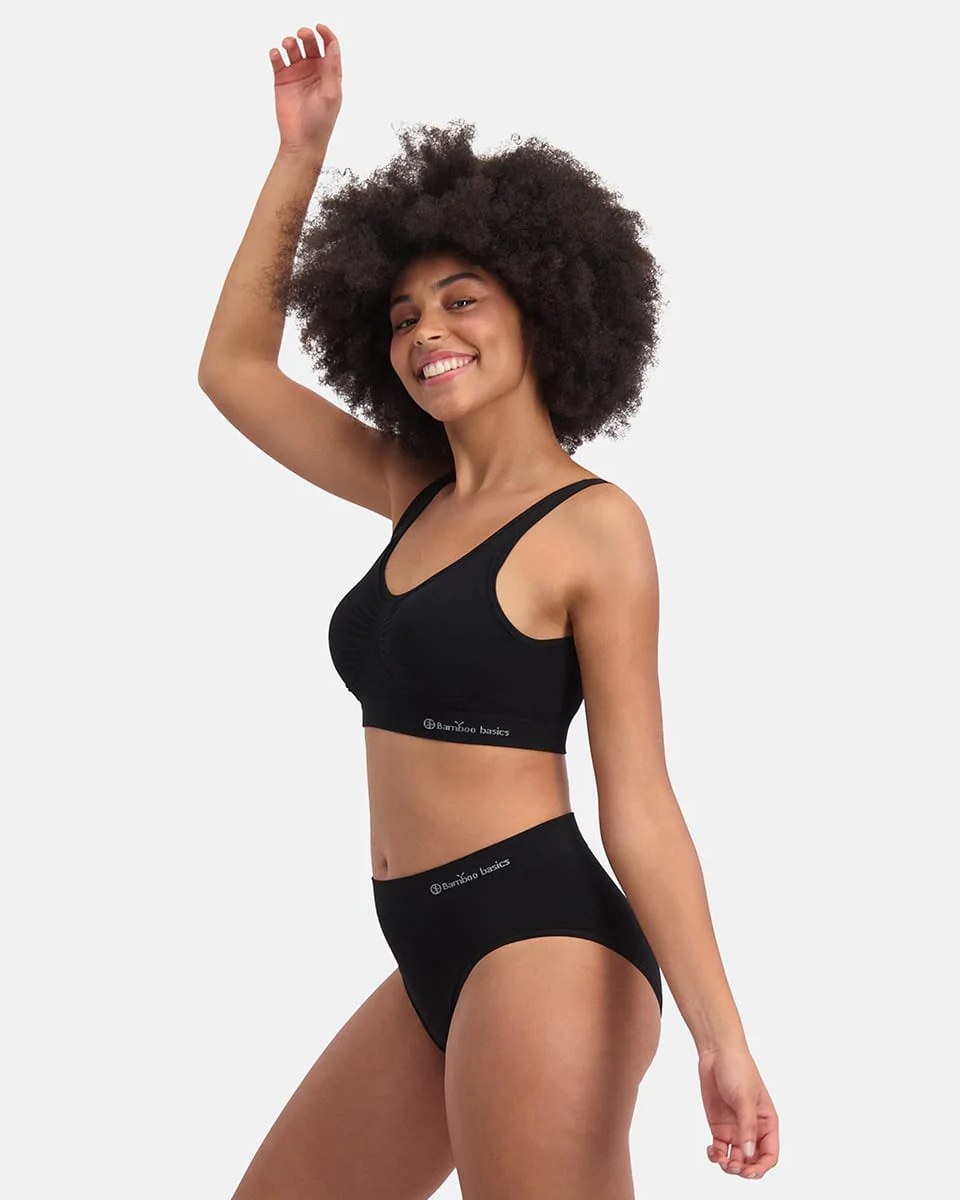
Because the fibre is spun from a liquid, it has an even surface without the tiny scales and irregularities found on natural fibres. This gives a fabric with a soft drape and a slightly cool feel against the skin. It explains why the material is popular for clothing that sits close to the body, such as bamboo underpants for men, where smoothness and fit matter far more than stiffness or structure.
Does mechanically made bamboo fabric exist
Yes, but it is rare. In mechanical processing the stems are crushed and treated with enzymes so that the fibres can be combed out. The method is slow and costly, and the resulting fabric is coarser and feels more like linen. It is usually sold as bamboo linen. Most bamboo clothing on the market is therefore viscose, and that is perfectly fine as long as you know what you are buying and can read the care label correctly.
What to look for on the label
Under EU rules the care label must state the fibre type. If it says viscose, lyocell or modal from bamboo, you are looking at a regenerated fibre. There is often a small share of elastane too, which helps the fabric spring back into shape. The same applies to clothing and to textiles for the home, for example home and homewear in bamboo. The label tells you more than words such as natural or pure printed on the packaging.
Why the myth persists
The word bamboo brings to mind a green plant, so it is easy to assume the fabric is simply plant fibre woven together. In reality there is an industrial process behind it, but that does not make the fabric worse. It just means that its qualities come from the shape and processing of the fibre. Brands such as Nordic Weaving work with exactly this kind of fibre, and it is the processing that creates the soft surface people notice.
Frequently asked questions
Is bamboo viscose a natural material
The raw material is a plant, but the fibre is produced industrially. It therefore belongs to the regenerated fibres, alongside ordinary viscose and modal.
What is the difference between bamboo viscose and bamboo lyocell
Both are regenerated cellulose fibres. Lyocell is made with a different solvent in a closed loop and often gives a slightly stronger fibre.
Can you feel a difference between bamboo viscose and ordinary viscose
The difference is small because the fibres are built in the same way. The weight, knit and finish of the fabric shape the feel more than the raw material does.
You can find the full range at Bamboo-Clothing.com.