The myth that certified clothing is completely free of chemicals
Short answer: Certified clothing is not free of chemicals. All textile production uses chemicals, from making the fibre to dyeing it. A certification usually means that limits have been set for specific harmful substances and that the finished product has been tested for them.
Chemistry is part of every textile
Whether clothing is made from cotton, wool, viscose or polyester, chemicals are used along the way. Cotton may be grown with fertiliser and pesticides, viscose is made by dissolving cellulose chemically, and almost all clothing is coloured with dyes. On top of that, auxiliary substances are used for spinning, knitting and finishing. Chemistry is therefore not something you can avoid entirely, but it is something that can be controlled and limited.
What a certification usually means
There are several labelling schemes for textiles. Many of them test the finished product for a long list of potentially harmful substances and set limit values for them. Some also look at production, such as wastewater and working conditions. What a scheme covers varies. It is therefore a good idea to look up the scheme and see exactly what it promises, rather than assuming that it means the product is free of chemicals.
Viscose and how it is made
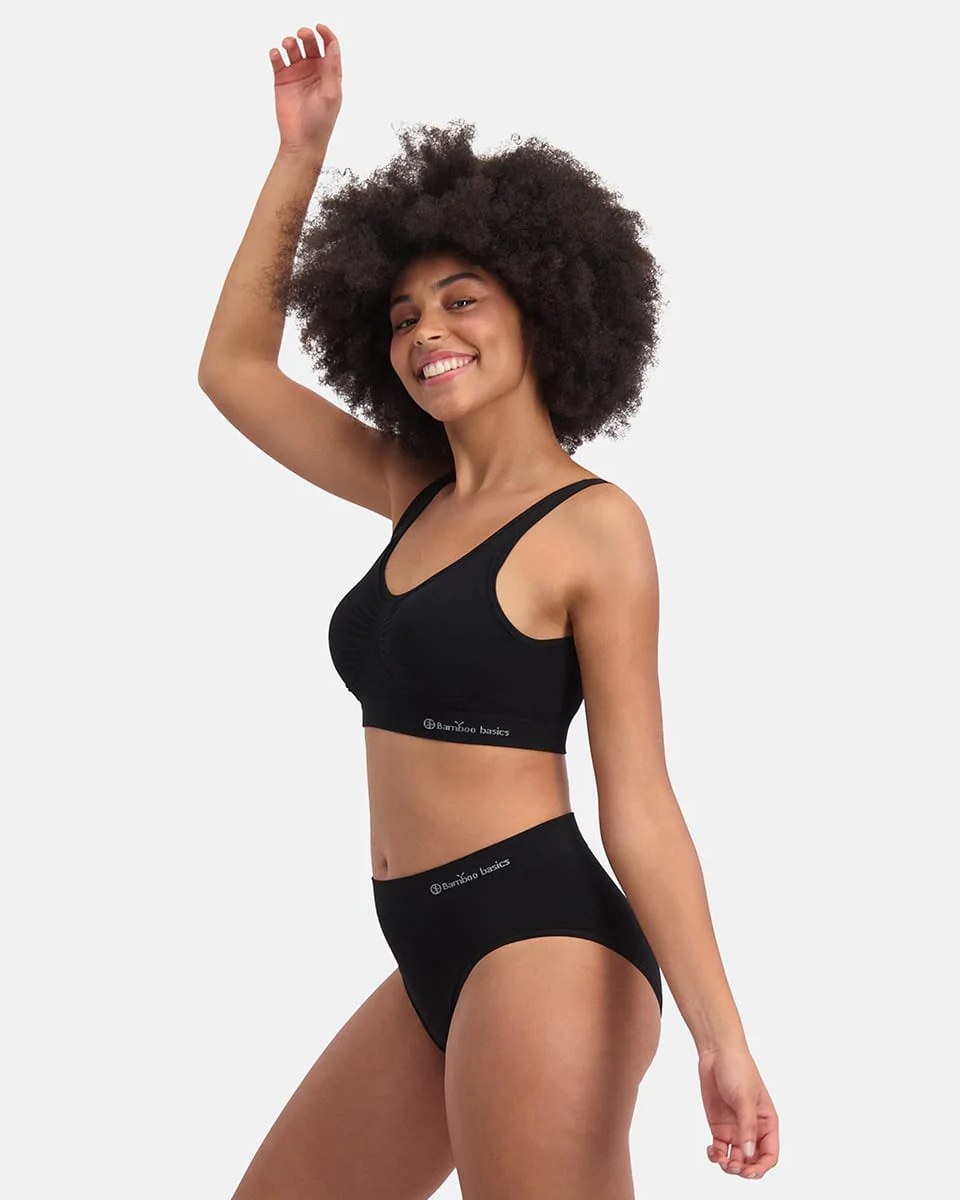
Viscose from bamboo is produced by dissolving the cellulose of the plant with chemicals and spinning it back into fibres. That cannot be done without chemistry. The finished fabric can, however, be tested for residues of harmful substances. Underwear such as a bamboo undershirt for women sits close to the skin, so it is relevant to know that the product has been tested. Read what the certificate actually covers.
Clothing close to the body
Clothing worn directly against the skin for many hours, such as underwear and period wear, is naturally in focus when people talk about chemicals. Period underwear often consists of several layers with different functions, and it makes sense to know what those layers are made of. If you experience a skin reaction, stop using the product and talk to your doctor about what may be causing it.
Wash new clothes before use
Regardless of certification, it is a good habit to wash new clothes before wearing them. Washing removes excess dye and residues from finishing that can remain on the fabric after production and transport. This also applies to bedding and sheets such as bamboo envelope sheets, which are in close contact with your skin all night long. Wash at the temperature given on the care label for the best result.
How to read the labelling
Check which scheme is involved and what it covers: the finished product, the production process or both. See whether the certification applies to the whole product or only to part of it, such as the fibre. Be aware that words such as natural and pure are not protected terms. A certification can be a useful tool, but it needs to be properly understood before you base a buying decision on it.
Frequently asked questions
Does certified mean the clothing is organic
Not necessarily. Some schemes concern organic fibre, while others are about testing for harmful substances. Read what the scheme covers.
Can you react to certified clothing
Yes, a few people react to dyes or elastane, for example. If you have problems, talk to your doctor.
Does washing remove all chemicals
Washing removes excess dye and finishing residues, but not the dye that is bound into the fibre.
You can find the full range at Bamboo-Clothing.com.