The myth that you can judge quality by the price
Short answer: Price alone does not tell you how good a product is. It also reflects the brand, the shop, the marketing and the margin. Quality can be judged far better from the material, the workmanship and the fit, all of which you can check yourself.
What the price is made up of
When you pay for a garment, you pay for much more than fabric and sewing. There are costs for design, transport, storage, retail, marketing, tax and profit. How large each of these parts is varies a great deal from brand to brand. That is why two almost identical items can have very different prices. A high price may reflect good materials, but it can just as easily reflect an expensive brand name or an expensive shop.
The material tells you something
Read the care label. It tells you which fibres the fabric contains and in what proportions. Viscose from bamboo is soft, cotton is hard wearing, wool insulates and elastane provides stretch. Which material is best depends on how the garment will be used. A bamboo sports bra needs support and stretch, while an everyday bra should feel soft and comfortable all day long. The material should always suit the purpose.
Workmanship can be seen and felt
Turn the garment inside out and look at the seams. They should be even, without loose threads or holes. The fabric should lie neatly around the seams and not pull crooked. The elastic should be stitched in evenly. Feel the fabric: a densely knitted fabric feels full and even. These details are far better signs of quality than the price tag, and they can be checked in a few seconds in a shop or at home.
Fit is decisive
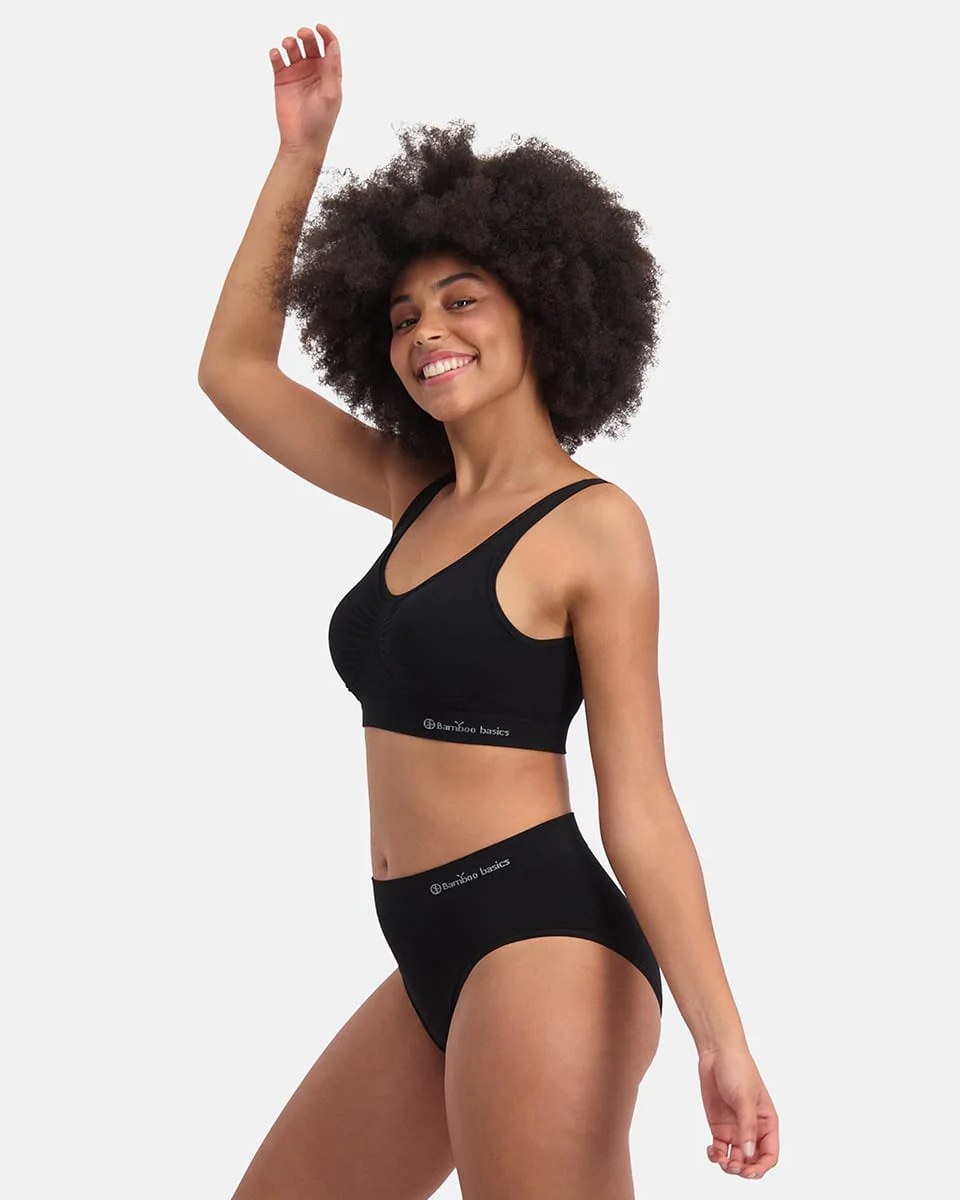
Even the best fabric is worth little if the garment does not fit. A bra should sit well without pressing, and socks should stay in place without slipping. Try the garment on and move around in it. A bamboo bra without underwire, for example, should give support through its cut and fabric rather than a rigid wire. The right fit provides more comfort than an expensive label ever could on its own.
Durability also depends on you
How clothes are treated has a big effect on how long they last. Wash at the temperature on the label, avoid the tumble dryer for delicate fabrics, and hang things up to dry. A cheaper garment that is well cared for can outlast an expensive one that is treated roughly. This also applies to bamboo socks for women, which last longest when they are washed gently and turned inside out first.
How to assess a product
Start with the care label and check the fibre content. Then look at the seams, the elastic and the density of the fabric. Try the garment on and think about what you need it for. Consider whether you can follow the care instructions in your daily routine. Use the price as one piece of information among several, not as the only one. That way you will find clothes that suit you and last a long time.
Frequently asked questions
Is cheap clothing always poor
No. Some cheap items are well made, while some expensive ones are fragile. Look at the material and workmanship.
How can I tell whether a seam is good
It should be even, without loose threads, and it should stretch a little without snapping.
Does a well known brand mean better quality
Not necessarily. A well known brand may sell good products, but you are also paying for the name.
You can find the full range at Bamboo-Clothing.com.