Three colours in one outfit is the limit
Short answer: Up to three colors in one outfit look put together. Four or more start to look random, unless the extra colors are neutrals like black, white, or gray.
Why three works
With three colors the eye can follow a pattern: a base, a secondary, and an accent. Add a fourth true color and the outfit loses its center of gravity, looking as if the pieces were chosen separately rather than as a whole.
What does not count
Black, white, gray, and navy act as neutrals and rarely count as one of the three colors. That is why an outfit in black, white, and gray plus a single color still looks calm and considered. See bamboo clothing for women .
How to use the rule
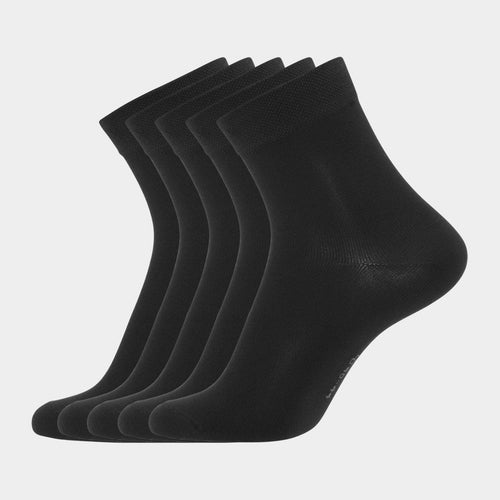
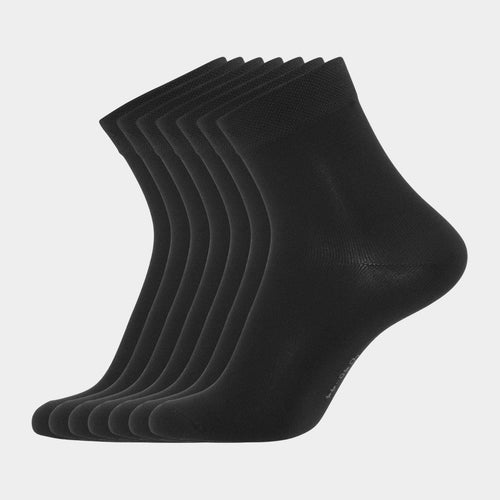
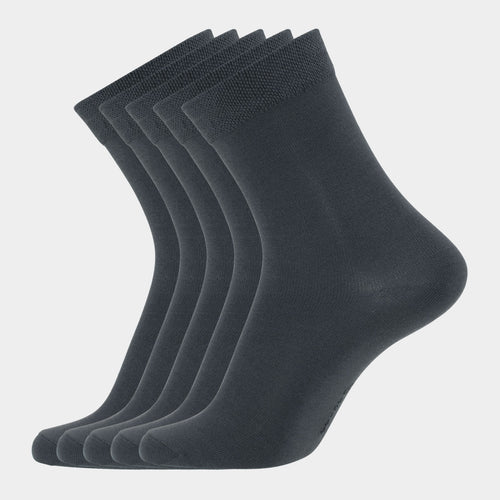
Choose a base that covers the most area, a secondary that covers roughly half as much, and an accent in something small. Socks, a top, or a sweater can be the accent. See bamboo t shirt for women and bamboo socks for women .
The base color carries the most
The base color usually covers pants, a skirt, or an outer layer, meaning the pieces that take up the most visual space in an outfit. It should therefore be a color you feel comfortable in and wear often, so the rest can easily be built around it.
The secondary color creates balance
The secondary color usually sits in a top or a cardigan and should add contrast without overpowering the base. A good rule of thumb is that the secondary covers about half the area the base does, so the eye naturally lands on the base first.
The accent is the final touch
The accent is the smallest element, often socks, a belt, or jewelry, and this is where you can allow yourself a color you would not otherwise wear on a larger scale. It brings life to the outfit without threatening the balance of the other two.
Patterns and the rule
A pattern counts as every color it contains, so a patterned piece often uses up the entire color budget on its own. Pair only one patterned piece with plain neutrals if you want to stay within the three colors.
Shoes and bags count too
Shoes and a bag are part of the whole outfit just as much as the clothing, even though they are easily forgotten when planning. A colorful bag can work well as your accent, but then the rest should stick to base and secondary.
The influence of the season
In summer the base color can be lighter, while in winter it often turns darker to match outerwear. The three color rule applies regardless of season, but which exact colors form your base, secondary, and accent can easily shift over the year.
Frequently asked questions
Do patterns count as a color
A pattern counts as every color it contains. That is why a patterned piece is often enough on its own, without adding further colors to the outfit.
Should shoes and bags count too
Yes, they are part of the whole outfit just as much as the clothing, and should be counted when working out the three colors in an outfit.
Can you use two shades of the same color
Yes, and that counts as one color. It adds depth without breaking the rule, since the eye still reads it as a single color impression.
You can find the full range at Bamboo-Clothing.com.