Tops for Layering – How to Style Your Basics
Short answer: Layering builds an outfit from several thin layers instead of one thick one. A smooth base top next to the skin, a shirt or cardigan over it and knitwear on the outside. Tops in bamboo viscose suit the innermost layer, because they are thin, fall smoothly and keep the temperature steady between the layers.
The basic principle of layering
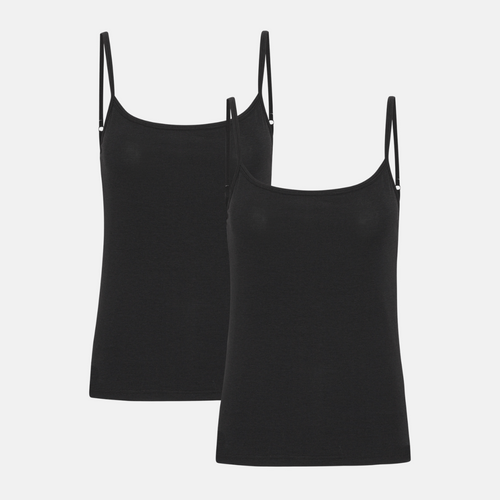
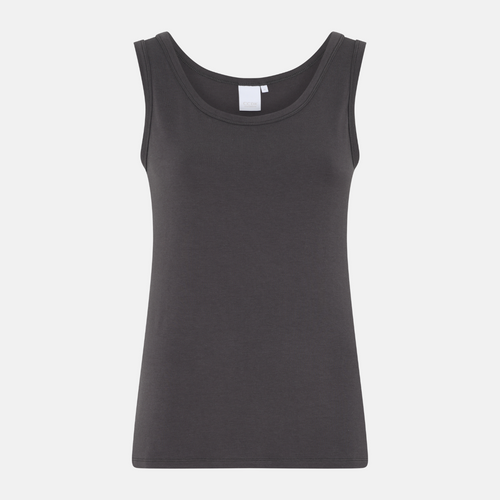
The innermost layer has to be thin and close fitting so the outer layers can fall freely. A tank top or strappy top sits smoothly against the body without bunching at the armholes and waist. If the inner layer is too thick, the shirt pulls across the shoulders. Have a look at the bamboo tops for women for that job.
Why bamboo works as an inner layer
Heat builds quickly between several layers, and air circulates less freely than under a single one. Bamboo viscose takes moisture into the fibre and releases it slowly, so you do not turn clammy when you move from the cold into a heated room. That shift between outdoors and indoors decides whether the layering lasts all day.
Three layers that always work
The simplest combination is a dark base top, an open shirt and a bamboo sweatshirt for women on the outside. Three layers give you three options during the day, and you can take the outer one off without the outfit falling apart. That is more flexible than a thick jumper, which is only on or off.
The long sleeved layer in winter
When the temperature drops, a long sleeved bamboo T-shirt for women can replace the tank top. It covers the arms without adding bulk under the shirt, and the sleeve finishes smoothly at the wrist so it does not ride up inside a knitted jumper. It is the cheapest way to make an autumn wardrobe ready for winter.
The vest underneath everything
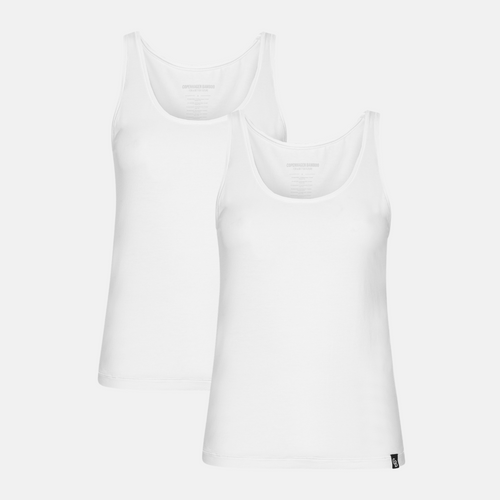
If the coldest days call for another layer, it belongs on the inside rather than the outside. A bamboo vest for women adds a thin, warm layer across the stomach and back, where most people feel the cold first, and it adds almost no thickness to the silhouette.
Colour and drape in the layers
Keep the innermost layer darker than, or the same tone as, the outer one so it does not show through a pale shirt. Skin tone and grey disappear best under white. The layers should also grow gradually longer towards the outside, or the base top shows below the hem and breaks the line.
From cold air into heated rooms
A winter day is made up of short trips in the frost and long hours at twenty degrees. Layering solves that, because you can adjust along the way instead of choosing once in the morning. Pick layers you can actually take off in an office or on a bus, and keep the thickest one outermost.
Washing and storing the base layers
Base layers are washed more often than the outer ones, because they touch the skin all day. Wash at 30 degrees without fabric softener, and hang them to dry rather than tumbling them. Fold them flat instead of hanging them on a hanger, so straps and necklines keep their shape. See also bamboo and temperature regulation and the undershirt as a base layer.
Frequently asked questions
How many layers make sense?
Two to three layers cover almost any weather. More than three make it hard to move your arms freely, and the innermost layer then rarely earns its place.
Can a tank top be used as an inner layer all year?
Yes. In summer it stands alone, and in winter it works as a smooth inner layer under a shirt and knitwear, keeping perspiration away from the outer layers.
Does the inner layer have to sit close?
Yes, it should follow the body without pulling. A loose inner layer creases under the shirt and shows as visible ridges through the outer layers.
See our range of Bamboo Basics.