Underwear for women in larger sizes and what changes
Short answer: In larger sizes, the width of waistbands and edges matters more than in small ones. A narrow band has to carry more and therefore presses harder, and that is where most discomfort appears over the day.
Width over tightness
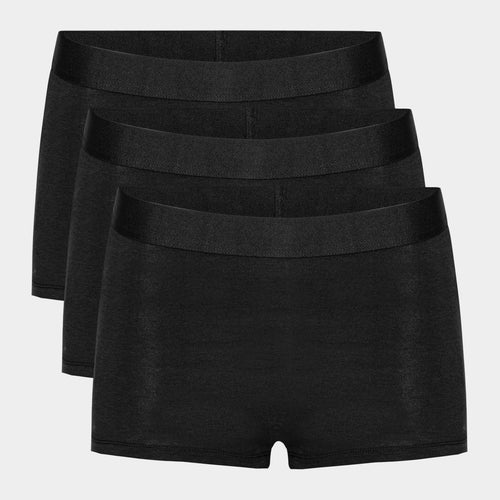
A wide waistband spreads the pressure over a larger area and holds just as well without digging in. It is the single most important detail in underwear for larger sizes. A narrow band may feel fine in the morning, but after a few hours you notice it as a groove. See bamboo underwear for women.
Why a narrow band presses
A band has to keep the briefs in place, and the force is spread across its width. When the band is narrow, all the pressure gathers on a thin line. The more the band has to hold, the more you feel it. That is why the same style can feel quite different in a small and a large size.
The leg edge should not squeeze
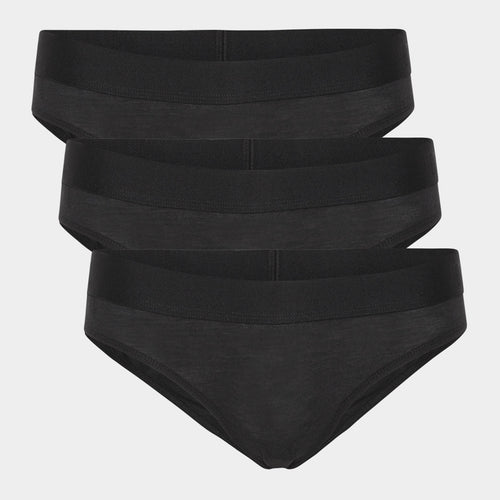
A leg edge that is tighter than the rest makes the briefs ride up during the day. It applies to all sizes, but it is more noticeable the more the edge has to hold. Look for a soft, wide leg edge that lies flat against the skin and leaves no deep marks by evening. See bamboo briefs.
Height at the waist
Many prefer a slightly higher waist in larger sizes, because the waistband then sits in a calmer spot and does not roll down under the belly. It is not a rule, but worth trying. Sit down, stand up and bend over when you try a new style. If the waistband stays put, it fits.
Measure instead of guessing
Size labels vary between brands, so your size with one may not fit with another. Measure around the widest part of your hips with a tape measure and compare with the specific chart. If you fall between two sizes, choose the one that fits best at the hips. Read more in our guide to briefs and underwear.
Fabric with stretch
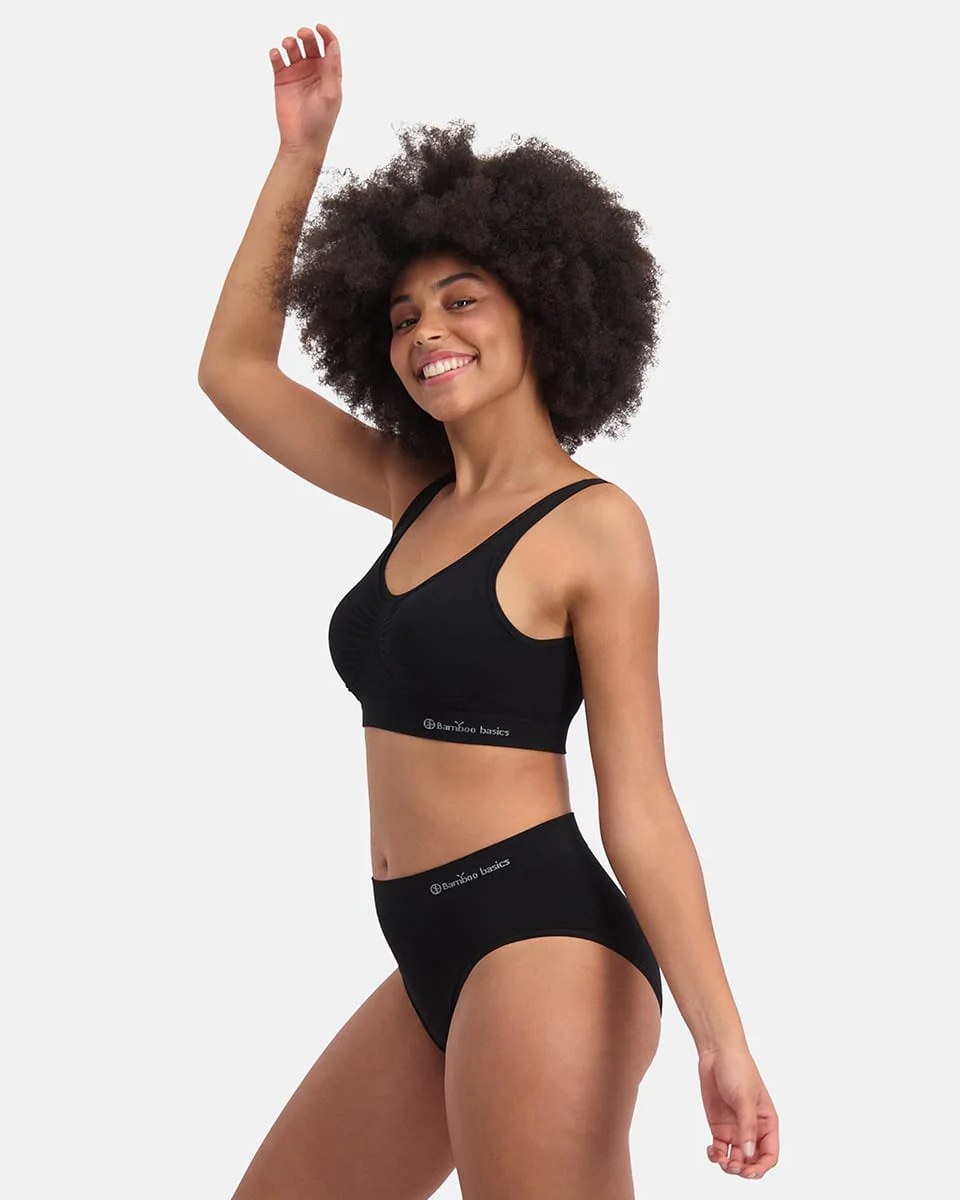
A fabric with a little elastane follows the body instead of squeezing in one spot. Bamboo viscose with elastane gives when you move and returns to shape afterwards. The briefs then fit the same all day, rather than tight in the morning and loose by the afternoon. In larger sizes that is especially welcome.
The gusset needs enough width
A gusset that is too narrow can chafe and pull the briefs out of line. In larger sizes the gusset should grow in width too, so it lies calmly and covers what it should. If it cuts in at the groin, the gusset rather than the size is often the problem. Try a different cut then.
Look after the stretch
Elastane loses its stretch from heat. Wash at 40 degrees, skip fabric softener, and hang your underwear to dry or use low heat in the dryer. The waistband and edges then keep their shape longer. See washing and care for how to preserve the stretch best.
In short
Choose a wide waistband and a soft leg edge over tightness. Measure your hips instead of guessing from the label, and pick a fabric with some stretch. Try new styles while moving, not just standing in front of the mirror. And protect the elastane in the wash, so the fit lasts.
Frequently asked questions
What matters most in underwear for larger sizes?
The width of the waistband and leg edge. A narrow band carries more and presses harder, while a wide band spreads the pressure and holds just as well without digging in.
Why do my briefs ride up?
Because the leg edge is tighter than the rest of the briefs. A soft, wide leg edge that lies flat against the skin is far more likely to stay in place all day.
Can you trust size labels?
Not across brands. Measure around the widest part of your hips with a tape measure and use the specific size chart for the style you are thinking of buying.
See our range of Boody underwear.