What a wash actually costs
Short answer: A few kroner per load. The electricity to heat the water is by far the biggest item, and it falls sharply when you turn the temperature down. At 20 degrees, the detergent is the biggest cost. The sum only gets interesting over a year, when small differences multiply across hundreds of loads.
The three items in a wash
A wash has three items: electricity to heat the water, the water itself and the detergent. They weigh very differently depending on temperature. At 60 degrees the electricity is about three quarters of the cost. At 20 degrees it is nearly gone, and the detergent becomes the biggest item.
Electricity is the big item
It is the heating that costs, not the programme itself. The water has to reach temperature, and every extra degree takes energy. That makes the temperature dial the most effective place to save, without changing how much you wash or how often.
The numbers at 60, 40 and 20 degrees
A wash at 60 degrees uses about 1.3 kilowatt hours. At 40 degrees it is around 0.7, and at 20 degrees under 0.3. The gap between first and last is more than a factor of four. These figures are typical, and your own machine may sit a little higher or lower.
Water and detergent
Water use sits at forty to sixty litres whatever the temperature, so turning the dial down does not save you water. Detergent costs a few øre up to about one krone per wash when dosed correctly. If you use too much, the cost rises without the clothes getting cleaner.
What it means over a year
A household that washes four times a week runs about two hundred loads a year. Going from 60 to 40 degrees on half of them is a noticeable saving that shows on the electricity bill. It is the same laundry and the same routine, just a lower temperature.
From 60 to 40 degrees
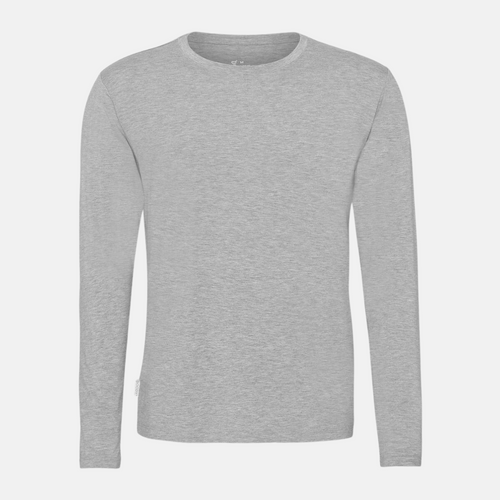
Not everything needs washing at 60 degrees. For everyday clothes such as a bamboo long sleeve t-shirt for men, the care label decides the temperature. If it allows 40 degrees, 60 is wasted electricity and needless strain on the fabric. Pick the lowest temperature the label allows.
The short programme and training clothes
The short programme is a little cheaper, but it also cleans worse at the same level of dirt. For training clothes such as bamboo training clothes for women it can tempt, because it is over quickly. If the clothes are sweaty, a normal programme at low temperature beats repeating a short wash.
Does the tumble dryer cost more
Yes, typically. A tumble dryer often uses double the electricity of the wash per cycle. Hang the laundry up and you save that cost entirely while sparing the fabric from wear. If you have space, a line or rack is the cheapest route, and you can wash cold and still get clean clothes.
How to save without washing worse
Three habits work: wash at the lowest temperature the label allows, fill the machine, and dose the detergent as instructed. Group your everyday clothes from Turiform by similar colours so a full machine means fewer washes across the year. That lowers the bill and the wear, without giving up on cleanliness.
Frequently asked questions
Does the tumble dryer cost more than the wash
Typically yes, often double per cycle. Hang the laundry up instead and you save the cost entirely, while sparing the fabric the wear a dryer causes.
Is the short programme cheaper
A little, but it also cleans worse at the same level of dirt. If the clothes are very dirty or sweaty, a normal programme at low temperature is often the better choice.
How much does detergent cost
A few øre up to about one krone per wash when dosed correctly. Follow the instructions on the pack, and remember a half-full machine does not need a full dose.
You can find the full range at Bamboo-Clothing.com.