What finishing of a fabric covers
Short answer: Finishing is everything that happens to the fabric after knitting and dyeing. It can be softened, pre-shrunk, made smoother or more resistant, and each treatment changes something about how the fabric looks, feels and behaves in the wash.
Everything after the dyeing
Once the yarn is knitted into fabric and dyed, the fabric is not yet finished. It is often rough, stretched and restless on the surface. Finishing is the umbrella term for the steps that make the fabric ready to be cut and sewn into a garment you can put on and use every day.
Mechanical or chemical
Some treatments are mechanical, like brushing or steam, where the fabric is affected by movement, heat and moisture. Others are chemical, like softening or enzyme treatment, where an agent changes the surface of the fibres. Both are used in textile production, and a producer chooses by what the fabric must do.
The main ones in basics
For ordinary knit it is mostly about pre-shrinking, softening and an even surface. Those three are the ones you feel most when you wear the garment. Pre-shrinking makes the measurements stable, softening makes the fabric pleasant on the skin, and an even surface keeps it looking tidy after some washes.
Pre-shrinking gives stable measurements
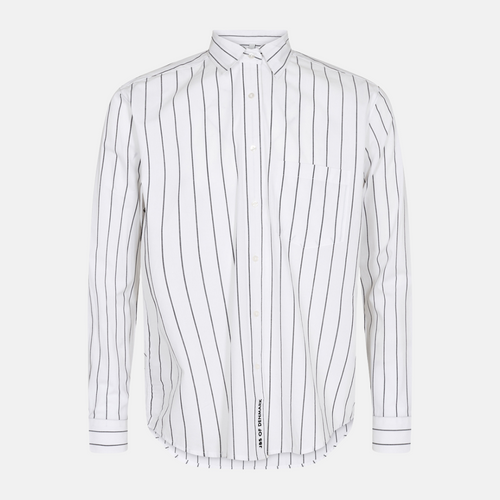
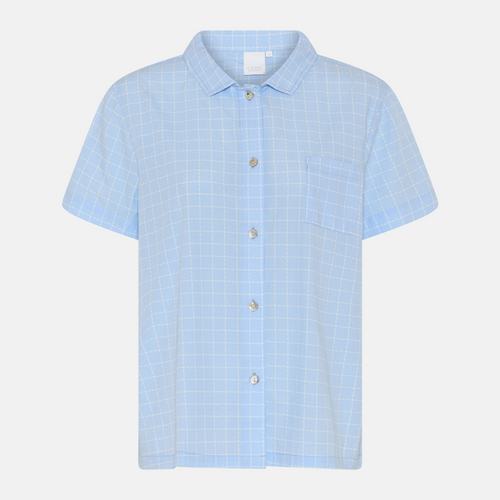
In pre-shrinking the fabric gets steam and heat without pull, so it relaxes before it is cut. That means the shrinking happens more at the producer and less in your washing machine. You can read more about fit and size with us. See bamboo shirts for women, where you can compare models and measurements.
Softening and surface
Softening makes the fabric softer to the touch, and an even surface makes it look calm and uniform. Both are among the treatments you already feel when you take the garment out of the package. Some of them wash out gradually, so the feel can change a little as the garment is used and washed.
Everything has a cost
Softening can reduce moisture transport, and enzymes cost a little strength. There is always a trade-off, and a producer weighs it against what the garment is for. Two fabrics that look alike can therefore behave differently in daily life. See offers for women and Lindbergh for garments with different looks.
Can you see what the fabric has had
Rarely. It is in the factory specification, not on the label in the garment. The label tells you about material and washing, but not which treatments the fabric has been through. If you want to know more about a particular garment, you can ask customer service, who answer from the information we have received.
Why a garment changes in the wash
Part of the finishing does not stay for ever. Softening and surface treatments wash out gradually, and the fabric shows its own character over time. It is not a fault but a normal development. That is why a new garment can feel different from after five washes, with nothing wrong with it.
How to care for the fabric
Wash at a low temperature and follow the label. Use no more detergent than needed, and skip fabric softener if you want to keep the fabric's own moisture transport. Drying without heat is gentler on fibres and surface. With calm care you keep the look and fit longer.
Frequently asked questions
Can you see which treatments a fabric has had?
Rarely. It is in the factory specification and not on the label in the garment, so the best advice is to ask if you want to know more about a specific fabric.
Does finishing last for ever?
No. Softening and surface treatments wash out gradually, so the feel and look can change a little over time, especially if you wash often.
Why does a new garment feel different from after five washes?
Because part of the finishing has been rinsed out, and the fabric shows its own character, no longer shaped by the first treatments.
You can find the full range at Bamboo-Clothing.com.