What happens to a fibre that breaks
Short answer: A fibre that breaks loses its ability to carry load, and the strain moves to the neighbouring fibres. They are then loaded harder, and the next one breaks more easily. That is how wear comes in a chain, and why it speeds up once it has started.
The load is redistributed
In a yarn, many fibres share the load between them. If one drops out, the rest have to carry the same with less strength. It happens without you noticing anything, because a yarn has many fibres and the loss of a single one cannot be seen. Only when more follow does the fabric begin to change.
Breaks come in a chain
Once some fibres have broken, the rest go faster. Each fibre that remains carries more than before, and a fibre that carries more reaches its limit sooner. That is why wear accelerates. See bamboo tights for women.
The end becomes a pill
The broken end sticks out of the yarn and can roll together with others. Then one break becomes a small ball on the surface that you can see and feel. It is the most visible result of a fibre having given up. See bamboo undershirt for women.
Why fibres break
From rubbing, from pulling and from chemical action from water that is too hot or strong products. Each of them can wear a fibre down, and together they do it faster. Think of it as small loads laid on top of each other until a fibre cannot take any more.
Can a fibre be repaired
No. A broken fibre is broken. The fabric can be darned if a hole appears, but the fibre does not come back. That is why care is about prevention, not repair, and about looking after the fibres you have while they are still whole.
How to see it early
The fabric becomes a little rough and loses its sheen long before a hole appears. Hold the garment up to the light and see whether the surface looks dull or fuzzy. It is a sign that fibres have begun to give up, and that you can do something about the wear before it goes further.
Gentle washing helps
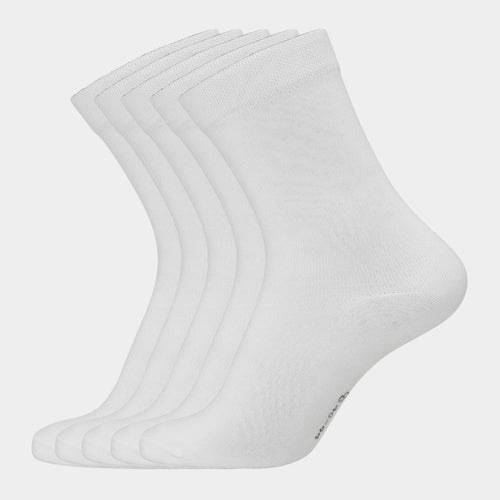
Wash at a low temperature, use a gentle programme and avoid strong products. Turn the garment inside out so the rubbing happens on the inside. The less a fibre is exposed to heat, chemicals and rubbing, the longer it lasts, and the longer the garment lasts. See bamboo socks for women.
Avoid unnecessary pulling
Do not pull harder on the garment than you need to when you put it on and take it off. Do not wear jewellery or long nails that can catch and pull fibres out. A single snag can break several fibres at once, and the damage then spreads faster.
Wear is normal
All clothes wear with time, and that is a normal part of how a garment lives. The aim is not to avoid it, but to postpone it, so the garment lasts longer. With care in washing and use you can extend its lifespan markedly, without it asking much of you.
Frequently asked questions
Can a fibre be repaired?
No. A broken fibre is broken. The fabric can be darned, but the fibre does not come back, so the best approach is to prevent wear.
Why do fibres break?
From rubbing, from pulling and from chemical action from water that is too hot or strong products. Together they wear faster than alone.
How can I see it early?
The fabric becomes a little rough and loses its sheen long before a hole appears. Hold it up to the light and see whether the surface looks dull.