What happens to heat under a rucksack
Short answer: A backpack presses the fabric flat against the back. The air disappears, the insulation turns to nothing, and the moisture cannot escape either. That is why the back gets warm and wet exactly where the backpack sits.
The backpack presses fabric flat
When you carry a backpack, it sits close to your back all day. The fabric of your top is squeezed between the pack and your body and cannot do what it is made for. That is the simple reason your back feels so different from the rest of your upper body after a hike.
Pressure removes the air spaces
Under straps and back panel, the fabric is squeezed between two surfaces. The small air spaces in the knit are pressed shut and the insulation is gone. The fabric cannot hold air any more, and the pack itself is an extra barrier, so heat has no easy way out.
The heat cannot get out
The backpack is dense and acts like an extra layer. The area under the pack therefore gets warmer than the rest of the back. The body responds by sweating, but sweat only helps if it can evaporate. With no room for air, heat lingers and you soon feel too warm.
And moisture collects
Sweat can neither evaporate nor move away. That is why the back is wet exactly where the pack has been. The moisture stays in the fabric, and the fabric turns clammy on the skin. When you take the pack off it can feel cold for a moment, because the wet surface suddenly meets air.
Why the back in particular
The back has many sweat glands, and it is a large, flat area that a backpack covers almost completely. There is no natural opening where air can enter, as there is at the armpits or neck. That is why the back is where heat and moisture collect most.
An air channel makes a difference
A mesh that holds the pack off the back gives air room to pass. It relieves both fabric and skin and lets sweat evaporate. The effect is clear, because you get a layer of air back where there was none. Many backpacks have such a design, and it is worth looking for.
Breaks without the pack
Five minutes without the pack dries the back considerably. It is a simple and free fix that works whatever you wear. Take the pack off during a break and let air reach the back, so skin and fabric can dry before you put it on again and walk on.
Shoulder straps and bags
The same happens under the shoulder straps of bags, just on a smaller scale. Pressure removes insulation locally, and a warm, damp stripe forms under the strap. Switch shoulders along the way and choose wide straps, so pressure spreads over a larger area and the fabric keeps its air more easily.
Soft clothing after the day
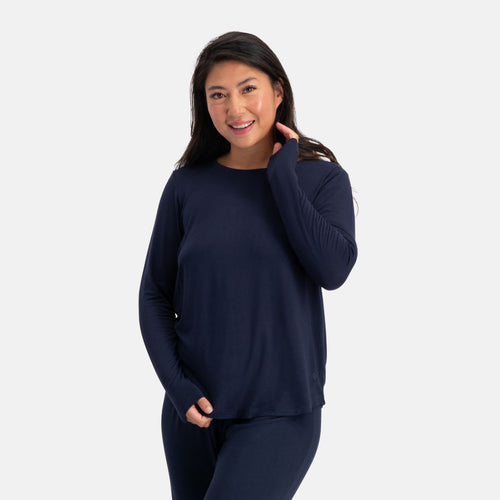
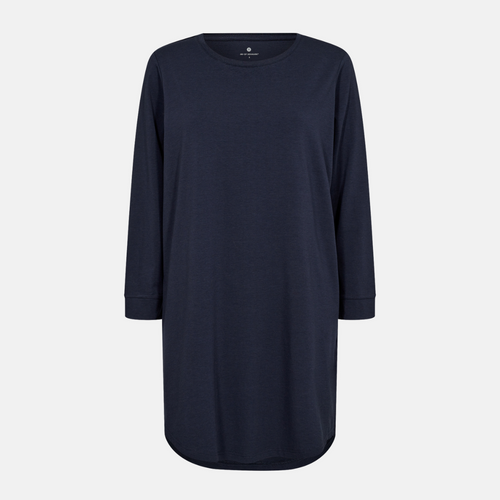
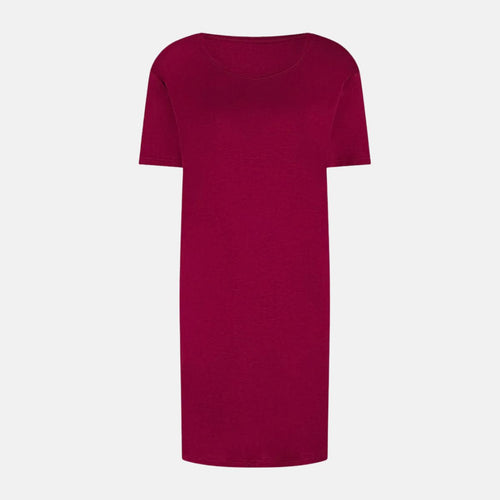
When the day is over and the pack is off, soft clothing at home can feel good on skin that has been pressed and damp. See for example women's bamboo nightgowns, women's bamboo pajama shirt and bamboo sleepwear for women if you want something to change into.
Frequently asked questions
Does an air channel backpack help?
Yes, noticeably. A mesh that holds the pack off the back gives air room to pass, so sweat can evaporate and there is less pressure on the fabric than with a pack sitting flat.
Should I take the pack off during breaks?
Yes. Five minutes without the pack dries the back considerably. Use the break to give the fabric some air too, so it is not clammy on the skin before you walk on.
Does the same apply to bag shoulder straps?
Yes, on a smaller scale. Pressure removes insulation locally, so a warm, damp stripe can form under the strap. Wide straps and switching shoulders make the difference smaller.