What the order of fibres means
Short answer: The fibres on a label are listed by how much of the fabric they make up, largest first. The order therefore tells you which fibre decides how the fabric behaves in daily life, both when you wear it and when you wash it.
The first fibre sets the tone
If a label says ninety percent viscose and ten percent elastane, the viscose decides drape, feel and how much moisture the fabric takes up. The fibre listed first makes up most of the cloth, so it is the one you feel against your skin. Read the first number first.
The small share has a job
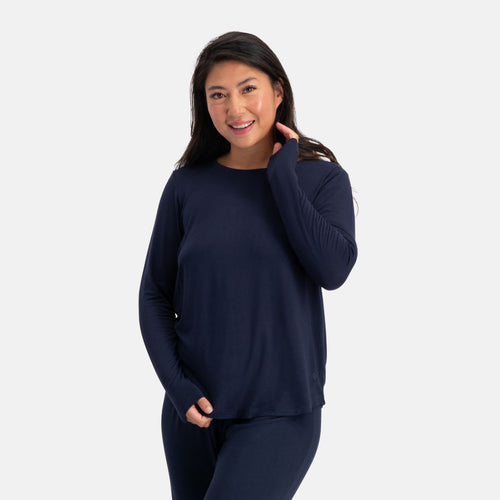
Even a few percent of elastane changes how a fabric stretches and returns to shape. Without it, many items would lose their form after only a few wears. A small share is not the same as a small effect. See bamboo sleepwear for women and read the composition on each item.
The total must reach one hundred
When several fibres are present, all of them are listed, and the numbers must add up to one hundred percent. That makes it easy to check that nothing is missing. If your sum comes out differently, something is wrong with the label. See bamboo split sheets and period underwear and compare the compositions yourself.
Percent means weight, not appearance
The percentages show how much of the fabric's weight each fibre makes up. They say nothing about how the surface looks or how thick the cloth is. Two fabrics with the same composition can feel different, because the yarn, the knit and the finishing also shape the final result.
How to read a label
Look for the list of fibres, often printed on a small fabric tag in the side seam or at the neck. Take the first fibre and ask what it does. Then take the next one and see what it adds. That gives you a quick picture of the fabric without knowing every technical term.
Blends are often an advantage
A blend can offer more than a single fibre on its own. One fibre brings softness and drape, another brings shape and elasticity. The aim is not to find a pure fibre but the composition that suits what the item will be used for, whether nightwear, underwear or bedding.
Order is not the same as quality
A fibre being listed first does not automatically make an item better. It only tells you that the fibre makes up the largest share. Quality also depends on how the fabric is made and how the item is sewn. Use the order to understand the cloth, not to judge it in advance.
Compare the two key numbers
When comparing two items, look at the first fibre and the small share separately. Two items with the same first fibre but a different small share can stretch quite differently. Lay the labels side by side and look for the difference, rather than looking only at the price.
Using it in practice
With an item in your hand, check the first fibre, then the small share, and finally whether the numbers reach one hundred. It takes half a minute. With a little practice it becomes a habit, and you are less often surprised by how a fabric behaves at home.
Frequently asked questions
Is a high percentage of one fibre always best
No. It depends on what the item needs to do. Elastane gives shape, and a little of it often helps, even when it makes up only a few percent of the fabric.
What if two fibres make up the same amount
Then they may be listed in either order, though that is rare in practice. Read both fibres, since they shape equally how the fabric feels and behaves.
Can small amounts be left out
Very small amounts may be grouped under a shared term according to the rules. That is why a label can show something slightly different from what you expect to see.
You can find the full range at Bamboo-Clothing.com.