When one red sock colours the whole wash
Short answer: Wash the whole load again straight away, while it is still wet. Colour that has dried into the fibres sets far harder than colour that is still damp.
Why it happens so easily
New, dark colours release excess dye during the first few washes, no matter how well the fabric was dyed at the factory. Mix a single red sock with light coloured clothes, and there is enough colour to give the whole load a pink or reddish tint, especially in warm water.
Act while the load is still wet
Wash the whole load again at 40 degrees with ordinary detergent as soon as you spot the accident. Do not dry anything until you have tried at least twice, because drying makes the transferred colour permanent in a way no later wash can undo.
Colour catchers work as prevention
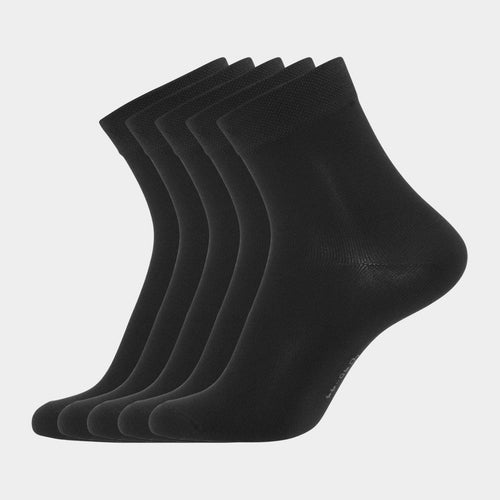
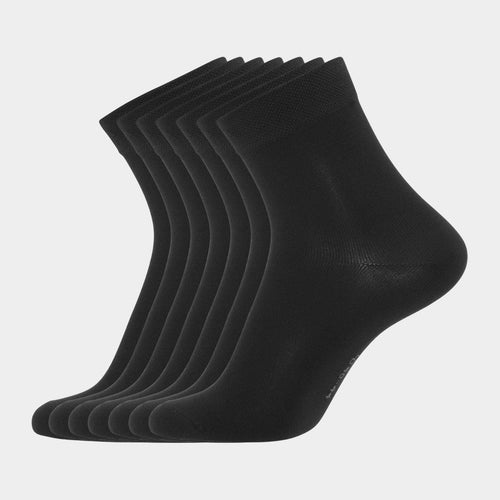
A colour catcher sheet in the machine picks up loose dye in the water while the wash runs. It will not save clothes that are already stained, but it prevents the problem next time. See the bamboo socks for men often washed alongside other dark colours.
Sort by colour from the start
New, dark items should always be washed separately for the first three to four washes. This applies especially to socks, t-shirts and other clothing with strong colours, where excess dye washes out easily and hits everything else in the machine.
New items need extra attention
See the bamboo t-shirts for men where a single separate wash the first time can save the rest of the wardrobe from an accident. After three to four washes, most textiles release far less dye and the risk drops considerably.
The role of temperature in colour bleeding
Hot water significantly increases the risk of colour bleeding, because the fibres open up and release more dye. Wash new, strongly coloured items at a lower temperature the first few times, and only raise it once you are sure the item no longer releases colour into the water.
Rescuing clothes that are already stained
If the clothing has already turned pink or reddish, repeated washes at 40 degrees can often pull much of the colour back out. See the bamboo clothing for women, light coloured items where it matters most to wash again right away and avoid the dryer meanwhile.
When the damage is already done
If the clothing has already dried with the new colour, the result is rarely quite the same as before. Some fabrics keep a faint tint permanently, while others can be rescued with several washes and some patience, depending on how strong the original dye was.
A simple habit that prevents most of it
Always check new, dark clothing for loose dye before mixing it with the rest of the wardrobe. A quick check by hand after one wash, or a single separate wash first, is often enough to avoid most surprises later.
Frequently asked questions
Can clothing that has turned pink be saved?
Often yes, if you wash it again straight away while it is still wet. Drying makes the damage far harder to undo afterwards.
Why does new clothing bleed onto other clothes?
Excess dye from the dyeing process washes out during the first few washes. Wash new, dark clothing separately at first, until it stops bleeding.
Do colour catchers actually work?
They pick up loose dye already in the water. They do not remove colour that has already set into the fabric.
You can find the full range at Bamboo-Clothing.com.