Which hanger for which garment
Short answer: A wide hanger suits anything that must hold its shape, a thin velvet hanger suits light pieces, and a clip hanger suits trousers and skirts. The wire hanger from the dry cleaner is too narrow for most clothes. Choose the hanger by the weight and shape of the garment.
The wide hanger
The shoulder of the hanger should be at least three centimetres wide and follow the shape of your shoulder. That spreads the weight over a larger area, so no bumps appear. A wide hanger suits shirts and other pieces that should keep their shape day after day. Take a look at bamboo shirts for men.
Why the shoulder matters so much
A garment hangs from two points, where the ends of the hanger touch the fabric. If the hanger is narrow or pointed, all the weight gathers on a small area and the fibres are pulled out of shape. With a wide, rounded shoulder the weight is spread out and the fabric lies as it was cut.
The thin hanger with velvet
The thin hanger is for light pieces that would otherwise slide off a smooth hanger. The velvet gives enough friction to keep the garment in place, and the hanger takes up so little room that more fits in the wardrobe. It suits soft dresses and thin tops. Have a look at bamboo dresses.
The clip hanger for trousers and skirts
Trousers and skirts hang best on a clip hanger that holds the waistband. The fabric then hangs straight down instead of being folded over a bar, where a sharp crease easily forms. Put a small piece of fabric between the clip and the garment so it leaves no marks, and never hang heavy pieces from one clip.
The wire hanger from the dry cleaner
The wire hanger is made to carry clothes home from the dry cleaner, not to stay in the wardrobe. It is thin, sharp at the ends and hardly supports the shoulder. The result is the small bumps many people know from shirts that have hung too long. Use it for transport, then switch to a proper hanger.
Knitwear and heavy pieces
Heavy and knitted pieces hang badly on almost every hanger, because the weight pulls the fabric down towards the shoulders. It is better to fold them and keep them in a drawer or on a shelf. If one must hang briefly, use a wide hanger with a folded towel edge around the bar.
Shirts, T-shirts and dresses
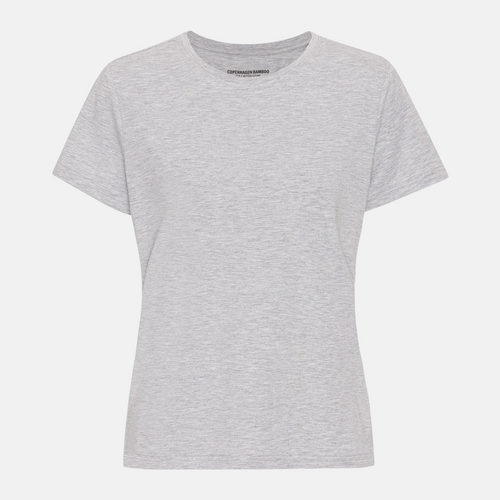
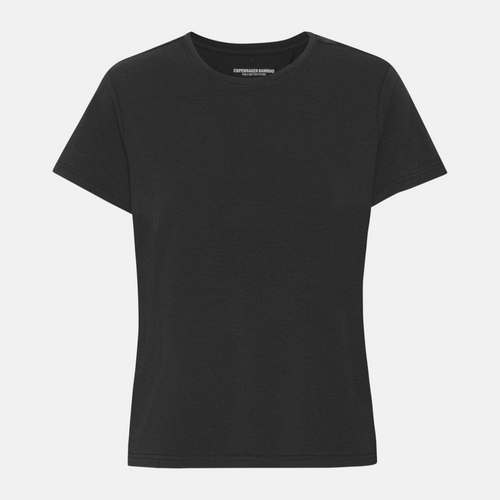
Shirts hang well on a wide hanger with rounded shoulders, and T-shirts can hang on the same type if they are not too heavy. Dresses with thin straps need some friction so the straps do not slip. If you own a bamboo T-shirt for women, an ordinary wide hanger is a good start.
Do all hangers need to match
Matching hangers look tidier and give an even line in the wardrobe, but they are not necessary. What matters is that each type of garment gets the hanger that suits it. Many people manage with three kinds: a wide one for shirts, a thin velvet one for light pieces and a clip hanger for trousers.
How to get started
Go through the wardrobe and find the pieces that hang on wire hangers or hangers with a narrow shoulder. Replace them, and after a few weeks see whether you notice a difference. You do not need to buy everything at once. Begin with the pieces you wear most and the most delicate ones.
Frequently asked questions
Why are wire hangers bad
They are too narrow and have pointed ends, so all the weight gathers on one small spot. That causes bumps at the shoulders, which can be hard to get out again.
Do all hangers need to match
Matching hangers look tidier, but it is not necessary. What matters is that each garment gets a hanger that suits its weight and that the shoulder is not too narrow.
How wide should a hanger be
About as wide as the shoulder of the garment hanging on it. As a rule of thumb, the shoulder should be at least three centimetres wide and rounded.
You can find the full range at Bamboo-Clothing.com.