Why a fabric weighs more after a day in the bathroom
Short answer: Viscose draws water from the air. In a humid room the fibre takes up several percent of its own weight, so the garment becomes measurably heavier without feeling wet. It is a natural result of the fibre seeking balance with the air around it.
The fibre seeks balance with the air
Cellulose fibres such as viscose sit in equilibrium with the humidity of the air. When the air gets damper, the fibre takes up more water until balance returns. When the air dries, it gives water back. This happens constantly and unnoticed, because the water is bound inside the material rather than on the surface.
How much it amounts to
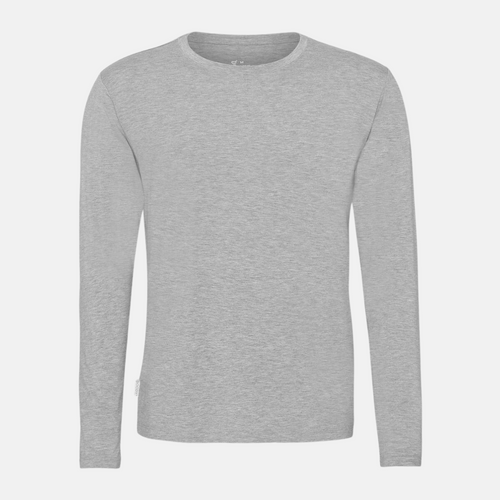
Between dry winter air and a steamy bathroom the difference can be five to ten percent of the fabric's weight. That is enough to measure on a scale but not enough to see. Take a look at the bamboo long sleeve T-shirt for men, whose weight shifts with room humidity without the fabric seeming wet.
What it means for you
Clothes left in the bathroom feel heavier and cooler and dry more slowly. It is the same reason towels never quite dry there. The air is full of vapour, so little room is left for more moisture to evaporate. It is not a sign of poor fabric but of a damp room. See bamboo envelope sheets and bamboo inner shorts.
Why the bathroom is special
A bathroom swings between dry and very humid air several times a day. After a hot bath the air is saturated with steam and stays that way unless you ventilate. Clothes hanging or lying out keep absorbing moisture. That is why the difference is clearer here than in the bedroom or living room.
Heavier does not mean wet
Water absorbed into the fibre does not feel like water against the skin. The fabric stays soft and the surface seems dry. Only when the fibre is saturated does moisture lie freely between the threads and give a cold, clammy feel. In an ordinary bathroom you are usually some way from that limit, though clothes may feel slightly cool.
Store clean clothes elsewhere
Clean, dry clothes belong in a wardrobe or chest of drawers outside the bathroom. The air there is steadier, and clothes start the day dry. If clothes must stay in the bathroom, keep them in a closed basket or drawer. Then moisture has a harder time reaching the fibres and you avoid putting on cool clothes.
Ventilate after bathing
Open a window or switch on the extractor as soon as you finish, and leave the door open for a while. The vapour escapes and the air becomes drier again. This helps the clothes as much as the room. Moisture leaves faster, and towels, mats and walls can dry fully between uses.
When moisture becomes a problem
Moisture alone does not harm the fabric. But when a room is constantly damp and clothes never dry, odour and mould can develop. This applies to every material, not just viscose. If you dry laundry in a bathroom, make sure the air changes. If something still smells, wash it again and dry it properly.
A simple habit that helps
Hang bath linen, towels and worn clothes so air can circulate, and keep clean clothes apart from them. It needs no special equipment, only some attention to where clothes are kept. You will rarely notice a difference in weight, and the clothes feel dry and calm against the skin when you put them on.
Frequently asked questions
Is it harmful to the fabric
Not in itself, but constant moisture creates conditions for odour and mould. Make sure air moves through the bathroom and let clothes dry fully before putting them away in the wardrobe.
How do I avoid it
Ventilate after bathing and keep clean clothes somewhere other than the bathroom. If something has to stay there, use a closed basket or drawer so moisture does not reach the fibres.
Does it apply to cotton too
Yes, but cotton absorbs slightly less than viscose. The principle is the same for all natural fibres, which seek balance with the humidity of the air and can grow heavier in a damp room.
You can find the full range at Bamboo-Clothing.com.