Why a knit rolls at the edge
Short answer: A single-layer knit curls at the edge because the front and back pull differently. When the edge is free, the fabric rolls toward the side that pulls most, and it happens on its own. It is a feature of jersey without an edge finish, not a fault, and a rib edge or a double-stitched hem stops it.
Stitches have two sides
The front of a stitch is a vertical arc, and the back is a horizontal one. The two shapes want to go different ways, because their arcs run differently and carry different tension. Inside the fabric they hold each other in check, so the surface lies flat. The problem starts only when there is nothing left to hold against.
The edge has no neighbour
Along a free edge there are no stitches to hold back. That is why sleeves, hems and necklines can curl when they are cut without a finish. It happens on its own and is clearest right after cutting, before the edge is sewn. See bamboo hoodies for women.
Up at the bottom, down at the top
The curl has a fixed direction. At the bottom, jersey rolls up and at the top it rolls down, and it is the same side that pulls in both cases. The direction is therefore recognisable from piece to piece, as long as the fabric is knitted the same way. Sleeve and side edges can curl similarly when cut free.
Why it is not a fault
A curling edge shows that the fabric is a single-layer knit and that the edge has not yet been finished. It is a natural property of all smooth jersey fabrics. That is why you often see it on fabric by the metre and on pieces cut without a seam. It says nothing about the quality of the yarn or the knit.
What stops the curling
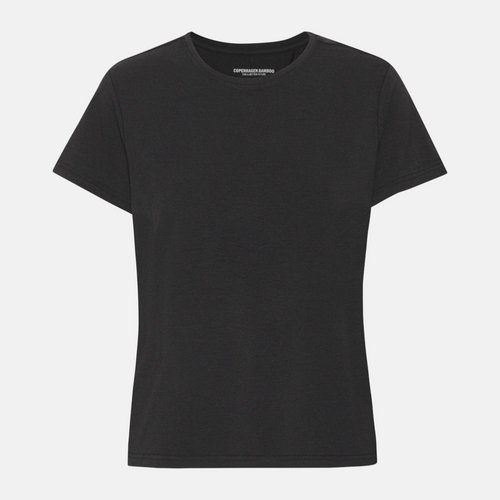
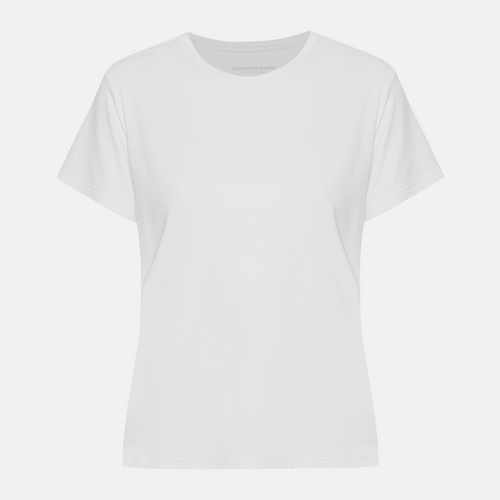
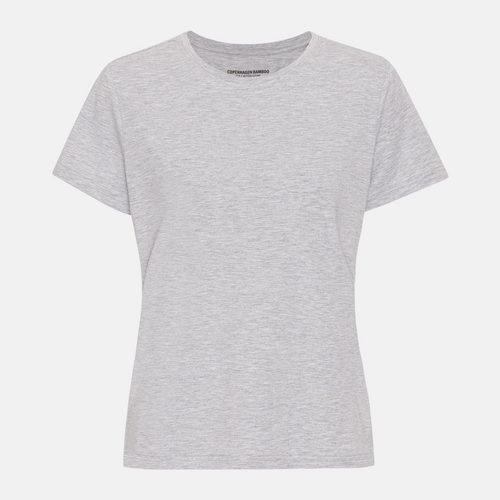
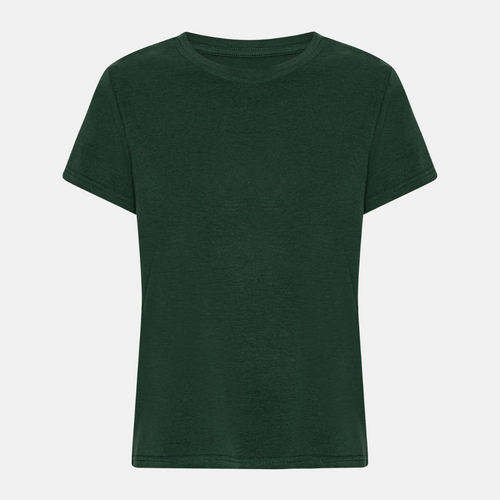
A rib edge, a binding or a double-stitched seam locks the edge and forces the fabric to lie flat. The seam holds the stitches in place so they cannot turn over. That is why most T-shirts have a double-stitched hem and a band at the neck. See bamboo T-shirt for women.
Why interlock does not curl
Interlock is a double-layer knit in which the two layers balance each other. The right and wrong side look the same, and pull in one direction is held back by the other side. The edge therefore lies flat without extra help. In return, interlock is heavier and denser than jersey, so it is a different fabric.
Why some garments curl more
Thinner yarn and looser knit give stronger curling, because the stitches have less resistance against each other. A thick, dense knit curls less, even with a free edge. That is why two garments in the same material can behave differently if the knit differs. Denser rows and thicker yarn make the difference.
Can you iron the curl away
Only until the next wash. With steam and pressure the edge can be made to lie flat, but the forces in the fabric are still there, and the edge rolls again once it has been wet and dried. Iron only if the edge must look neat for a single day, and do not count on it lasting.
How to look after the edge
Wash inside out and avoid stretching the edge when the garment is wet. Let it dry flat or hanging so the edge is not pulled crooked. A binding or rib edge lasts best when heat and hard spinning do not overload it. See also the bamboo sweatshirt for women.
Frequently asked questions
Can you iron the curl away
Only until the next wash. The forces in the fabric are still there, so the edge rolls again after the garment has been wet and dried.
Is a curling edge a fault
No, it is a feature of jersey without an edge finish. It says nothing about quality, and a rib edge or a double-stitched hem stops it.
Why do some garments curl more than others
Because thinner yarn and looser knit curl more. Thicker yarn and denser rows curl less, even with a free edge.
You can find the full range at Bamboo-Clothing.com.